
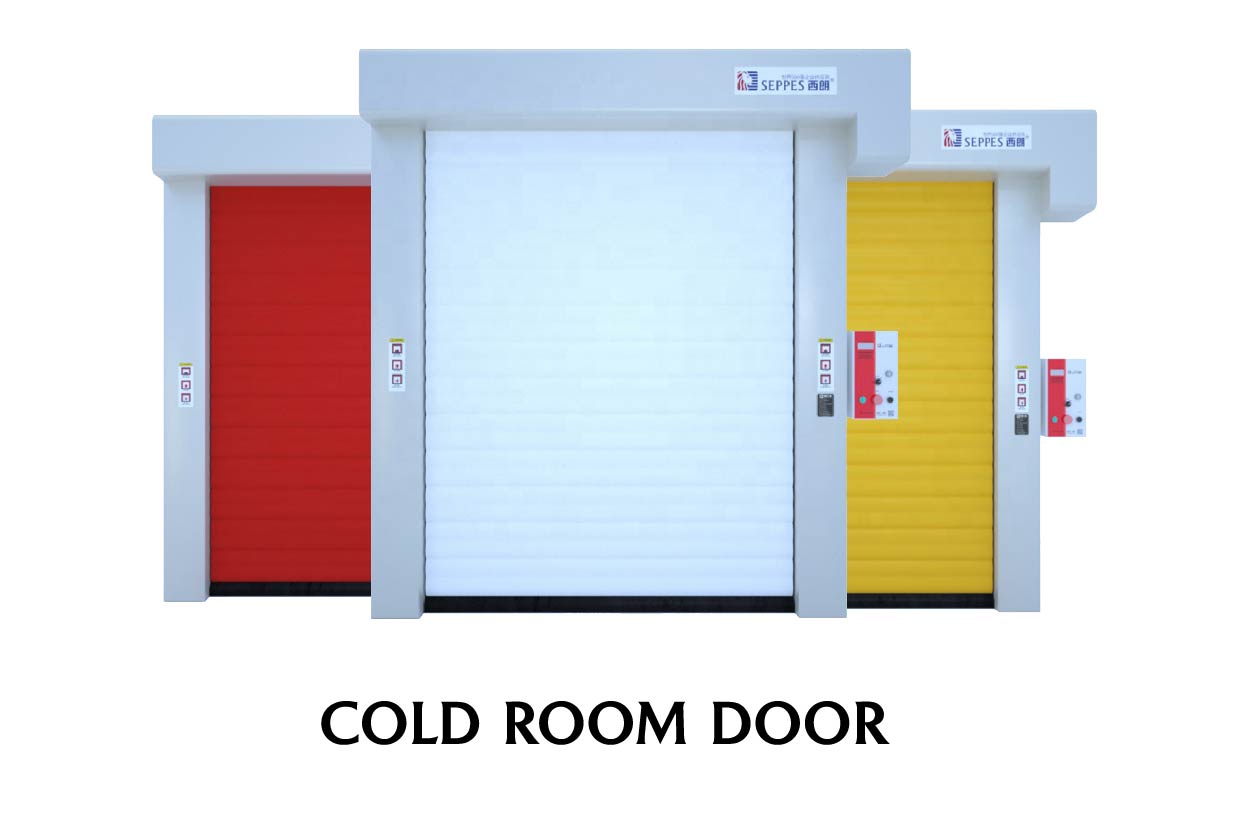
As an important facility in factories, warehouses and other places, the choice of puertas industriales is crucial for production efficiency and logistics operations. In the industrial door, cold room door is playing a key role, directly affecting the safety and efficiency of cold chain logistics. This article will lead readers to understand the selection of cold storage doors. To help you release the potential of industrial doors, enhance productivity and operational efficiency.
Cold Room Door Basics
Definition and function of cold storage door
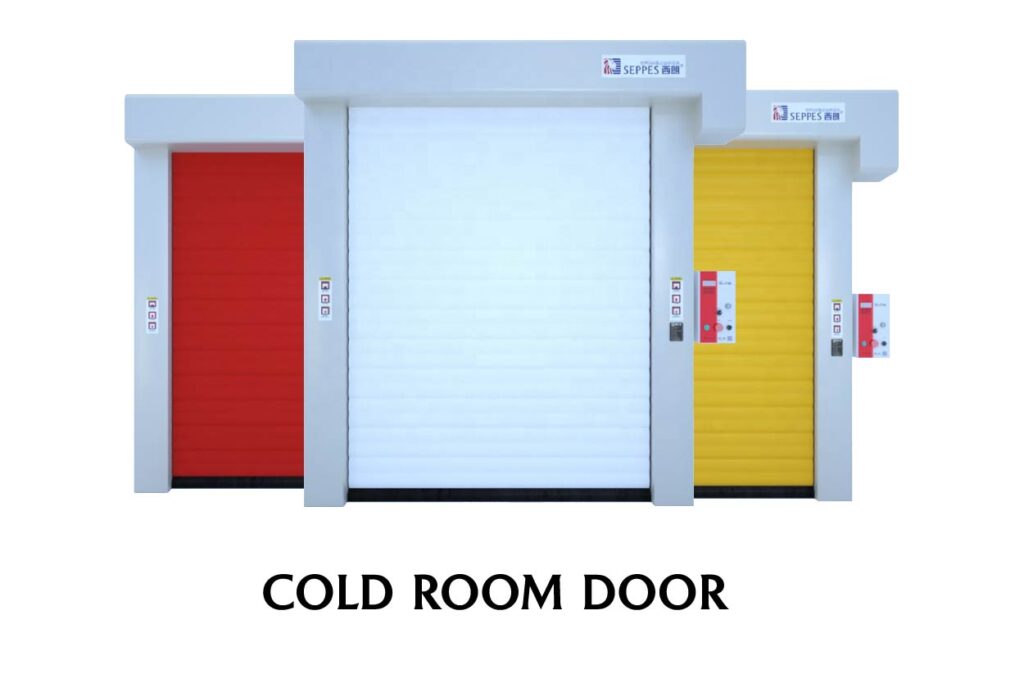
Heat preservation function: insulated doors for cold rooms has excellent heat preservation performance. Can effectively isolate the low temperature environment inside the cold storage and the heat exchange of the external environment. So as to keep the temperature inside the cold storage stable in the required low temperature state, to ensure that the stored goods are not affected by temperature fluctuations.
Sealing function: cold freezer door has good sealing performance, which can effectively prevent the exchange and circulation of air, moisture, dust and other substances inside and outside the cold storage, and keep the internal environment of the cold storage relatively closed, so as to minimize the risk of energy loss and cargo contamination.
Durable function: Cold storage door is usually made of high-strength, corrosion-resistant materials with good durability and impact resistance, able to withstand all kinds of pressures and challenges in the process of routine operation and use to ensure stable operation for a long time.
Safety function: thermal insulation door in the design and manufacturing process to take into account the safety factors, usually with fire, explosion-proof, anti-theft and other characteristics, can effectively protect the cold storage interior and the safety of stored goods to avoid accidents.
Convenient operation function: some cold storage doors are designed with intelligent operating system, which can realize automatic opening and closing, improve the convenience and efficiency of operation, and reduce the work intensity of manual operation.
The role of cold storage door in cold chain logistics
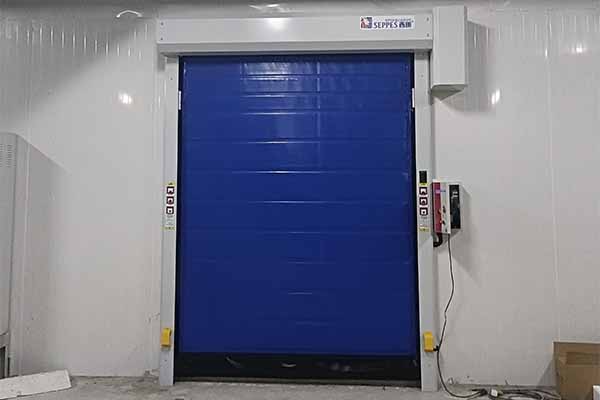
Maintaining a stable temperature environment: The main function of cold storage doors is to ensure that the temperature inside the cold storage is maintained at the required low temperature. Goods in cold chain logistics, especially perishable and perishable foods and medicines, have extremely strict temperature requirements. Through its excellent heat preservation performance, the cold storage door can effectively isolate the temperature exchange inside and outside the cold storage, maintain a stable low-temperature environment inside the cold storage, and ensure that the quality of goods is not affected.
Preventing temperature fluctuation: Temperature fluctuation is a common problem in cold chain logistics, which will lead to the decline in the quality of goods or even damage. Cold storage door has good sealing performance, which can effectively prevent the intrusion of external heat, moisture and other factors, reduce the fluctuation of temperature inside the cold storage, and maintain a stable cold chain environment, which is conducive to the preservation and conservation of goods.
Protect the quality of goods: the insulation and sealing function of the cold storage door not only helps to maintain the appropriate temperature inside the cold storage, but also reduces the impact of external factors on the goods. By effectively preventing the entry of air, moisture, dust and other substances, the cold storage door can protect the goods from pollution and deterioration, ensuring the quality and safety of goods.
The importance of cold storage doors in industrial applications
Goods preservation and quality assurance: In industrial production, many products need to be stored and transported in a specific temperature environment, such as food, pharmaceuticals, chemical products and so on. By maintaining a stable low-temperature environment, the cold storage door effectively extends the freshness period of the goods and ensures the quality and safety of the products.
Productivity Improvement: Cold storage door can help enterprises better manage and control the storage and flow of goods, reducing the loss and waste of goods. By maintaining a suitable temperature environment, cold storage doors help optimize the production process and improve production efficiency.
Energy saving and environmental protection: High-quality cold storage door has good heat preservation and sealing performance, which can effectively prevent energy loss, reduce the running time of refrigeration equipment and energy consumption, reduce the energy cost of enterprises, and also help to reduce the impact on the environment and realize energy saving and environmental protection.
Security guarantee: cold storage door with reasonable design and solid structure can effectively prevent the entry of external objects and guarantee the safety of cold storage interior and goods. Some cold storage doors also have the functions of fireproof and explosion-proof, which can cope with unexpected situations and guarantee the safety of production and personnel.
Meet different needs: different industries, different products have different requirements for the storage environment, and the cold storage door provides a variety of options, including different types, different materials of the door, to meet the needs of different enterprises and products, with strong flexibility and adaptability.
Different types of cold storage doors and their characteristics
Advantages and disadvantages of cold storage fast door vs cold storage sliding door comparison contrast
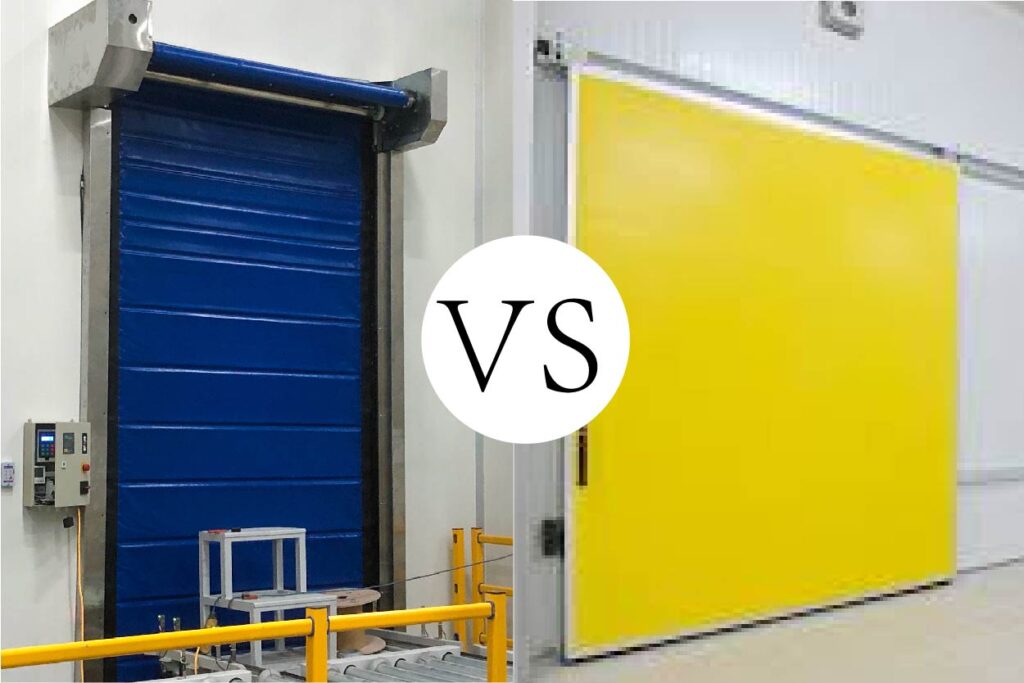
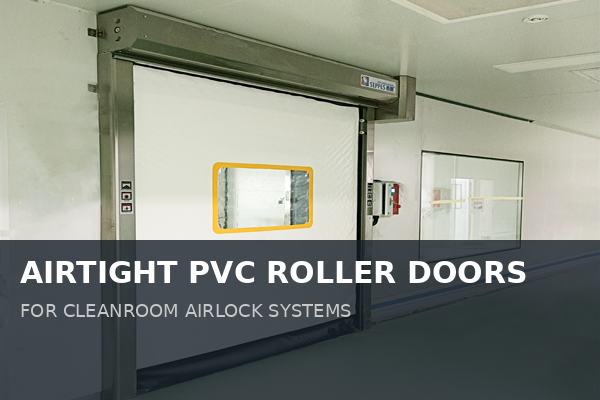
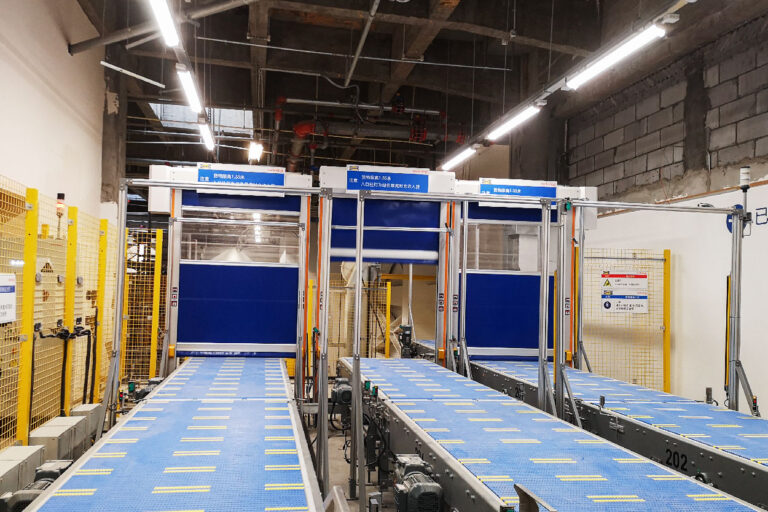
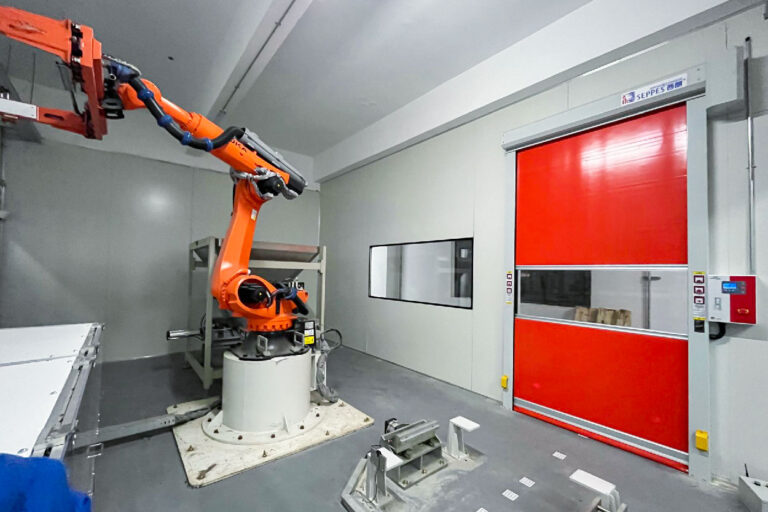
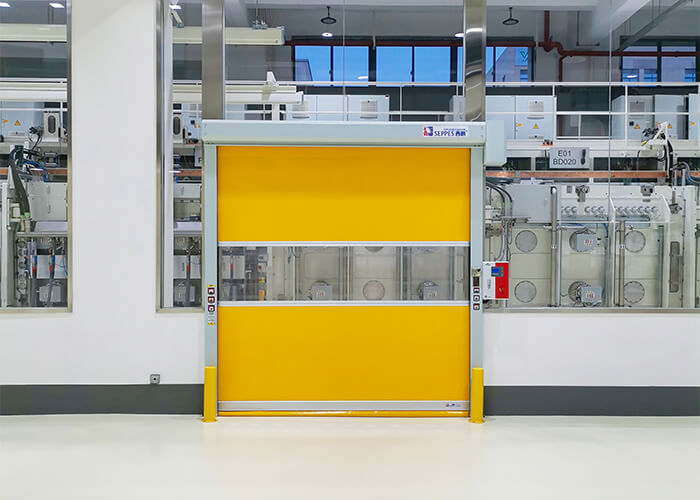
Cold Storage Rapid Doors
Ventajas:
Rapid opening and closing: Insulation fast door can complete the opening and closing operation in a very short time, which helps to improve the efficiency of access.
Keep the temperature stable: the rapid operation of the rapid door can reduce the loss of cold air, help to maintain the stability of the internal temperature of the cold storage.
Ideal for high-frequency access: For cold rooms that require frequent access, rapid doors can better meet the demand and reduce waiting time.
Safety: Rapid doors are often equipped with safety sensors that can stop the closing action when an obstacle is detected, improving safety.
Disadvantages:
Higher Costs: Speed doors typically contain more mechanical and electronic components, which can be costly.
Complicated Installation: Installation of a speedy door can be relatively complex and requires specialized technical support.
Advantages:
Space saving: Sliding doors require no additional space to open and close, making them suitable for locations with limited space.
Good sealing: Provides better sealing, reduces cold air leakage and helps to keep the temperature inside the cold storage stable.
Suitable for large door sizes: Sliding doors can be designed in large sizes for larger entrances.
Relatively Low Maintenance Cost: Sliding doors are relatively simple in structure and may have low maintenance costs.
Disadvantages:
Slower opening speeds: Sliding doors have slower opening speeds than speedy doors, which may affect the efficiency of entry and exit.
Not suitable for high-frequency entrances: Sliding doors may not be suitable for cold stores that require frequent entry and exit due to their slow opening speed.
High speed cold storage door vs cold storage traditional door applicable scene comparison
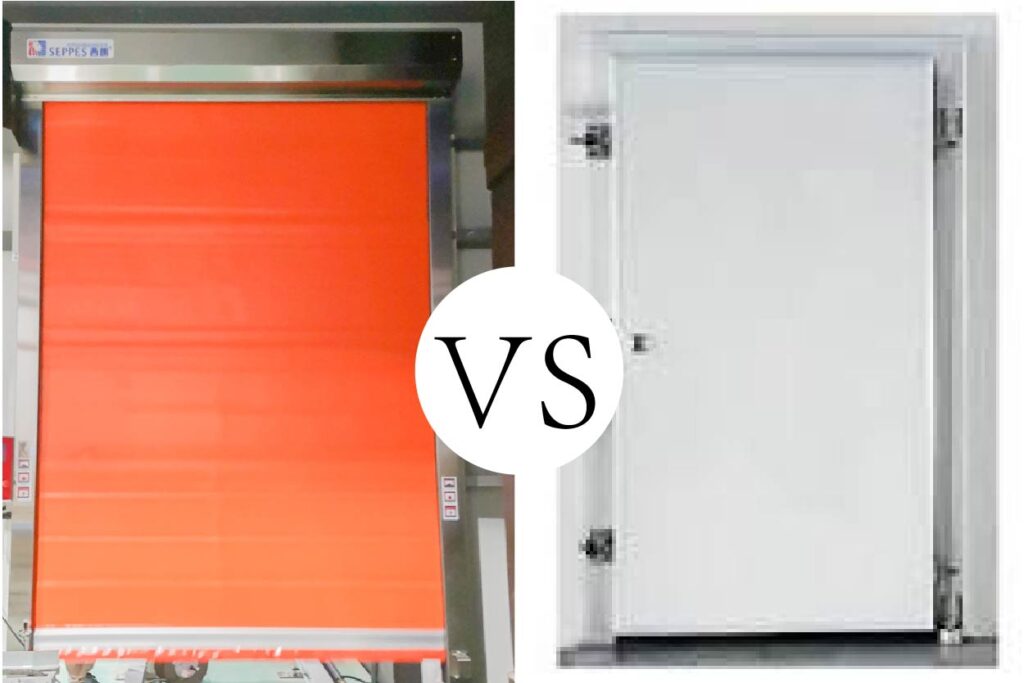
High speed cold storage door
Escenarios aplicables:
High-frequency entrances and exits: for cold storage that requires frequent entrances and exits, fast doors can improve efficiency and reduce waiting time.
Strict temperature control environment: fast door opening and closing speed can effectively reduce the loss of cold air. Help to maintain the stability of the temperature inside the cold storage.
Places that require improved safety and hygiene standards: fast doors can often be equipped with safety sensors to ensure that they do not injure people or damage goods when opening and closing. And can also reduce the entry of dust, bacteria and other substances into the cold storage.
Traditional doors for cold storage
Escenarios aplicables:
Low-frequency entrances and exits: for cold rooms with low frequency of entry and exit, traditional doors may be more suitable. As the effect of opening speed does not need to be considered.
Economic considerations: traditional doors usually have a low cost and are suitable for occasions with a limited budget.
Environments that do not require high opening speeds: If the temperature difference between inside and outside the cold room is not significant. Or if the temperature control requirements are not stringent, a traditional door may be a more affordable option.
Cold storage fast door vs cold storage manual door operation ease of analysis
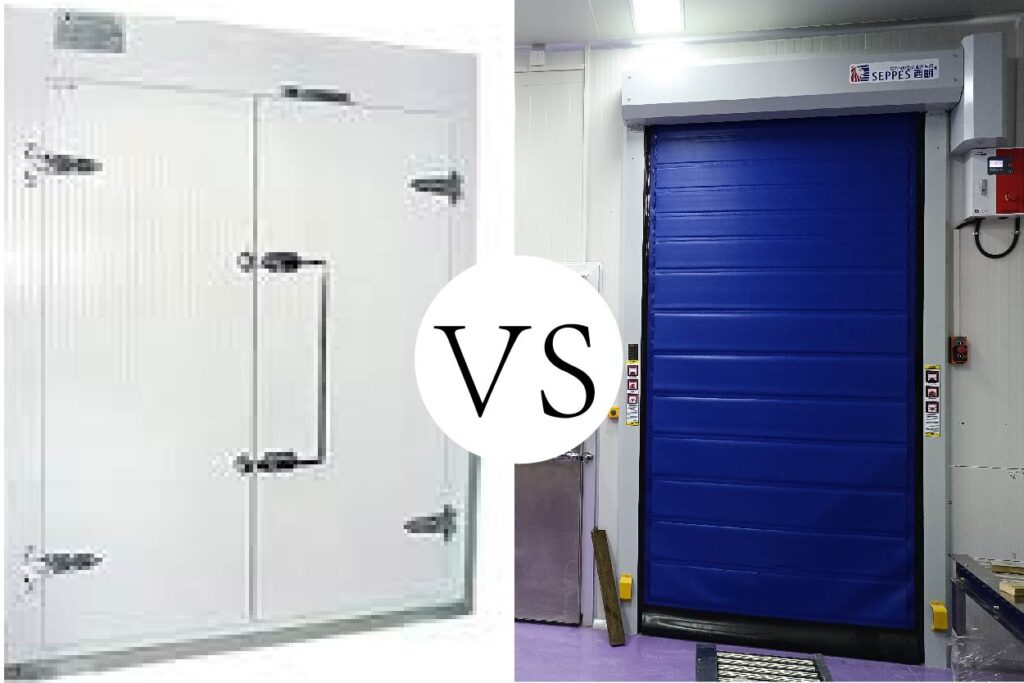
Cold storage fast door
Conveniencia de operación:
Automation: The door can be opened and closed automatically by sensor or remote control, users do not need to operate manually. So the operation is more convenient.
Applicable to the situation of hands inconvenience: for people who carry more items or hands inconvenience. Automatic door can let them easily in and out, without putting down the items in their hands.
Save time: Automatic doors open faster, reducing waiting time and improving access efficiency.
Ease of operation:
Simple operation: manual door operation is simple and direct, just push or pull the door to open or close. There is no complex control system, so the operation is relatively simple.
Lower maintenance costs: Manual doors do not have automated systems, so maintenance costs are usually low and repairs are relatively easy.
Flexibility: Manual doors are not dependent on electricity or automated systems. Making them more flexible and allowing them to be used in the event of power outages or equipment failure.
Key factors in choosing a cold storage door
Importance of insulation performance and testing methods
The insulation performance of a cold storage door is critical to maintaining a stable temperature inside the cold storage. Especially in environments that require tight temperature control. A poorly insulated door may lead to temperature fluctuations inside the cold room. Increasing energy consumption and potentially affecting the quality of stored goods. Therefore, it is vital to test the insulation performance of cold storage doors.
Thermal Transfer Coefficient Test: Thermal transfer coefficient is an important indicator for assessing the heat transfer performance of a material. By measuring the thermal conductivity of a cold storage door material, its insulation performance can be assessed. Commonly used test methods include heat flow meter method and thermal bridge coefficient method.
Thermal resistance test: Thermal resistance is an indicator for assessing the insulation performance of thermal insulation materials. By measuring the thermal resistance of the cold storage door, its insulation performance can be evaluated. Commonly used test methods include temperature difference method and heat flow meter method.
Comprehensive test of insulation performance: In addition to testing the thermal conductivity coefficient and thermal resistance of the material individually. It is also possible to conduct a comprehensive test of the insulation performance of the entire cold storage door. This test method can simulate the heat preservation performance in actual use and evaluate the performance of the cold storage door more comprehensively.
The impact of sealing performance on the operation of cold storage
Energy consumption: The sealing performance of cold storage doors directly affects the energy consumption of cold storage. Poor sealing performance of the door will lead to continuous leakage of cold air. Thus increasing the load of the refrigeration system and energy consumption. On the contrary, good sealing performance of the door can effectively prevent cold air leakage, reducing energy consumption.
Temperature control: cold storage door sealing performance is also a direct impact on the temperature control inside the cold storage. Poor sealing performance of the door will lead to continuous loss of cold air. Making it difficult to stabilize the temperature inside the cold storage, affecting the quality of stored goods. Good sealing performance of the door can effectively maintain a stable temperature inside the cold storage. That is conducive to the storage and preservation of goods.
Humidity control: the sealing performance of the cold storage door will also affect the humidity control inside the cold storage. Good sealing performance of the door can effectively prevent the outside air into the cold storage. Reducing the possibility of humidity changes, is conducive to maintaining the stability of the humidity inside the cold storage.
Reduce condensation: In a high humidity environment. A door with poor sealing performance may lead to condensation inside the cold storage. Thus affecting the quality of goods and the hygiene of the storage environment. A door with good sealing performance can effectively reduce the occurrence of condensation and keep the inside of the cold storage dry and clean.
Durability and Safety Considerations
Durability considerations
Material Quality: The durability of a cold storage door is closely related to the quality of the materials selected. Usually, durable materials with good insulating properties are used, such as stainless steel, aluminum alloy or high-density polyurethane.
Structural design: The structural design of the cold storage door should take into account the stability and durability of long-term use. Doors with reasonable structural design and sufficient strength can resist the pressure and vibration in daily use and improve their service life.
Sealing performance: Sealing performance not only affects the temperature control of the cold storage. But also directly affects the durability of the door. A quality sealing system prevents moisture, dust and other contaminants from entering the door body. Thus extending the life of the door.
Consideraciones de Seguridad
Safety Sensors: Cold storage doors should be equipped with safety sensors that can detect if there are people or obstacles in the doorway to avoid damage to people or goods when the door is closed.
Anti-collision devices: Some doors are designed with anti-collision devices that automatically stop the door when it encounters an obstacle. Reducing the likelihood of accidents.
Safety signs: the use of warning signs marked on the door body, emergency switch location and other information to remind people to pay attention to safety in use. And in case of emergency can quickly find the emergency switch.
The impact of material selection on the performance of cold room door
Metallic Materials vs Polymer Materials
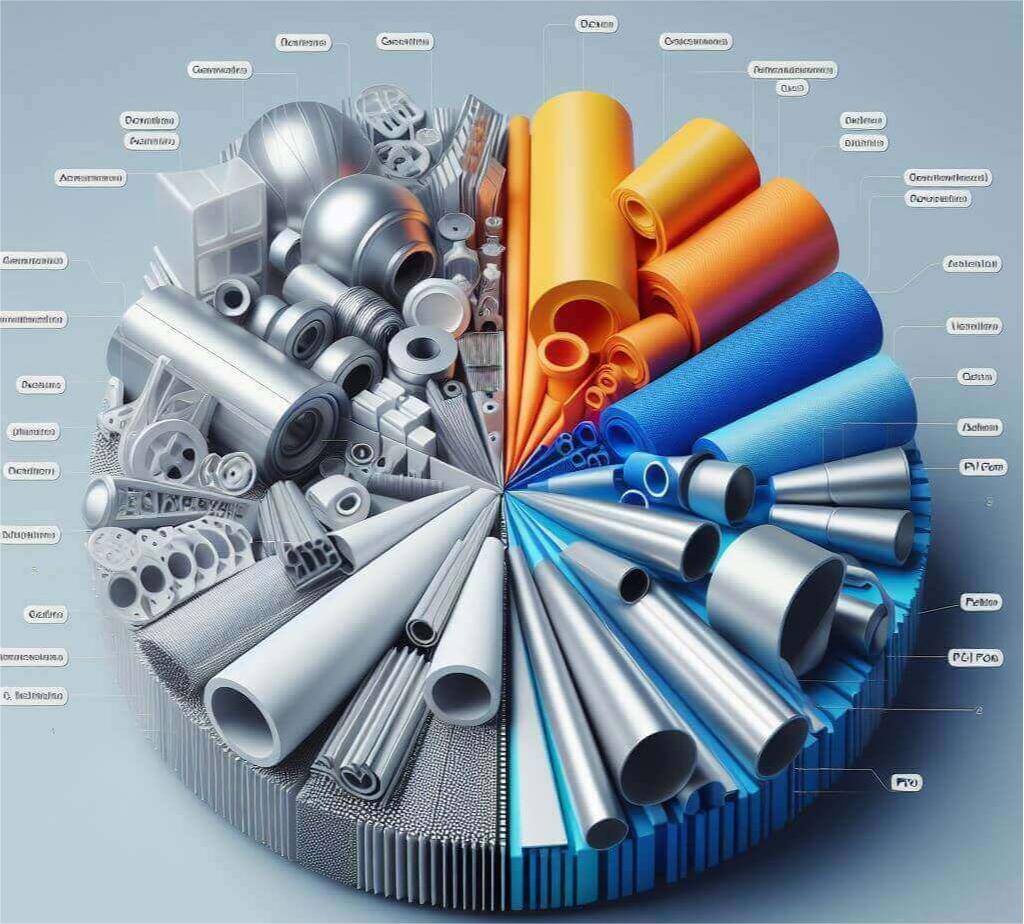
Metal Materials
STRENGTH: Metals are typically stronger than polymers and can provide greater security and durability.
Durability: Metal doors may be more durable and able to stand the test of time and harsh environments.
Fire resistance: some metal materials have higher fire resistance, which may be critical in some applications.
Maintenance: metal doors may require less maintenance, especially when faced with scratches or chemical corrosion.
Polymer materials
Insulation: Polymer materials typically have better insulation properties, which can help maintain the temperature inside the cold room.
Lightweight: Polymer materials are typically lighter than metal and may be easier to install and maintain.
Corrosion resistance: Polymer materials are not susceptible to corrosion, which makes them more suitable for certain environments with high humidity.
Cost: Generally speaking, polymer materials are relatively inexpensive, so they can be an affordable option on a limited budget.
Fiberglass vs Stainless Steel
Fiberglass Material
Insulation: Fiberglass typically has better insulation properties, which can help maintain the temperature inside the cooler.
Lightweight: Fiberglass is typically lighter compared to stainless steel, which makes installation and maintenance easier.
Corrosion Resistant: Fiberglass is not subject to corrosion, so it may last longer in environments with higher humidity.
Maintenance: Fiberglass may require less maintenance compared to stainless steel.
Stainless steel material
STRENGTH: Stainless steel is typically stronger than fiberglass, providing greater safety and durability.
Appearance: Stainless steel has a modern look and shine that can enhance the appearance of a cold room.
Fire resistance: Stainless steel has high fire resistance, which may be important in some applications.
Cost: Typically, stainless steel is a bit more expensive compared to fiberglass.
Cold room door application case study
Cold storage rapid door application case in food industry
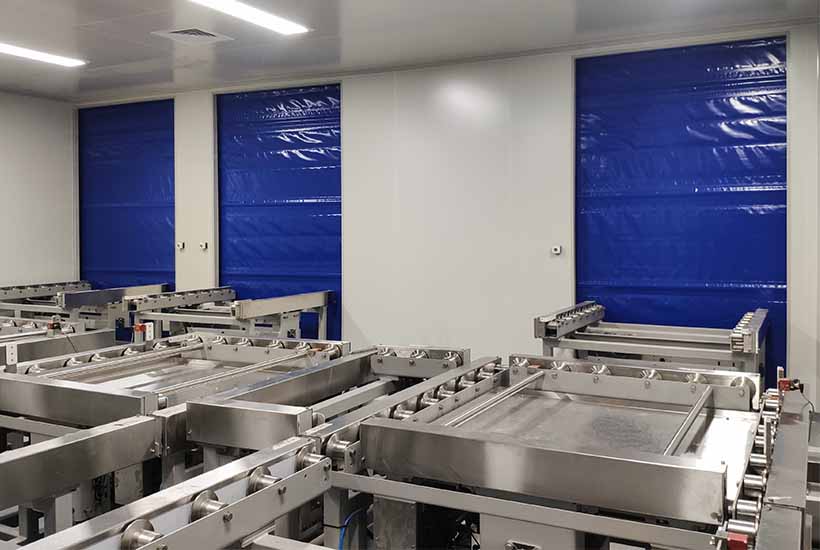
Case description: A supermarket has large frozen food shelves and needs to frequently bring fresh frozen food into the cold storage and take out the sold out food. In order to improve the freshness of the food on the shelves and reduce the temperature fluctuation inside the cold storage. They decided to install a fast door at the entrance of the cold storage.
Results Analysis:
Temperature Stability: The installation of the speed door minimized temperature fluctuations inside the cold room. The ability to open and close the door quickly reduces cold air loss and maintains a stable low-temperature environment inside the cold room, ensuring the freshness and quality of the food.
Energy saving: Due to the high-speed operation characteristics of the fast door, the time and amount of cold air loss at the doorway is reduced. Reducing the energy consumption of the cold storage. This helps to reduce the supermarket’s energy costs and meets the environmental requirements of energy saving and emission reduction.
Improve work efficiency: the rapid opening and closing of the fast door can substantially improve the efficiency of goods in and out. Staff can more quickly send fresh frozen food into the cold storage, as well as the need for food out. Thus shortening the operation time and improving work efficiency.
Hygiene and safety: Fast doors are often easy to clean and meet the hygiene standards of the food industry. Through regular cleaning and sanitizing, it can ensure the cleanliness and hygiene of the door surface. Preventing the growth of bacteria and guaranteeing the hygiene and safety of food.
Cold room door application cases in pharmaceutical industry
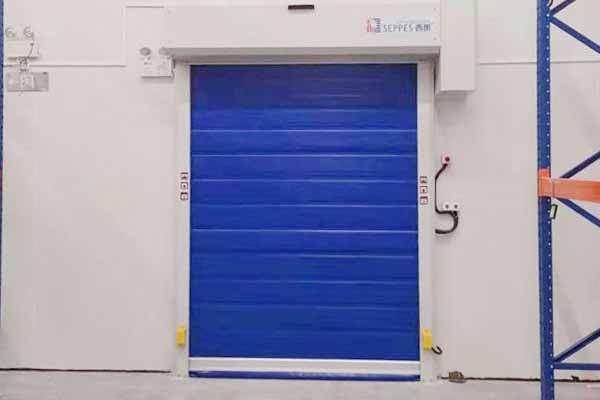
Case Description: A pharmaceutical company has a large cold storage facility for pharmaceutical raw materials. And finished products that need to be kept at low temperatures. As the internal temperature of the cold room needs to be strictly controlled and frequent access is required for drug delivery and pick-up. They decided to install a fast door at the entrance and exit of the cold room.
Results Analysis:
Pharmaceutical Quality Assurance: The rapid opening and closing of the speed door minimizes temperature fluctuations inside the coldroom and maintains a stable low temperature environment. This helps to ensure the quality and stability of pharmaceutical raw materials and finished products stored in the cold storage. Preventing the drugs from being affected by temperature changes and becoming ineffective.
Improve production efficiency: the high-speed operation of the high-speed door makes the entry and exit of drugs more rapid and efficient. The staff can quickly take out the required drugs or put them into the cold storage. That saves the operation time and improves the production efficiency.
Reduce energy consumption: Because the fast door can be closed quickly. Reducing the time and amount of cold air loss at the door, reducing the energy consumption of the cold storage. This helps to reduce the energy costs of enterprises. But also in line with the environmental requirements of energy saving and emission reduction.
Hygiene and safety: Fast doors are usually easy to clean and meet the hygiene standards of the pharmaceutical industry. Through regular cleaning and disinfection, it can ensure the cleanliness and hygiene of the door surface. Prevent bacterial growth, and safeguard the hygiene and safety of medicines.
How to choose the right cold storage door for you
Selección de materiales: las puertas de cámaras frigoríficas suelen fabricarse con acero inoxidable, polímeros, fibra de vidrio y otros materiales. Según sus necesidades y presupuesto, elija materiales duraderos y que cumplan con los estándares de higiene.
Rendimiento de aislamiento: el rendimiento de aislamiento de las puertas de cámaras frigoríficas afecta directamente a la estabilidad de la temperatura interior. Asegúrese de elegir una puerta con buen rendimiento de aislamiento para reducir el consumo energético y mantener estable la temperatura interna.
Estanqueidad: la estanqueidad de la puerta determina el grado de flujo de aire dentro de la cámara frigorífica. Elija una puerta con excelente estanqueidad para evitar la pérdida de aire frío y la entrada de aire exterior, garantizando la estabilidad del ambiente interno.
Velocidad de apertura: según sus necesidades operativas y frecuencia, elija puertas rápidas de apertura veloz o puertas convencionales. Las puertas rápidas son adecuadas para entradas y salidas frecuentes, lo que puede mejorar la eficiencia laboral.
Características de seguridad: considere las características de seguridad de la puerta, como diseño anticolisión, sensores de seguridad, etc., para garantizar la seguridad del personal y los equipos.
Costos de mantenimiento: considere los costos de mantenimiento de la puerta, incluidos los de limpieza, reparación y reemplazo de piezas. Elegir una puerta fácil de limpiar y con bajo mantenimiento reducirá costos a largo plazo.
Cumplimiento de estándares industriales: elija una puerta para cámara frigorífica que cumpla con los requisitos según las normas y regulaciones relevantes de su sector, para asegurar el cumplimiento de exigencias de higiene, seguridad, etc. Debe contar con certificación CE.
The future development trend of cold room door
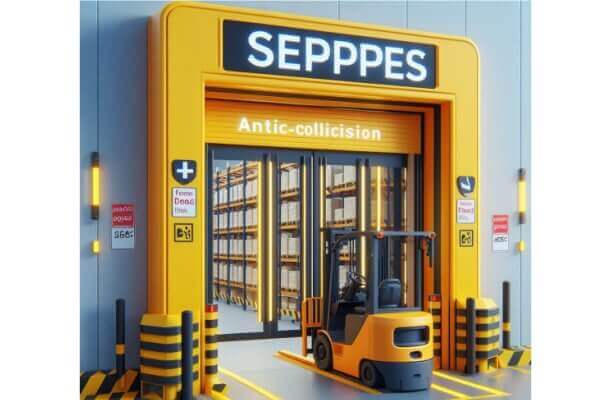
Inteligencia y automatización: las futuras puertas de cámaras frigoríficas serán más inteligentes y automatizadas. Utilizarán sensores, sistemas de control automático y algoritmos inteligentes para lograr la apertura, cierre y ajuste automáticos de la puerta, mejorando la eficiencia operativa y reduciendo la intervención manual.
Innovación en materiales: las futuras puertas de cámaras frigoríficas podrían emplear más tipos de nuevos materiales, como composites, nanomateriales, etc., con mayor resistencia, durabilidad y rendimiento ambiental, adaptándose a diferentes entornos y condiciones climáticas.
Mejora de la seguridad: las futuras puertas de cámaras frigoríficas reforzarán aún más la seguridad mediante sistemas de seguridad inteligentes, diseño anticolisión y monitoreo remoto, entre otros medios técnicos, para garantizar su operación segura y prevenir accidentes.
Servicio personalizado: con la diversificación de la demanda del mercado, las futuras puertas de cámaras frigoríficas podrían ofrecer servicios más personalizados y a medida, adaptando puertas de diferentes tamaños, funciones y apariencias según las necesidades del cliente, para satisfacer requerimientos específicos de diversos usuarios.
En resumen, la tendencia de desarrollo futuro de las puertas de cámaras frigoríficas será hacia una mayor inteligencia, ahorro energético, respeto al medio ambiente, seguridad y fiabilidad, ofreciendo productos más diversificados y servicios personalizados para satisfacer las cambiantes demandas del mercado y requisitos técnicos.
Recommended international brands of cold room door
Hörmann: Hörmann es una reconocida empresa alemana de puertas que ofrece varios tipos de puertas para cámaras frigoríficas, conocidas por su alta calidad y fiabilidad.
Dortek: Dortek es una empresa con sede en Irlanda especializada en puertas de grado higiénico, incluidas puertas para cámaras frigoríficas. Sus productos se utilizan comúnmente en las industrias médica y alimentaria.
Seppes: Seppes es un conocido fabricante chino de puertas industriales, especializado en posicionamiento de gama media y alta. La puerta rápida para cámaras frigoríficas es también uno de sus productos principales; con productos profesionales y reputación de marca, se ha convertido en proveedor colaborador de más de 70 empresas Fortune 500 a nivel mundial, como IKEA, Tyson, Logitech, Thermo Fisher, AkzoNobel, entre otras.