
INTRODUCTION: Why the South African Industrial Door Market is Worth Watching?
With the rapid advancement of South Africa in infrastructure construction, logistics and warehousing, manufacturing and many other areas, the demand for high-performance industrial doors is continuing to grow. Whether in Durban (Durban), Cape Town (Cape Town) and other port cities in the logistics center, or in Johannesburg around the industrial park, companies rely on efficient, safe and intelligent industrial door products is deepening.
The South African industrial door is no longer just a component of the entrance or exit, but an important part of energy-efficient operations, safety management and smart manufacturing.
South Africa Industrial Doors Market Trends to 2025
According to the latest market dynamics, the following points will profoundly impact the procurement demand for industrial doors in South Africa:
National Development Plan (NDP) Continuous promotion of infrastructure upgradation, leading to the expansion of large-scale factories and logistics parks.
E-commerce and warehouse automation Promote the popularity of high-speed doors and intelligent door control systems.
Cold chain logistics and agricultural export growth, the demand for excellent thermal insulation of industrial doors.
Rising energy prices are encouraging companies to choose energy efficient door structures and control systems.
SABS (South African Bureau of Standards) Compliance requirements are getting stricter and stricter, and importers and local engineers need to pay attention to whether door products comply with technical standards for fire prevention, anti-pinch and energy saving.
Mainstream Industrial Door Types and Applicable Scenarios in South Africa Market
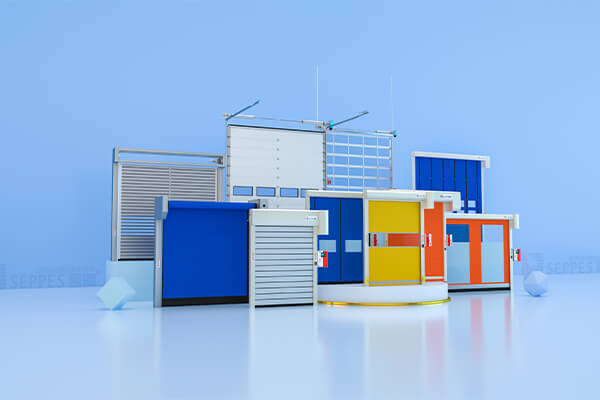
With the continuous growth of South Africa’s manufacturing industry, port logistics, cold chain transportation, mineral resources extraction and other industries, different industries have put forward differentiated functional requirements for industrial doors. In the South African market, the following types of industrial doors are widely used in various industrial projects due to their excellent performance:
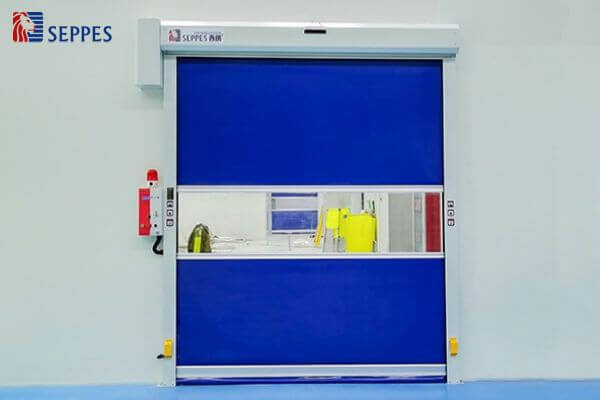
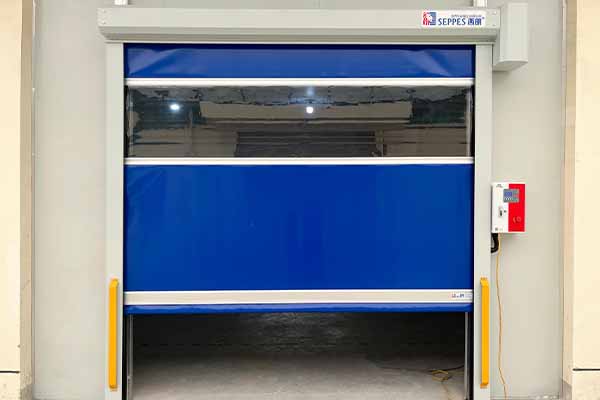
Porte Rapide Enroulable
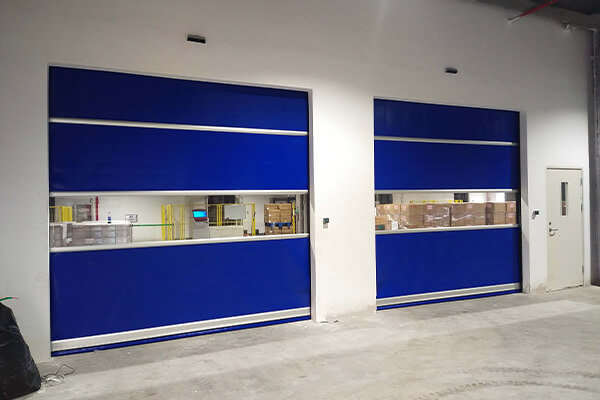
High Speed Roll Up Door is widely used in warehousing and logistics centers, food processing workshops and internal area divisions for its fast opening and closing, energy saving and consumption reduction, and dust and insect prevention characteristics. The door body adopts flexible PVC door curtain, with frequency conversion motor control system, it can realize frequent opening and closing, and guarantee the operation efficiency of high flow volume operation area.
Porte sectionnelle isolée
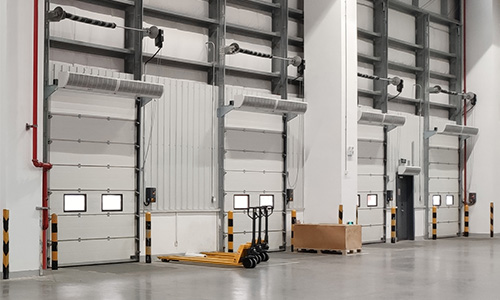
This type of door uses high density polyurethane filled structural panels with excellent thermal insulation properties and good resistance to wind and pressure. They are suitable for cold chain warehouses, food factories and energy facilities in South Africa, which require strict temperature control. The door body supports manual or electric opening, and the sealing strip is fully set to ensure energy-saving effect.
Aluminum alloy rolling door
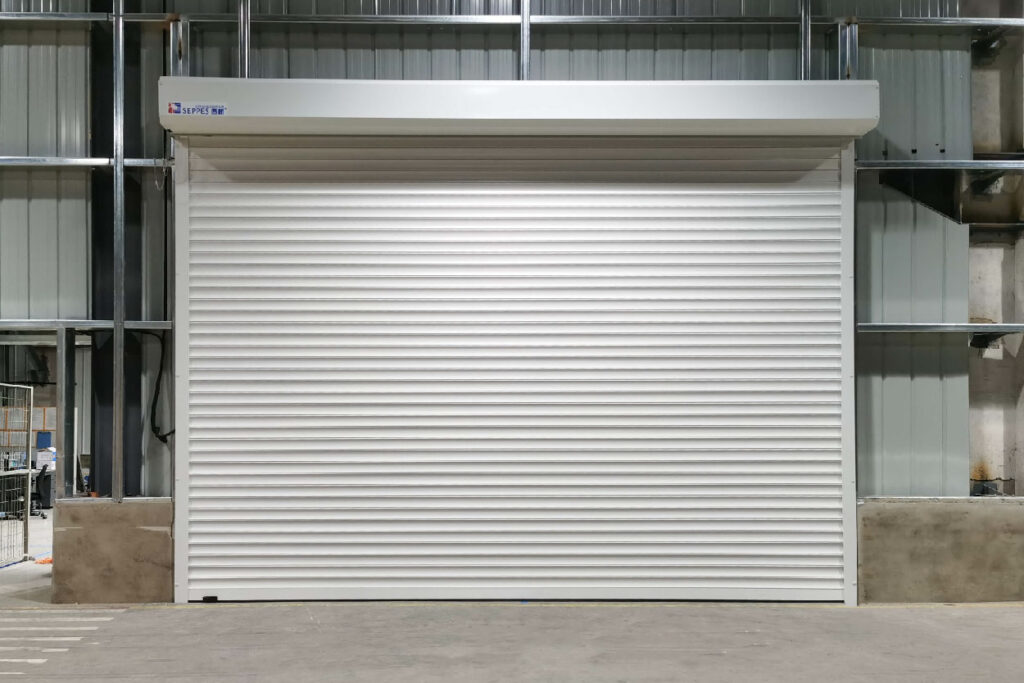
Aluminum Roller Shutter is popular for its strong structure, light weight and corrosion resistance, especially for coastal cities such as Durban, Cape Town and other high salt spray environments. It is used in commercial loading docks, garages, car 4S stores and small factories. This door type is low maintenance and suitable for places with high demands on appearance and practicality.
Porte Haute Vitesse Spirale
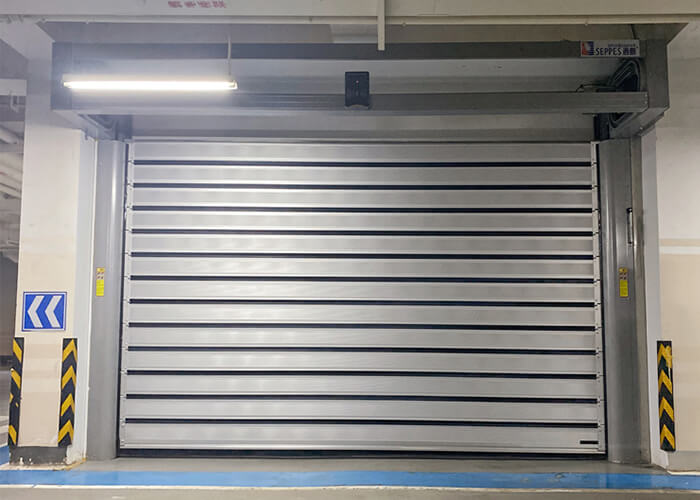
This is a kind of industrial door with both high-speed opening and rigid protection functions. The door plate is made of aluminum alloy composite material, with modern appearance, stable structure and low running noise. It is suitable for the entrance of intelligent manufacturing workshop, high-end automobile manufacturing, electronic plant and enterprises with high requirements on image.
Machine Protection Door

The high-security isolation door is specially designed for automation equipment, robot systems, and high-frequency working areas. In addition, it is equipped with photoelectric sensing, emergency brake, safety interlock, and other functions. As a result, it is widely used in CNC machining areas, robot working islands, stamping lines, and other high-risk zones to effectively protect both the personal safety of operators and the continuity of production.
Below is a comparison table of the above industrial door types and their typical application scenarios for quick comparison:
| Types de portes industrielles | Core Features | Typical application scenarios |
| Porte Rapide Enroulable | Fast opening and closing, dustproof and energy-saving, automatic repair options | Warehousing and logistics, food processing areas, internal transition doors |
| Porte sectionnelle isolée | Thermal insulation, wind pressure resistance, custom color door panels | Cold chain warehouses, food factories, pharmaceutical plants |
| Store métallique en aluminium | Lightweight, corrosion-resistant, modern appearance, low maintenance | Commercial stores, harbor loading and unloading, garage entrances |
| Porte Haute Vitesse Spirale | Rigid panels, modern appearance, quiet operation | High-end manufacturing, clean area, showroom door |
| Machine Protection Door | High-frequency opening and closing, safety interlocks, compact structure | Automated production lines, CNC workshops, robot fenced areas |
How to choose the right industrial doors for the South African market?
When choosing industrial door products, South African customers should consider the following factors:
Climatic conditions: high temperature or sandy environment requires the use of more weather-resistant door body and motor system;
Switching frequency: high-speed doors are suitable for frequent opening and closing areas, while lifting doors are more suitable for maximizing space utilization;
Industry needs: cold chain industry focuses on thermal insulation; manufacturing workshops are more concerned about safety and efficiency;
Compliance and certification: whether it meets SABS standards, fire rating, corrosion resistance test, etc.;
Maintenance cost: focusing on the life of the door body’s fragile parts, the degree of easy maintenance and after-sales service response.
Compliance Certification and Import Requirements
The South African market is placing increasing emphasis on product safety and compliance when sourcing industrial doors:
SABS certification: ensures that doors comply with local South African structural safety and electrical codes.
ISO standards: International certification enhances importer trust.
Fire rating testing: certain industrial areas need to pass local fire protection requirements.
Import tariffs: understand South African tariff classifications and rationalize cost structure;
Docking with local registered engineers: we can assist our customers to quickly achieve installation acceptance and technical filing.
Price Composition and Supplier Selection Recommendations
Key factors affecting the price of industrial doors include
Door material (PVC, steel, stainless steel)
Motor brand (e.g. German Firip, Italian SE, etc.)
Control system (manual / remote control / PLC linkage)
Installation size and track design complexity
Local vs Import Comparison
| Dimension | Local Suppliers | Import Suppliers |
| Delivery Time | Plus courte | Longer (transportation time + customs clearance) |
| Le service après-vente | Fast response | Need to plan spare parts in advance |
| Stabilité des prix | Plus élevé (moins affecté par les taux de change) | Fluctuations plus importantes des taux de change |
| Flexibilité de personnalisation | Personnalisable avec des mesures sur site | Communication détaillée requise à l'avance |
Il est recommandé de choisir un fournisseur disposant d'un support d'agent local et d'une capacité d'ingénierie de mise en œuvre pour réduire les risques.
Maintenance advice: how to extend the life of industrial doors
La maintenance est essentielle pour prolonger la durée de vie des portes industrielles et les recommandations incluent :
Vérifications trimestrielles du fonctionnement et de la lubrification du moteur ;
Nettoyage régulier des rails, des capteurs et des joints d'étanchéité ;
Vérification de l'usure des ressorts de bouton, des câbles en acier et des dispositifs anti-chute ;
Installation de coussins gonflables et de protections infrarouges photodélectriques pour les zones à utilisation fréquente ;
Établissement d'un programme de maintenance annuel et constitution d'un stock de pièces de rechange.
Conclusion: Investing in the right South African industrial doors promotes sound business development
Les installations industrielles en Afrique du Sud sont constamment modernisées, et l'intelligence, l'efficacité énergétique et la sécurité des portes industrielles sont devenues des critères clés. Choisir le bon type de porte améliore non seulement l'image de votre entreprise, mais réduit également la consommation d'énergie et améliore les niveaux d'efficacité et de sécurité.
Si vous recherchez une solution professionnelle de portes industrielles pour l'Afrique du Sud, veuillez nous contacter pour un devis personnalisé et une brochure produit.
Questions fréquemment posées (FAQ)
1. Quels types de portes industrielles sont les plus courants en Afrique du Sud ?
Les principaux types incluent les portes rapides à enroulement, les portes sectionnelles isolantes, les portes spirales et les portes à enroulement en alliage d'aluminium. Ces portes sont donc largement adaptées aux applications industrielles telles que l'entreposage, la fabrication, la chaîne du froid, etc.
2. Comment choisir la porte industrielle adaptée ?
Selon la fréquence d'utilisation, les exigences d'isolation thermique et de protection incendie, la structure de l'espace et le budget, une évaluation globale est recommandée, de préférence par un fournisseur professionnel pour une personnalisation.
3. Les portes industrielles sont-elles conformes aux normes sud-africaines ?
Les produits de qualité répondent généralement aux normes ISO, CE, SABS, etc. Les projets de construction doivent également respecter les réglementations locales telles que le NHBRC.
4. À quelle fréquence les portes industrielles doivent-elles être entretenues ?
Il est recommandé d'inspecter le moteur, les rails et le système d'étanchéité tous les 6 à 12 mois, avec des intervalles plus courts pour les environnements spéciaux.
5. Puis-je obtenir des instructions d'installation à distance ?
Oui, de nombreuses marques fournissent des instructions d'installation par vidéo à distance, des manuels et les services d'assistance technique nécessaires.
N'hésitez pas à nous contacter pour un catalogue ou une proposition de devis. Dois-je générer une autre version anglaise ?