
As the New Zealand industry continues to grow, the need for efficient and safe loading and unloading of goods is increasing. The Loading Dock Leveler has become an indispensable piece of equipment in the logistics, manufacturing and warehousing sectors. In this article, we will introduce the difference between Hydraulic Dock Leveler and Mechanical Dock Leveler, analyze their specific application scenarios in the New Zealand industry, as well as their relationship with Dock Shelter and Sectional Door . and how they work together with Dock Shelters and Sectional Doors to improve loading and unloading efficiency.
What is a Loading Dock Leveler?
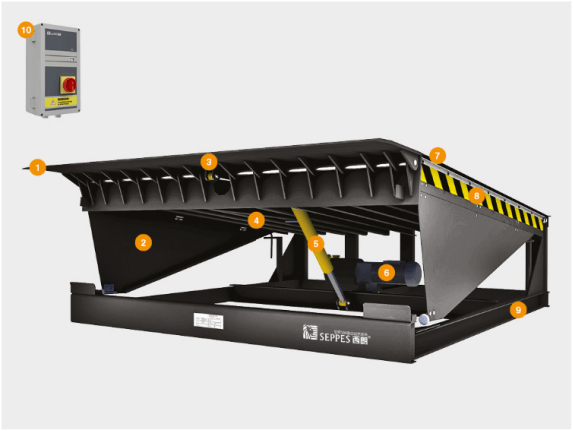
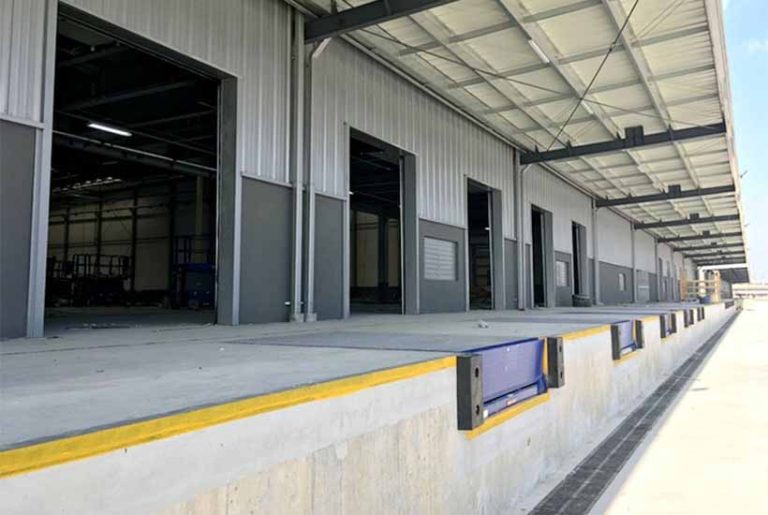
A Niveleur de Quai de Chargement is a device used to connect the difference in height between a truck and a warehouse to ensure a smooth transition during loading and unloading. Its purpose is to reduce the waste of labor, time and energy, and to improve the safety of loading and unloading operations. There are many types of loading and unloading platforms, of which hydraulic loading and unloading platforms and mechanical loading and unloading platforms are the two most common.
Hydraulic Dock Leveler
Hydraulic Dock Levelers operate using a hydraulic system, allowing them to automatically lift and lower to adjust the height difference between trucks and loading/unloading ports, ensuring a smooth transfer of goods. Its main technical parameters include:
Carrying capacity: common models can carry 6-15 tons of goods.
Size: standard width is 2000mm, length is 2500mm, can be customized according to the site requirements.
Control system: Equipped with electro-hydraulic control device, easy to operate, one-button start.
Safety: Equipped with anti-slip surface and safety locking device to prevent accidental slipping.
Mechanical Dock Leveler
Different from hydraulic dock leveler, mechanical dock leveler mainly relies on spring and mechanical manual operation system to adjust the height. With its simple structure and low maintenance cost, it is suitable for small and medium-sized enterprises and scenes with low loading and unloading frequency. Its technical parameters are as follows:
Carrying capacity: usually can carry about 6 tons.
Operation mode: it relies on mechanical spring system to adjust and requires manual operation.
Maintenance cost: relatively simple structure, low maintenance and repair cost.
The difference between hydraulic and mechanical loading Niveleur de Quai
Convenience of operation: Hydraulic platforms have a high degree of automation and are suitable for frequent operations; mechanical platforms need to be operated manually.
Maintenance requirements: Hydraulic system requires regular maintenance, while mechanical platforms have simple maintenance and lower cost.
Application scenarios: hydraulic platforms are suitable for high-frequency loading and unloading scenarios, such as large logistics centers; mechanical platforms are suitable for small and medium-sized enterprises with less loading and unloading needs.
Synergies between loading dock leveler and other pour le stockage logistique et le chargement/déchargement.
In the New Zealand industry, loading docks are often used in conjunction with offrent un accès sécurisé et conviennent aux accès fréquents. Elles possèdent généralement une bonne étanchéité et isolation thermique, peuvent bloquer efficacement l'influence de l'environnement extérieur et maintenir une température constante à l'intérieur de l'entrepôt. Le choix du matériau de la porte, comme l'acier ou l'aluminium, affecte également sa durabilité et sa sécurité. et Portes sectionnelles to form a complete loading and unloading system. The synergy of these devices not only improves the efficiency of loading and unloading, but also enhances the safety and environmental protection of the entire warehousing and logistics system.
1. Dock Shelter
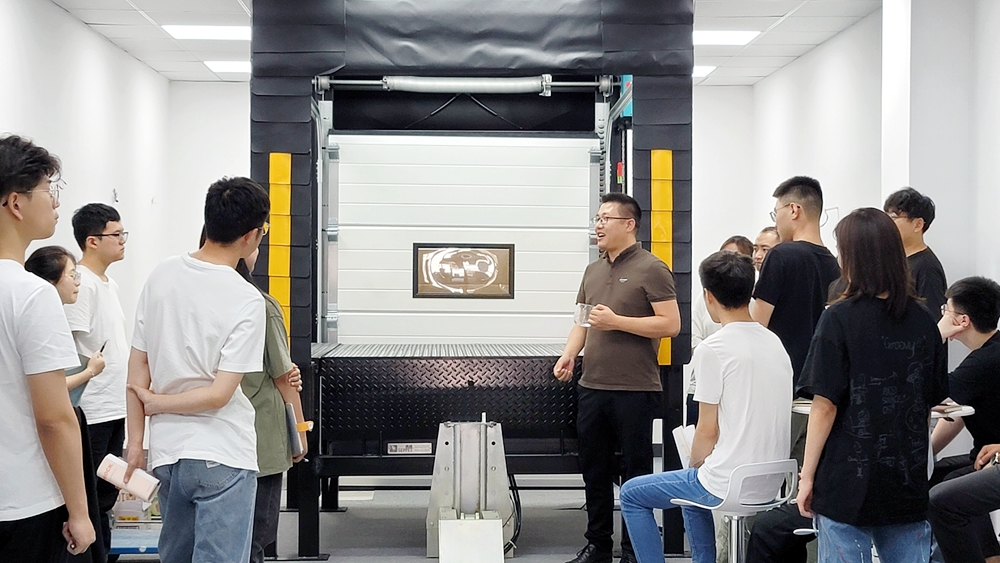
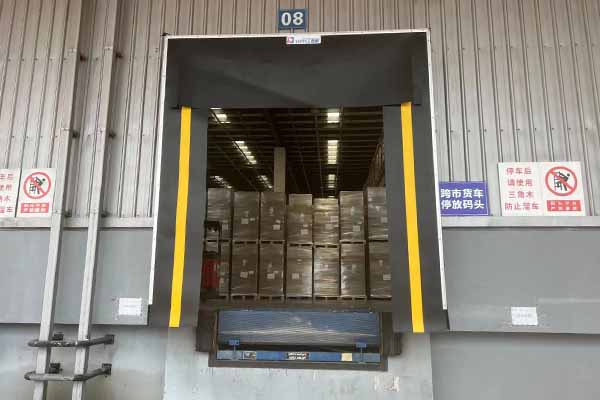
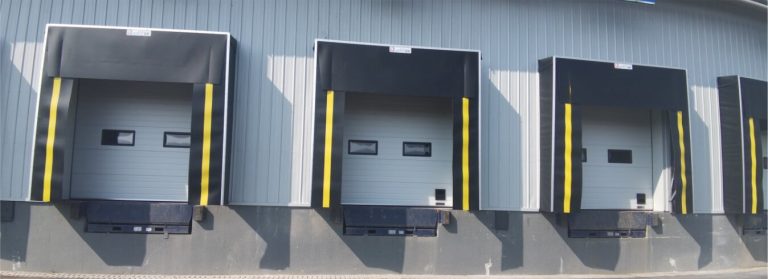
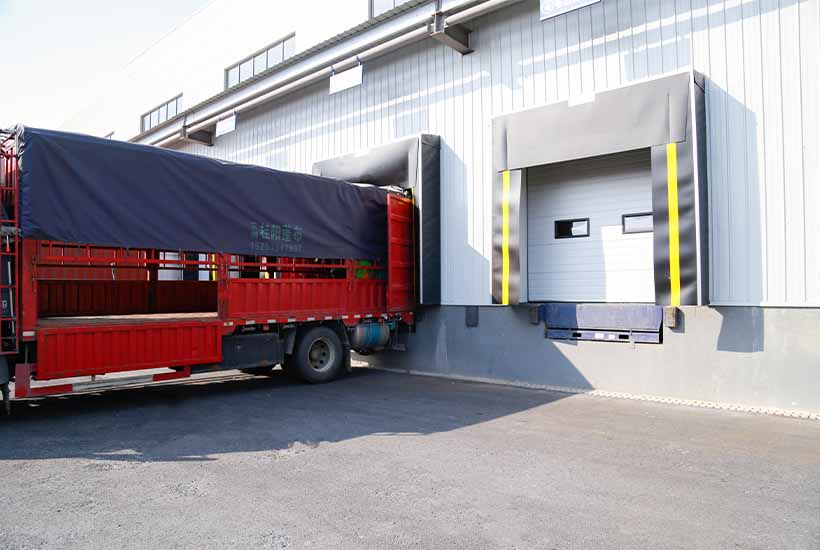
Door Shelter is a sealing system, usually used in loading and unloading of goods to close the gap between the truck and the warehouse, to prevent the outside world of wind and rain, dust into the warehouse. Its technical advantages include:
Effective sealing ensures that external environmental factors do not affect the loading and unloading process, making it especially suitable for New Zealand’s changeable climate.
Protecting goods: effectively preventing the impact of wind, sand, rain and temperature changes on goods.
2. Industrielle Porte Sectionnelle
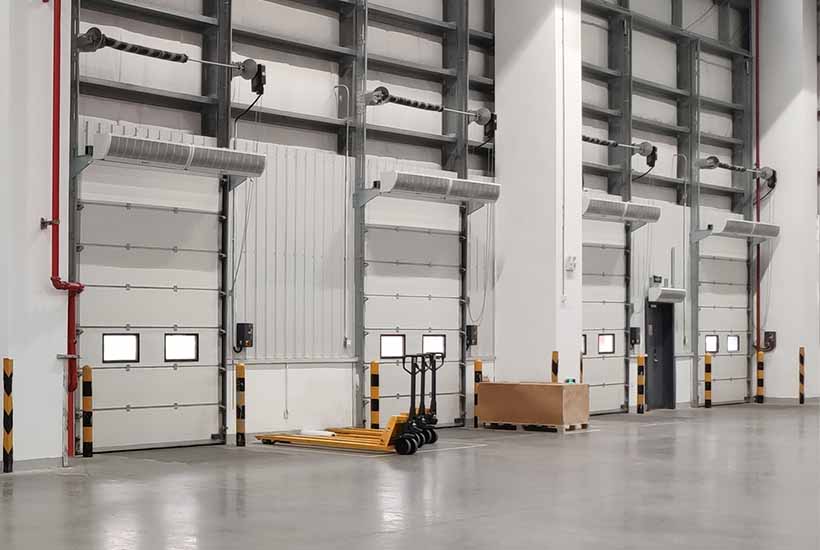
Porte Sectionnelle is used to close the warehouse and loading/unloading area, with excellent heat preservation, windproof and soundproof effect. The technical characteristics are as follows:
Matériau : High-strength polyurethane filled door panels with good heat insulation.
Opening and closing speed: The door body opens and closes quickly, suitable for high-frequency logistics operations.
Durability: Adapt to New Zealand’s bad weather, the door body has strong wind resistance.
Why are they chosen for New Zealand industrial sites?
Improved logistics efficiency: Hydraulic loading platforms can significantly reduce loading and unloading times and improve overall operational efficiency.
Meeting climate challenges: Dock shelters and industrial sectional doors ensure that loading and unloading areas are protected from the elements, safeguarding the quality of goods.
Enhanced corporate image: Efficient, modern equipment enhances the image of the operation and strengthens customer trust.
How to choose the right loading platform equipment for New Zealand?
1. Choose according to the frequency of use
For high-frequency loading and unloading scenarios, such as large logistics centers or manufacturing enterprises. It is recommended to choose hydraulic dock levelers that are easier to operate and more efficient. For small and medium-sized enterprises, mechanical dock levelers may be a more cost-effective choice.
2. Prendre en compte le climat
Les passerelles de quai de chargement sont devenues indispensables aux secteurs de la logistique, de la fabrication et de l'entreposage en Nouvelle-Zélande.
3. Garantir la sécurité et la conformité
Lors du choix d'équipements de quai de chargement, il est important de s'assurer qu'ils sont conformes aux normes internationales de sécurité, qu'ils disposent de surfaces antidérapantes et de mécanismes de verrouillage de sécurité afin de minimiser les risques.
Specific application examples in industrial sites in New Zealand
Les passerelles de quai de chargement sont largement utilisées dans les centres logistiques, les usines de transformation alimentaire et les installations de stockage en Nouvelle-Zélande. Par exemple, l'installation d'une passerelle de quai hydraulique dans une grande usine de transformation alimentaire améliore l'efficacité du chargement et du déchargement des marchandises et garantit la manutention rapide des denrées périssables. De plus, dans le centre logistique d'Auckland, cet équipement a permis à l'entreprise d'automatiser la gestion des marchandises à grande échelle.
Chargement Niveleur de Quai améliorer l'efficacité opérationnelle sur les sites industriels en Nouvelle-Zélande
L'utilisation généralisée des plates-formes de chargement et déchargement sur les sites industriels néo-zélandais améliore non seulement l'efficacité logistique, mais joue également un rôle important pour relever les défis climatiques, sécuriser les marchandises et réduire les coûts d'exploitation. Les passerelles de quai hydrauliques et mécaniques offrent chacune la meilleure solution pour chaque application. Utilisées conjointement avec des abris de quai et des portes sectionnelles industrielles, elles créent même un système de quai de chargement efficace et sûr pour les entreprises néo-zélandaises. En choisissant les équipements de chargement et déchargement appropriés, les entreprises peuvent considérablement améliorer leur efficacité opérationnelle et acquérir un avantage sur leurs concurrents sur le marché mondial.
Recommended Related Brands
SEPPES: Réputée pour ses plates-formes de chargement hydrauliques et mécaniques de haute qualité, particulièrement adaptées aux secteurs de la logistique et de la fabrication en Nouvelle-Zélande.
Hormann: Son équipement de porte sectionnelle industrielle et de plate-forme de chargement est bien considéré, en particulier sur le marché européen.
Rite-Hite: Spécialisée dans la conception sécuritaire et écoénergétique, Rite-Hite propose des plates-formes de chargement hydrauliques pour les opérations de chargement et déchargement à haute fréquence.
FAQ
Quelles sont les principales différences entre les plates-formes de chargement hydrauliques et mécaniques ?
Les passerelles hydrauliques sont hautement automatisées et adaptées aux opérations à haute fréquence ; les passerelles de quai mécaniques conviennent mieux pour des budgets plus limités.
Quels secteurs conviennent aux plates-formes de chargement et déchargement ?
Les secteurs de la logistique, de l'entreposage, de la fabrication et de la transformation alimentaire.
Quel rôle jouent , les abris de quai et les portes portes sectionnelles dans le climat néo-zélandais ?
Elles protègent les marchandises en empêchant le vent, la pluie, le sable et la poussière extérieurs de pénétrer dans l'entrepôt.