

With the rapid development of the global electronics industry, the electronics manufacturing industry has become increasingly stringent requirements for the production environment. Especially in the field of semiconductor, electronic components and precision equipment manufacturing, cleanliness control, electrostatic protection, temperature and humidity management and other factors directly affect product quality. Efficient industrial doors can not only separate production areas, but also enhance production efficiency and ensure environmental stability, so they play a vital role in the electronics industry project.
This article will combine the types of industrial doors and technical advantages, a detailed introduction to its application in the electronics industry project and purchase guide, to help the project to choose the right industrial door products to improve the overall operational efficiency.
The special needs of electronic industry projects
The environmental requirements of electronic industry projects are more stringent than those of other industries, which are mainly reflected in the following aspects:
Cleanliness control: the manufacturing process of electronic components is extremely sensitive to fine dust and particulate matter in the air, and the sealing and air flow control of the clean room is crucial.
Static electricity protection: static electricity will affect the performance of electronic products, and even lead to product damage, so electronic factories need to pay special attention to static electricity protection.
Temperature and humidity management: electronic components on the environment temperature and humidity have strict control requirements, especially in semiconductor manufacturing, temperature changes may affect product quality.
Efficient logistics needs: due to the fast pace of production in the electronics industry, the logistics efficiency requirements are extremely high, in and out of the channel frequently used, the need for efficient industrial doors to ensure smooth logistics.
Types of industrial doors and their application in electronic industrial projects
According to the specific needs of electronic industrial projects, different types of industrial doors play their respective roles in different scenarios.
1. High Speed Door
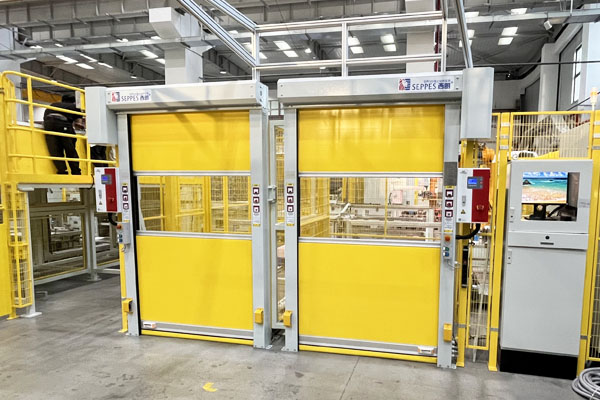
Scénario d'application : Used in the logistics channel of electronic factories, entrance and exit areas.
Caractéristiques : High speed door with its fast opening and closing function, suitable for frequent goods in and out of the place. Its efficient sealing performance can effectively reduce the interaction between outside air and clean room air to ensure cleanliness.
Paramètres techniques :
Vitesse d'ouverture/fermeture : 1.0 to 1.5 meters/second.
Performance d'étanchéité : Adopting multi-layer sealing strip design to reduce air exchange and maintain a clean environment.
Niveau de résistance au vent : suitable for frequent use in internal and external areas, wind pressure resistance reaches more than 600Pa.
2. High Speed Zipper Door
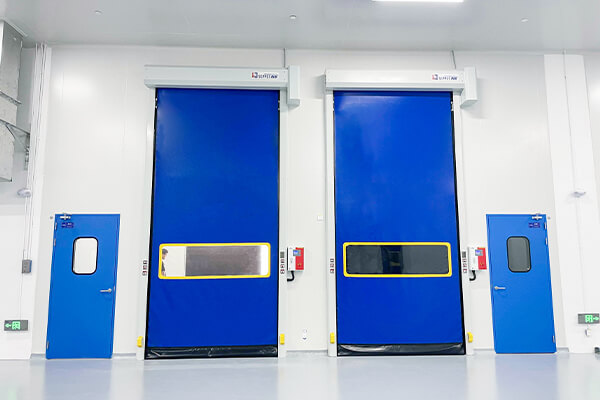
Scénario d'application : High cleanliness area in electronic component manufacturing.
Caractéristiques : Porte rapide à fermeture éclair with self-repair function, it can automatically reset when the door curtain is damaged to avoid affecting the normal operation of the production line. The door body is especially suitable for the inside of the clean room, areas with high cleanliness requirements.
Paramètres techniques :
Vitesse d'ouverture/fermeture : 1.5 to 2.5 meters/second, suitable for high-frequency entry and exit places.
Self-repairing function: reduce maintenance time and cost, ensure continuous production.
Matériau : Anti-bacterial PVC material, in line with the requirements of clean room environment.
3. Insulated High Speed Door
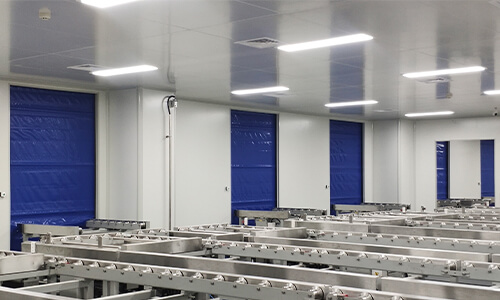
Scénario d'application : Areas with strict control of temperature and humidity, such as storage areas and constant temperature production workshops in electronic manufacturing plants.
Caractéristiques : Porte rapide isolée effectively prevents the exchange of hot and cold air by filling with heat-insulating materials to keep the temperature and humidity of the production environment stable. It is suitable for areas with high temperature control demand.
Paramètres techniques :
U-value: less than 1.0 W/m²K, with excellent thermal insulation effect.
Niveau de résistance au vent : wind pressure level up to 700Pa, suitable for areas with large external temperature difference.
4. Electrostatic protection door
Scénario d'application : Electronic manufacturing areas that require electrostatic protection, such as semiconductor manufacturing workshops and electronic component assembly lines.
Caractéristiques : The door body is made of electrostatic protection material, which effectively prevents static electricity from accumulating and provides additional protection for electrostatic sensitive electronic products.
Paramètres techniques :
Antistatic performance: surface resistance is less than 10^6Ω, ensuring smooth electrostatic discharge.
Vitesse d'ouverture/fermeture : 1.2 to 2.0 meters/second, ensuring fast opening and static control.
Why do electronics industry projects need efficient industrial doors?
Industrial doors are used in the electronics industry for much more than their traditional function of area separation. Their efficiency, security, and intelligence make them an integral part of the electronics manufacturing industry. Here are the top three reasons why electronics projects choose efficient industrial doors:
1. Enhance production efficiency
Electronic industry logistics is frequent and time-sensitive, efficient industrial doors through rapid opening and closing to shorten the waiting time for production and transportation, especially in the logistics channel, storage areas and other high-frequency access to the place, can effectively improve the production line operating efficiency.
2. Ensure cleanliness and static electricity protection
High-speed roller shutter door and static protection door can maintain the air quality in the clean room through good sealing and protection function, reduce the impact of static electricity on electronic components, so as to improve product quality.
3. Reduce energy consumption and operating costs
Insulated doors can effectively reduce the temperature loss in the constant temperature production workshop or storage area, ensure the stability of the temperature and humidity of the environment, and at the same time, save energy consumption and reduce the operating costs of enterprises.
How to choose the right industrial door for the electronics industry?
1. Choose the right door body according to the production demand
Different production links have different needs for industrial doors. Production lines with high cleanliness requirements need high-speed zipper doors, while areas with frequent logistics access need high-speed rolling doors. If it involves constant temperature or electrostatic protection, heat preservation door and electrostatic protection door are the best choice.
2. Concerned about maintenance and cost
Electronic factories usually run frequently, the durability and self-repair ability of the door body is key. Doors with self-repairing features can reduce downtime and maintenance costs, ensuring continuous production.
3. Choose a reliable brand and after-sales service
Electronic industry projects are usually high investment projects. It is especially important to choose a brand with good after-sales service and long-term stability. Global brands such as SEPPES, Hörmann, ASSA ABLOY, etc. provide high quality products and after-sales support to ensure the smooth running of the project.
Practical example: Successful application of industrial doors in an electronics industry project
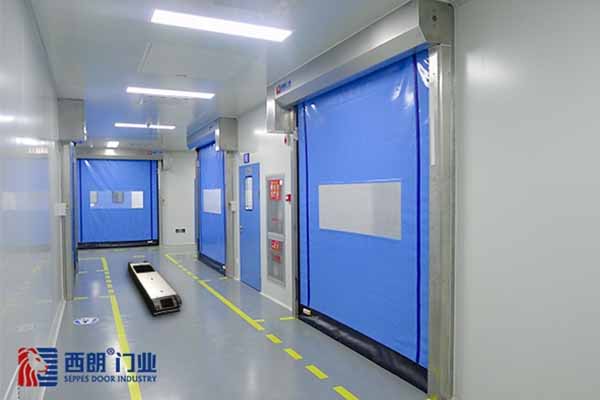
In a recent electronics manufacturing project we were involved in for export to the Asian market, the customer installed high-speed roller shutter doors and ESD doors in the production halls for the isolation of cleanrooms and sensitive electronic component production lines. These industrial doors not only significantly improved production efficiency. But also effectively maintained the cleanliness and ESD protection of the workshop. Feedback from the customer is that the doors’ efficient sealing and fast opening and closing functions have helped them to optimize their production processes.
Future outlook and brand recommendation
Avec le développement continu de l'industrie électronique, la demande pour des portes industrielles intelligentes continuera de croître à l'avenir. Les produits de portes industrielles intégrant la technologie de l'Internet des objets deviendront plus populaires, permettant aux entreprises de réaliser une surveillance à distance, une collecte de données et un contrôle intelligent. Parallèlement, les portes dotées de caractéristiques d'économie d'énergie et de respect de l'environnement deviendront le choix dominant, aidant les entreprises à optimiser leur production tout en réduisant la consommation d'énergie.
Recommandation de marques :
SEPPES: Un leader dans le domaine des portes industrielles, proposant une variété de portes hautes performances adaptées à l'industrie électronique, avec un excellent service après-vente.
Hörmann : Marque allemande de portes industrielles, réputée pour sa haute qualité et sa fiabilité, particulièrement adaptée à une utilisation intensive.
ASSA ABLOY : Un fournisseur mondial de premier plan de solutions de contrôle d'accès, offrant des technologies de portes industrielles avancées, notamment des performances exceptionnelles en matière de contrôle intelligent.
FAQ
1. Quelles sont les portes industrielles les plus couramment utilisées dans l'industrie électronique ?
Les plus couramment utilisées sont les portes rapides à enroulement et les portes rapides à fermeture éclair. Elles offrent une efficacité d'ouverture et de fermeture élevée ainsi qu'une excellente étanchéité, et sont adaptées aux salles blanches et aux canaux logistiques dans la fabrication électronique.
2. Comment est l'effet de protection statique des portes anti-statiques ?
Les portes anti-statiques peuvent efficacement prévenir l'accumulation d'électricité statique grâce à des matériaux anti-statiques spéciaux, et sont particulièrement adaptées aux lignes de production sensibles à l'électricité statique, comme la fabrication de semi-conducteurs.
3. Comment choisir des portes industrielles adaptées à différents environnements de température ?
Les lieux ayant des exigences strictes de contrôle de température devraient opter pour des portes rapides isolées, qui peuvent efficacement isoler l'air chaud et froid et maintenir un environnement à température constante.