📞WhatsApp 86-18068436613

Высокоскоростные моечные ворота: устранение неисправностей после очистки

When a washdown high speed door starts reversing, stays open, or displays a fault immediately after cleaning, the timing is a useful clue. Begin with the cleaning sequence, the visible condition of the doorway, and the controller message. Together, these observations can help a technician decide whether to investigate an obstructed detection path, a disturbed component, material damage, or possible moisture ingress.
Imagine a transfer opening beside a food production wash area. The door worked normally during the shift, but closing becomes unreliable after sanitation. The useful question is what changed between the last successful cycle and the first fault.
In this guide: cleaning history, symptom comparison, material and component limits, configuration choices, and service records.
Содержание
ПереключательWhat Changed During the Last Cleaning Cycle?
Start with a short account of the cleaning event. Record the cleaning product, dilution, water temperature, application method, contact time, and rinse procedure. Note whether staff cleaned the door itself or whether spray reached it from nearby equipment.
Ask what differed from the normal routine. A replacement nozzle, a new chemical, or a hose used from a different direction can change the exposure of sensors, cable entries, and seals. These are investigation leads, not proof that cleaning caused the fault.
Observe from outside the movement area. Secure the doorway according to the site’s procedure if movement is unpredictable or electrical moisture ingress is suspected. Electrical inspection and repairs belong with qualified personnel following the equipment’s isolation procedure. Keep safety devices active and never bypass them to resume production.
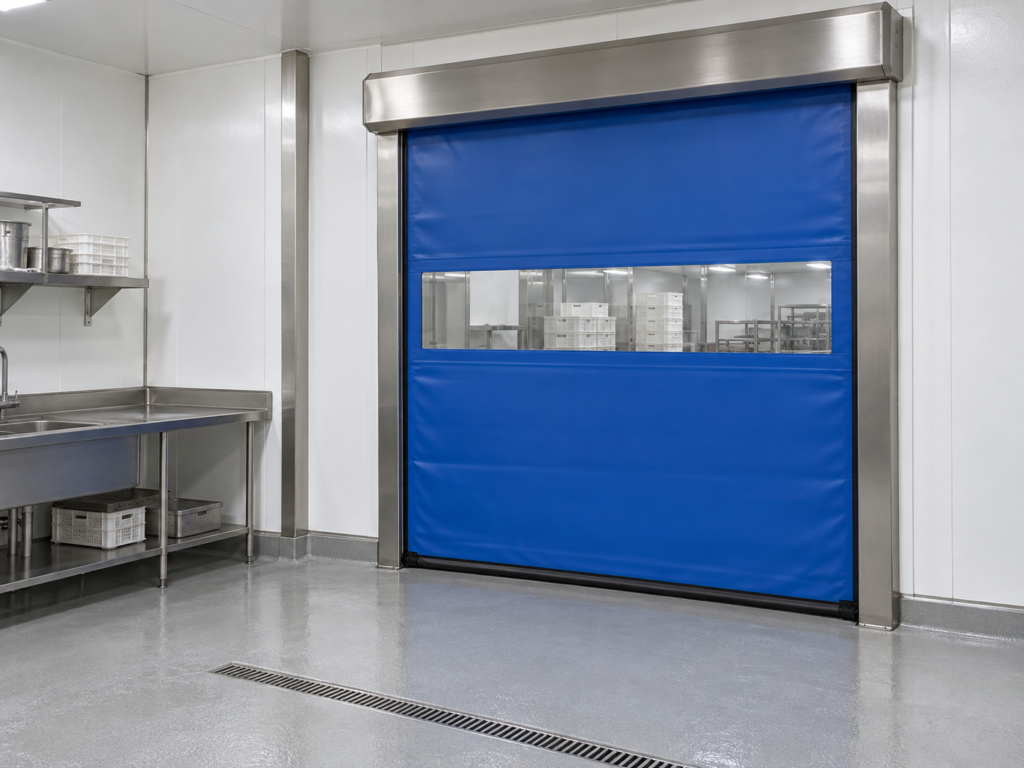
Match the Symptom to the Next Check
A fault description becomes more useful when it identifies the exact stage of operation. “Stops while closing” and “does not accept a closing command” point to different questions.
| Observed symptom | Possible explanations to investigate | Useful information to record |
|---|---|---|
| The door stays open after cleaning | A blocked detection path, an active opening input, or a controller condition preventing closure | Controller message, visible indicators, and anything left near the opening |
| The curtain reverses during closing | An obstruction, a protective-device signal, or another model-specific stop condition | Approximate reversal position and whether it happens consistently |
| A fault appears after nearby rinsing | Moisture exposure, a disturbed cable or connector, or another electrical fault | Timing, visible spray path, and exact fault code; arrange qualified inspection |
| A vision panel becomes cloudy or a seal changes shape | Residue, abrasion, or possible chemical incompatibility | Before-and-after photos and the cleaning product and method used |
This table is a way to organize observations, not a diagnosis or a reset procedure. Use the supplied manual to interpret indicators and fault codes for the installed model.
Optical components deserve particular attention when they are present. For example, SICK’s RAY26 troubleshooting guidance identifies lens contamination, reflector condition, alignment, and stable mounting as relevant checks. That example supports inspecting the actual sensor arrangement; it does not establish that a SEPPES door uses that sensor. Follow the fitted device’s own cleaning instructions.
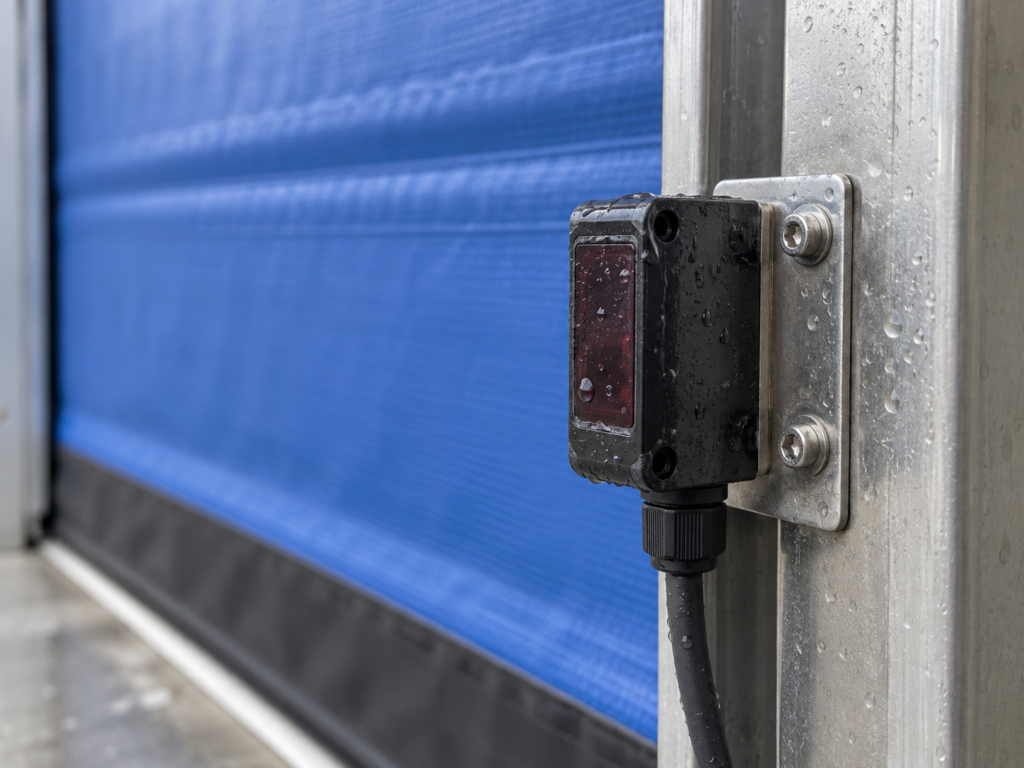
Check the Cleaning Limits of a Washdown High Speed Door
Review the complete installation, including the curtain, frame, seals, vision material, sensors, drive, control enclosure, and cable connections. The suitability of one visible part does not establish the cleaning limits of the others.
Ingress protection and chemical resistance answer different questions. Phoenix Contact explains IP protection testing in terms of access to hazardous parts and entry of foreign bodies or water. Its separate food-industry cabling information discusses testing materials with specified cleaning agents. For a door project, request both the relevant protection information and the approved cleaning conditions.
Even a heavy duty high speed fabric door needs a documented cleaning method. The description “heavy duty” does not establish compatibility with a particular disinfectant, concentration, or hot-water process. Ask the supplier to confirm the permitted method for the supplied curtain and seals.
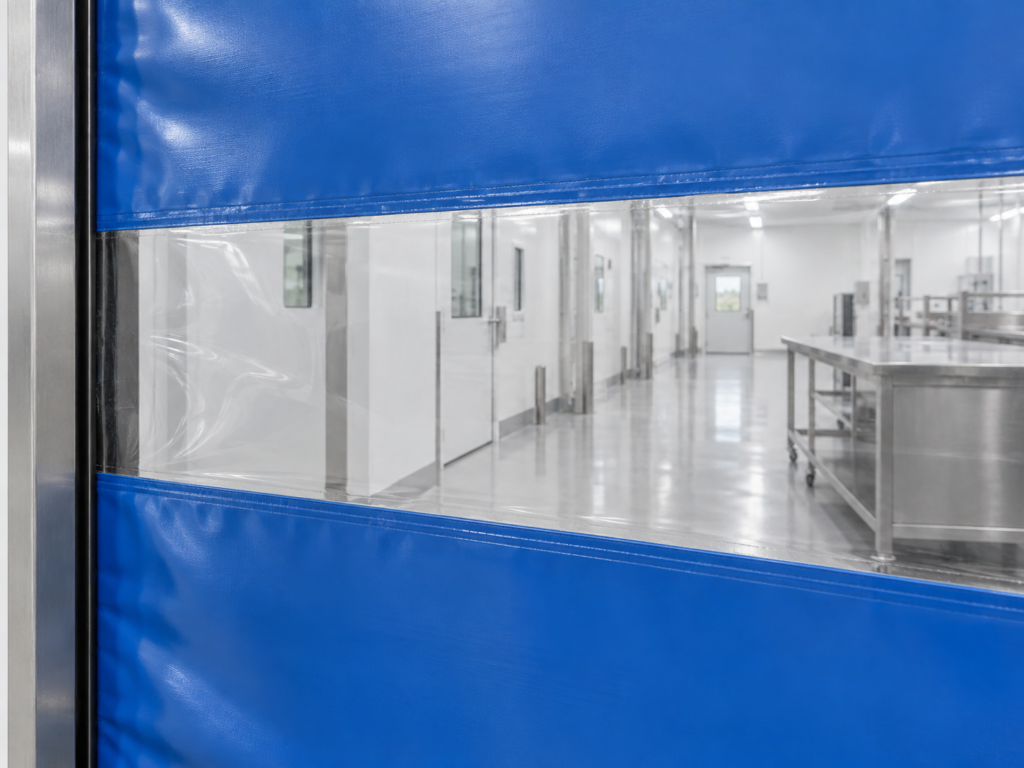
Visibility introduces another material question. When comparing high speed clear doors, identify whether the proposed design uses a fully transparent curtain or a vision panel within an opaque curtain. Obtain cleaning instructions for that transparent material, including restrictions on chemicals and abrasive tools. Clouding should be investigated before changing cleaners or polishing the surface.
SEPPES’s 2026 catalog lists an optional SUS304 stainless steel frame for its rapid roll-up range. A separate cleanroom model features smooth guides and a vision window integrated flush with the curtain. These details can inform a cleanability review, but pressure, temperature, chemical, and electrical exposure limits still require confirmation for the chosen configuration.
Can High-Speed Doors Be Customised to Meet Specific Requirements?
Yes, where the manufacturer offers and verifies the required configuration. The starting point should be a description of the cleaning process and the doorway’s exposure.
Mark where water is applied, which surfaces receive direct spray, and where splash can travel. Share the normal cleaning procedure with SEPPES alongside the opening dimensions and traffic requirements. Ask which components and locations are suitable for that exposure, and which need a different arrangement or cleaning method.
The resulting proposal should identify component protection, material compatibility, access for cleaning, and any installation conditions. If a sensor or control enclosure is relocated, the design must still preserve the required detection coverage and operating function.
For an existing door, have proposed changes reviewed against its actual model and installation. A replacement component’s suitability should be confirmed as part of the assembled system.
Make the Next Service Visit More Useful
A useful high speed door service request includes the door model and serial number, the exact displayed message, the cleaning record, and photographs of the affected area. Add whether the fault occurs before movement, during closing, or after the curtain reaches the floor. Record information before any reset authorized by the manual or service team.
SEPPES’s 2026 rapid-door catalog describes a display showing operating status and fault codes. Where that feature is fitted, the original message gives the service team a more precise starting point than “the door stopped working.”
After the cause has been addressed, authorized personnel should complete the manufacturer’s return-to-service checks, including the relevant protective functions. Review the cleaning instructions with the sanitation team if the investigation identifies an exposure or procedure mismatch.
For a new or existing washdown high speed door, send SEPPES the cleaning procedure and the observed symptoms together. Connecting those details to the actual configuration supports a targeted review and a clearer plan for reliable operation after cleaning.