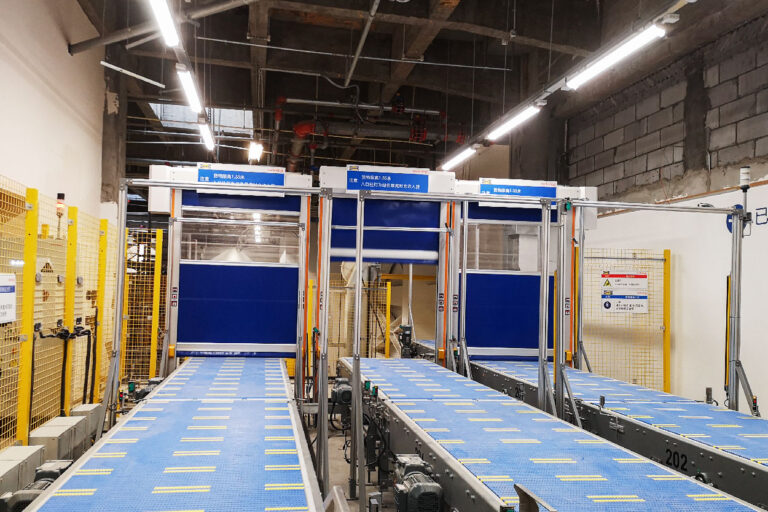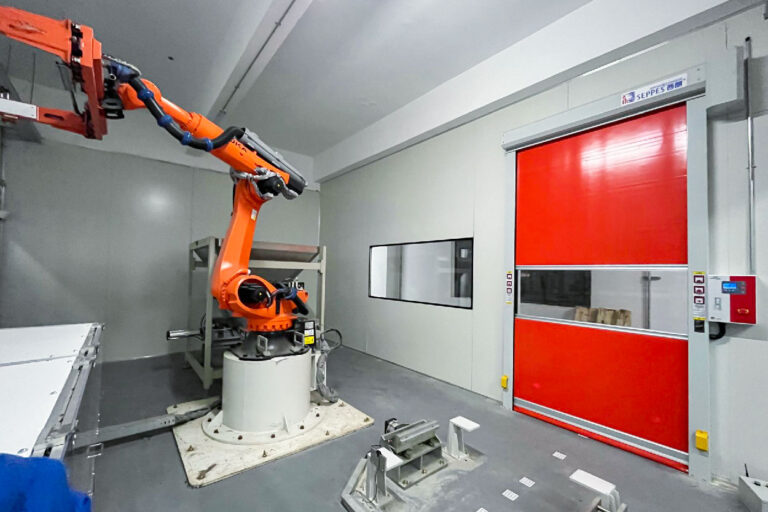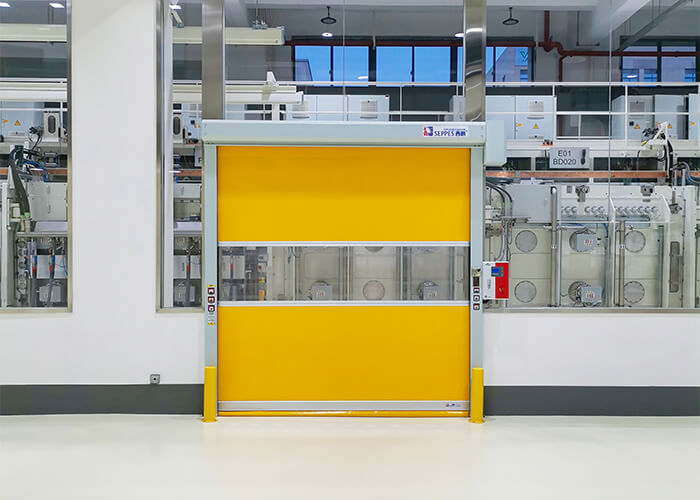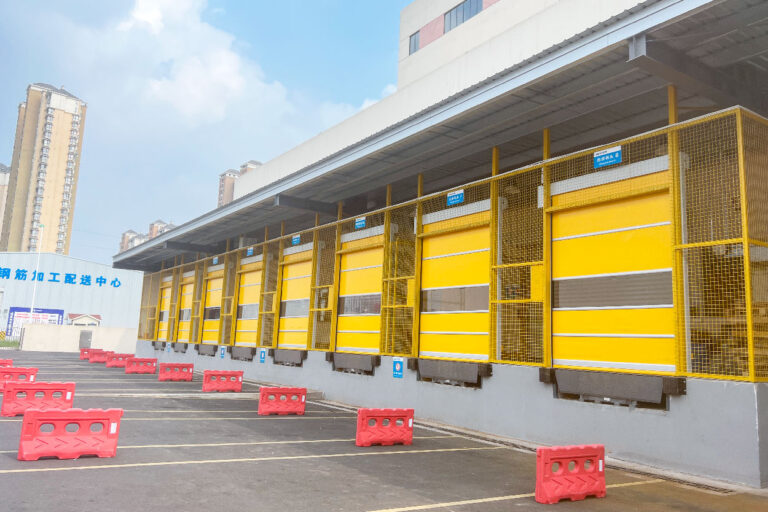

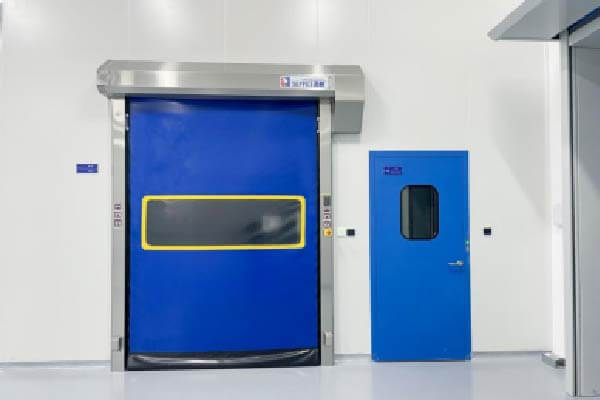
The importance of keeping environments controlled and safe in industries such as pharmaceuticals, food processing, and electronics manufacturing is never overstated. It’s because even the tiniest impurities and/or contamination can set back production significantly. To protect these sensitive environments, roll-up clean room doors offer an air-tight solution and also promote improved cleanliness, efficiency, and workflow. In this article, we will look at the unique features of clean room roll-up doors. We will also examine the challenges they help us overcome in controlled environments. If you wish to meet strict regulatory requirements or improve operational efficiency, this article will demonstrate the features that make these specialized doors a valuable asset to your facility.
What Are Clean Room Roll Up Doors?

Clean room roll-up doors are designed for spaces that require high levels of cleanliness, air quality, and environmental control. They are made of smooth and non-porous materials that can be quickly cleaned and that won’t harbor contaminants. They can open and close quickly to minimize air exchange and help keep the room at its optimal pressure, temperature, and humidity. Due to their important role in regulatory compliance and the provision of ideal conditions for sensitive workflows, they are a staple of the pharmaceutical, biotechnology, and food production industries.
Definition and Basic Operation
These specialized high-performance roll-up doors maintain a clean room’s internal environment by minimizing external contamination and controlling airflow and other critical factors to meet strict guidelines and regulations. High-quality sealing systems and durable materials ensure long-lasting performance in critical environments.
They are built to meet the following features and details for clean room roll-up doors:
Operating Speed
They can operate anywhere from 30 to 100 inches per second.
They reduce the potential for contamination and air exchange.
Bacteria-Resistant and Durable Materials
They can be constructed out of smooth PVC and stainless steel for easy cleaning.
With a non-porous finish, the buildup of bacteria and contaminants is further restricted.
Sealing Systems That Provide Air Control
They can control the air pressure and humidity levels of the clean room when the sealing systems are fully engaged.
Custom Features and Sizes
They can be built to meet the requirements and needs of specific clean room environments, as well as industry needs.
Automated doors, integrated sensors, and clear vision panels can all be added.
Meets industry standards
They meet the clean room standards set by the International Standards Organization. They are valuable to anyone working in the industry while following FDA, GMP, and HACCP regulations.
These features combined make sure that clean room roll-up doors keep the necessary conditions for sensitive industrial processes.
Materials and Properties
High-Grade Stainless Steel
Ideal for maintaining hygiene and corrosion resistance.
It is durable and long-lasting, and easy to clean in sterile environments.
Flexible PVC Fabric
Provides low friction to minimize particle adhesion.
It is cleanroom safe and resistant to commonly used chemicals and disinfectants.
Aluminum Side Guides
Lightweight and sturdy for precise door movement.
Finish anodizing for extra protection against wear and tear.
Sealed Bearings
Operate more cleanly by generating less debris.
Doors move more smoothly and quietly.
Silicone or EPDM Seals
Compatible with pressure and temperature control.
Cleansing and sterilizing practices can be used frequently.
Comparison to Traditional Door Systems
Clean room roll-up doors offer modern advantages over sliding or hinged doors. They close quickly, reducing the time contaminants can enter, and support strict air pressure, temperature, and cleanliness standards. Roll-up doors save space by eliminating clearance needs and use durable, easy-to-clean materials like PVC and silicone that resist chemicals. Fully energy-efficient and compatible with automation, these doors are ideal for industries such as bioengineering, electronics, and pharmaceuticals.
Core Benefits of Clean Room Roll Up Doors
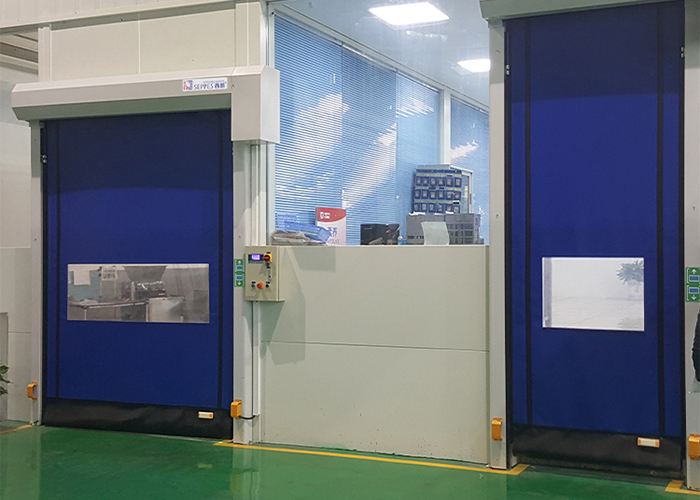
Rapid Isolation and Air Quality Control
Pure isolation and high air quality control in sensitive environments are the main objectives of the design and construction of clean rooms roll up doors. Below are five of the most important attributes that contribute to their rapid isolation and air quality control.
Speed of Opening and Closing
Because the doors open up to 60 inches per second, the intervals during which the doors are open are the smallest possible. Therefore, the contamination of the environment that the doors are protecting is kept the same with a minimal level of exposure.
Air Tightness
Because of the high-quality gaskets and closing mechanisms, cross-contamination is eliminated, and the differential of air pressure is maintained.
Minimal Particle Release
Constructed from materials that provide minimal particulate shedding, the doors assist in the achievement of rigorous air cleanliness standards, including ISO 14644.
HEPA Filter Systems
These doors facilitate the integration of HEPA filtration systems, as they limit the air exchange and ensure that air quality remains unchanged in critical areas.
Automation and Air Control Systems
These air control systems automatically control door closing intervals, thus preventing unwanted air exchange and eliminating the contamination of the environment.
By incorporating these features, the safety of cleanroom environments and compliance with cgmp regulations are greatly enhanced.
Protection Against Contaminants
Cleanroom roll-up doors protect your facility from different contaminants, and here are five features that make them effective.
Seamless Design
Cleanroom roll-up doors are designed for easy cleaning and to keep a sterile environment. They are made from a smooth, non-porous material that seals shut and minimizes particle build-up.
Advanced Sealing Technology
These roll-up doors come with gaskets and high sealing technology, which means that no airborne particles will be able to enter your facility.
Rapid Opening and Closing Speeds
These roll-up doors are designed to be efficient and will close quickly to reduced exposure time that external contaminants have on your facility.
Anti-Microbial Coatings
The surfaces of cleanroom roll-up doors are designed with surfaces that prevent contaminants from growing on the surface, which means dirt and contaminating microbes will not be able to survive.
Positive Pressure Maintenance is essential for cleanroom high speed door functionality.
Cleanroom roll-up doors help ensure that no contaminants enter controlled cleanroom environments. They help support cleanroom systems and keep positive air pressure.
These cleanroom roll-up doors will provide your facility with the best and most reliable protection from contaminants.
Energy Efficiency and Cost Savings
Not only do cleanroom roll-up doors help preserve contamination-free areas, but they also help save energy and reduce costs. Below are five ways these doors save energy and reduce costs:
Greater Insulation
Cleanroom roll-up doors use high-quality insulating materials and engineered designs to reduce heat transfer. This improved insulation saves up to 30% in energy by lowering the energy needed to maintain temperature-controlled environments.
Faster door operations are crucial for high speed clean room door efficiency.
The quick speed of the doors lessens the time the door is open, which means less air is exchanged between controlled and uncontrolled areas. This helps maintain the desired conditions and reduces the demands on the HVAC system.
Less HVAC Load can be achieved with the installation of clean room speed doors.
Roll-up doors help ease the pressure on the HVAC system, increasing its efficiency. In turn, this reduces the operating costs and the power the system consumes.
Less Frequent Replacements and Maintenance
Because of the high-strength materials with which the doors are manufactured, they require less frequent replacement and maintenance. This also extends the lifespan of the doors compared to standard doors.
Energy Rebates and Incentives
Certain areas offer energy rebates and incentives to cleanroom roll-up doors that qualify for the energy efficiency standard. This can reduce the cleanroom roll-up door initial installation expense.
When businesses combine cleanroom roll-up doors with other energy-efficient features, the doors extend operational cost savings and support eco-friendly practices.
Enhanced Workflow and Operational Efficiency
Roll-up doors can seamlessly transition between the fast-paced cleanroom environments while keeping contamination at bay. Improper use can sand down the overall quality of the doors, while correct usage can increase productivity and the ability to streamline workflow. Here are the specific ways in which high speed clean room doors can improve workflow within cleanroom environments:
快速启闭功能
Roll-up doors are made to open and close quickly, allowing employees to pass through in only a matter of seconds. This allows for trends in productivity and reduces the amount of time spent standing still.
Better Airflow
The sealed and controlled motion of the high-speed roll-up doors reduces the amount of airborne contamination that can occur while the doors operate. This allows employees to better control their environment while maintaining the cleanliness of the area.
Less Workflow Interruptions
Being made out of high-quality materials, roll-up doors can close and open for an extended period of time before they experience a breakdown. This allows employees to experience the fullest capability of the roll-up doors without experiencing issues.
Less Manual Control
Roll-up doors can come with automation systems to help control the door. This allows employees to improve their workflow and other tasks that are more important while the roll-up door can operate itself.
Maximized Usable Vertical Space
Compared to other types of doors, roll-up doors require very little real estate in the overhead area while still being very functional. This is especially important in cleanroom environments in which overhead contamination could occur.
Engineering cleanroom roll-up doors with these features enhances efficiency and operational performance in demanding environments.
Key Features and Technologies
Airtight Seals and High-Speed Mechanisms
Cleanroom roll-up doors feature cutting-edge airtight seals and fast rolling systems, meeting the demands of highly controlled areas. The roll-up door seals minimize air interchange, maintain safe positive and negative pressure, and block dust, particulates, and microbes from entering the cleanroom. Designers reinforce the seals with materials like flexible rubber or silicone to ensure exceptional operational performance and long-lasting durability.
Seals that protect the cleanroom from contaminants play a crucial role. Fast rolling mechanisms reduce the time the doors stay open, limiting contaminant entry. Motors roll the doors open and closed with precise control. Adding smart technology, such as motion sensors, further improves functionality by managing door operation and keeping contamination within safe levels. These doors help keep the cleanroom safe and also allow the staff to work more efficiently as the doors eliminate downtime and energy loss.
Advanced Control Systems
Integrated control systems in cleanroom roll-up doors make sure that they comply with the strict operational and environmental cleanroom standards. They feature embedded microprocessors and intelligent systems that allow the control of door speed, duration, and position. Many roll-up doors use Variable Frequency Drives (VFDs), which allow for the complete adjustment of speed, ensuring that doors open and close without disrupting air flow or introducing contaminating particles to the cleanroom environment. They can also be connected to Building Management Systems (BMS), which provide monitoring and control functions and communication of data across various systems in a facility.
Touchless activation sensors and auto-reverse functions are examples of the latest cleanroom door systems. They allow for the seamless integration of energy-saving features. Doors open automatically to allow for the passage of people and objects, and when closed, an obstacle can reverse the door to avoid impact. The combination of all of these systems traditionally lowers energy expenditures and improves the efficiency of the cleanroom.
Self-Repairing and Corrosion-Resistant Design
Roll-up doors for cleanrooms are made to last because of the harsh environments they must endure. Their self-repairing design and the corrosion-resistant materials are the key to their durability. Self-repairing designs utilize a flexible curtain that, after being knocked off the tracks, can slide back into its tracks, greatly reducing downtime and maintenance. Because of this feature, self-repairing roll-up doors are the only option for environments that require strict cleanliness and noise control, because they can operate uninterrupted to guarantee cleanliness.
The materials used to construct the cleanroom high speed doors also make them last longer and meet the cleanroom criteria for contamination risks. With the absence of cracking and flaking, the corrosion-resistant materials, such as stainless steels and coated metals, ensure that there will be no contamination and that the doors will be safe to use even with harsh cleaning materials, such as moisture and cleansing agents. Together with the self-repairing features, the corrosion-resistant materials are everything that cleanrooms require. With the strength of the metals and the self-repairing designs, they will guarantee that the strictest cleanliness demands are met.
Compliance with Industry Regulations
Cleanroom roll-up doors are built to meet the regulated standards in controlled environments. They follow the guidelines of the ISO 14644 Cleanroom Standards, which dictate the maximum levels of particulates. In addition, several doors meet FDA and GMP (Good Manufacturing Practice) requirements, making them suitable for the Pharmaceutical, Biotechnology, and Food Processing industries. Designed for safety and environmental control, these doors operate at high speed to reduce airflow and use chemically resistant, easy-to-sterilize materials that prevent particulates from accumulating. On a broader scale, using these doors helps to preserve the processes and ensure compliance for the facilities.
Application Scenarios
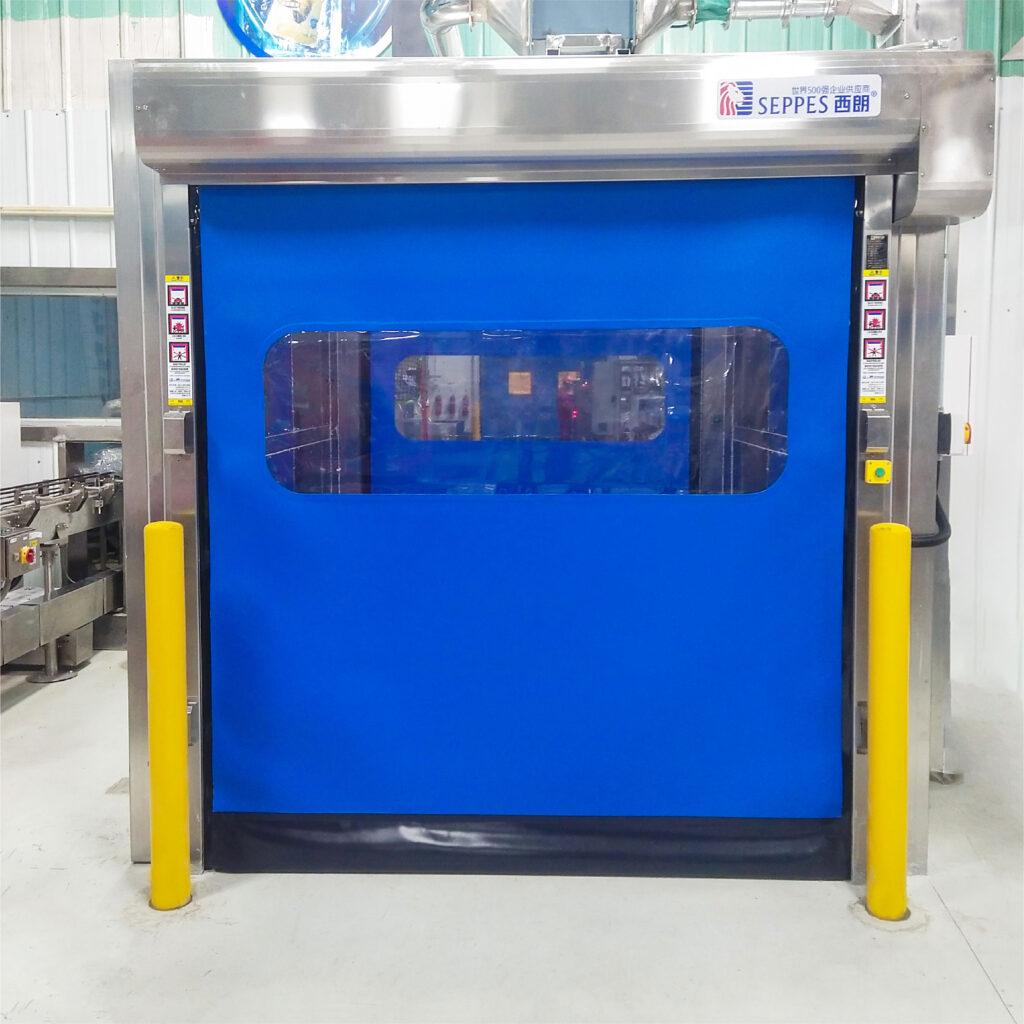
Pharmaceuticals and Biotechnology
Cleanroom roll-up doors are built to meet the regulated standards in controlled environments. They follow the guidelines of the ISO 14644 Cleanroom Standards, which dictate the maximum levels of particulates.Several of these doors meet FDA and GMP (Good Manufacturing Practice) requirements, making them suitable for the Pharmaceutical, Biotechnology, and Food Processing industries. They feature high-speed operation to reduce airflow and use chemically resistant, easy-to-sterilize materials that prevent particulate buildup, ensuring safety and environmental control. On a broader scale, using these doors helps to preserve the processes and ensure compliance for the facilities.
Semiconductor and Electronics Manufacturing
Used in the semiconductor and electronics sectors, clean room roll-up doors protect the vital environmental controls necessary to carry out the special procedures in these sectors. They provide a dust, static, and particle-free environment, essential for the safe manufacturing of electronic components, from microchips to circuit boards. Because of their high speed, sealed edges, and anti-static properties, clean room roll-up doors reduce the risk of contamination and air exchange during critical operating processes. They protect and maintain the controls needed in manufacturing processes. They also provide a better and more productive yield in creating the components vital to the fast-evolving semiconductor and electronics industries.
Food and Beverage Processing
Clean room roll-up doors are crucial in the food and beverage processing field because of the need for extreme care in the hygiene and contamination of food products. These specially designed high-speed doors create a barrier between processing zones to prevent cross-contamination and meet strict industry guidelines such as the FDA and USDA. They use durable, non-porous, and chemically resistant materials, making them easy to maintain—ideal for areas that require frequent sanitation or pest control. Also, clean room roll-up doors assist in the control of temperature and humidity, which is vital in the safety and quality of food products. These doors are indispensable for protecting the integrity of the food products and improving the efficiency of processes for contemporary food and beverage facilities.
Aerospace and Automotive Sectors
Roll-up doors served as clean room doors and are essential to the aerospace and automotive industries. They are the most reliable doors to help maintain the most critical and clean environments in the manufacture of aerospace component production and automotive part assembly. They are fast to open and close to help control the air exchange and airborne particulates, as well as maintain the clean room’s controlled conditions. The aerospace and automotive industries use well-engineered clean room roll-up doors that are highly chemically resistant, durable, and specialized. These industries have demanding operating environments and processes, and these doors help improve operational reliability, enhance product consistency, and ensure compliance with the increasingly stringent guidelines of today’s aerospace and automotive manufacturing.
Choosing the Right Clean Room Roll Up Door
Factors to Consider
Factors to consider when choosing a clean room roll-up door should center on performance and compliance with industry standards. Here are five such factors.
材料质量
Doors should be built with a tough, lightweight, and chemically resistant material to survive clean room conditions. Stainless steel and high-grade PVC doors can endure regular cleaning and exposure to a variety of materials without deteriorating.
密封性能
Advanced sealing mechanisms and reinforced edges help a cleanroom high speed door achieve an airtight seal. These are the types of doors that help cut down contamination and retain the controlled conditions of the atmosphere of the room. Less contamination requires the atmosphere to be controlled to a low particle count.
Speed and Efficiency
Doors that open with a speed of 40 to 60 inches per second reduce air exchange when the door is in motion and improve workflow efficiency. This helps decrease the probability of contamination.
Compliance with Industry Standards
The door must be compliant with other industry regulations such as the FDA for pharmaceutical use and the ISO 14644-1 for clean rooms. These regulations will tell you if the door is appropriate for your clean room classification.
Ease of Maintenance
In order to avoid steady downtime, having a flexible, low-maintenance model is crucial. Choose doors that have clean surface finishes as well as modular parts that are easily wipeable or replaceable. This keeps maintenance time low, costs down, and maintains a contamination-free environment.
Tailoring Solutions for Different Openings
When it comes to picking the ideal clean room roll-up door, it is essential to understand the need to tailor different options to the unique requirements of the different openings. Below are five customized solutions to help ensure the clean room doors fit your environment best:
Small Openings
When it comes to clean room openings that are smaller in size, doors that are compact roll-up style with an even smaller footprint are optimal. These doors are space-saving while also meeting the required levels of air pressure stability and contamination control.
Large Openings
In the case of openings that are large, high-performance doors are needed that are also more durable and have the ability to operate at higher speeds. These doors provide effective isolation of the controlled environments and adequately ensure the free flow of larger pieces of equipment or materials.
High Traffic Areas
In the case of clean rooms that are located in high-traffic areas, roll-up doors that have robust drive systems are ideal. These are made with reinforced materials, and the combination helps to minimize wear and tear.
Temperature Controlled Zones
In areas requiring more strict temperature control, the ideal doors are roll-up styles with insulation that also help to provide better thermal resistance. These help with maintaining more stable conditions in your environment and even help in saving energy.
Strict Contamination Control
In environments that have extremely strict contamination control, the best doors to use are the ones that have more seamless surfaces, fewer gaps, and even extra sealing options. These provide the best control over cleanliness as well as the control over particles.
Consider these elements to choose a clean room roll-up door that best fits your needs and optimizes performance and reliability.
Installation and Maintenance Considerations
Importance of Proper Installation
To keep roll-up doors operational and compliant, operators should clean and maintain the doors regularly to prevent air leaks and improve contamination control. Here are five problems that can occur with high-speed roll-up doors when improper installation happens:
Seals May Not Be Airtight
Sealing the doors properly on the first install helps keep air from flowing between the clean and unclean rooms
Helps Comply with Clean Room Requirements
To be compliant with the latest ISO and GMP requirements for clean rooms, the doors need to be properly installed. The exact positioning of the doors is critical to passing inspections and keeping the doors certified.
Restricted Wear and Tear, and Smooth Operation
Improperly installing the doors can cause misalignments, which may require adjustments that put stress on the internal components.
Increased Energy Consumption
Properly installed roll-up doors help contain the clean room by minimizing air gaps, avoiding unintentional changes in humidity and temperature. This reduces the clean room’s climate control costs.
增强安全性
When installed properly, the doors will operate safely and minimize the chances of malfunctions or accidents. Safety features, like motion sensors or doors with emergency releases, will work best when the doors are installed properly.
Taking the time and putting in the effort for proper installation is maximally beneficial for the owner when considering clean room roll-up doors, regulatory compliance, and operational efficiency.
Routine Maintenance for Reliability
Staying on top of maintenance helps perform to set standards and prolong the longevity of the clean room roll-up doors. The above mentioned helps to identify potential problems. This helps lower the chances of problems and costly repairs. Below are 5 important maintenance steps for clean room roll-up doors.
Check For Dust And Inspect The Door Panels
Regular cleaning of the doors is important. The doors need to be cleaned to avoid debris buildup, which would compromise the atmosphere in the clean room. Also, look for scratches, dents, and other damage that may impact the doors from closing properly.
Apply Lubrication to Moving Parts
Use the suggested lubricant on the moving pieces like hinges and tracks to reduce friction and elements of sticktion that would hinder the doors’ movement.
Check The Door Seals
Often check the seals of the doors. Ensure that they are properly and fully intact. Seals that are damaged or old must be promptly replaced to keep the doors from contamination.
Verify The Safety Features
Ensure the safety features of the doors, including motion sensors and emergency release systems, all function properly and are responsive.
Examine the Motor and Drive System
Check the elements of the motor and drive system for any signs of wear, strange sounds, or overheating. Make sure the wiring is complete and working to avoid motor breakdown.
When these maintenance strategies are performed regularly, clean room roll-up doors will be able to sustain their dependability, improve safety, and prolong their operational life.
Innovations and Trends
Magnetic Sealing Systems and Anti-Collision Features
The latest cleanroom roll-up door upgrades include new designs that use Magnetic sealing systems to improve their performance. A strong magnet to keep a door sealed to an edge to keep air from leaking out. Air and completion are especially important to the pharmaceutical, medical electronics, and research industries. Magnetic sealing systems reduce wear and improve overall efficiency.
On the other hand, cleanroom roll-up doors include anti-collision features that improve operational efficiency. These features use advanced sensors and AI technology to assess the actions of the roll-up doors before conflicts occur. Removing details that could damage the door, conflicts could also lead to cleanroom contamination. Some systems also include features that automatically roll doors back to prevent the door from hitting someone. The emphasis of these systems is on increasing workplace safety and improving visibility and productivity.
Smart Door Controls and Facility Integration
Modern clean room roll-up doors now integrate advanced facility management for increased operational efficiency and improved security. With their smart door controls, facility management systems optimize performance and downtime through technology such as the Internet of Things (IoT), real-time monitoring, and programmable logic control (PLC) systems. Smart door systems comply with cleanroom standards and integrate with access control systems (biometric, RFID, etc.) to ensure only authorized personnel access the facility.
Facility managers can also centrally monitor and control doors through management software. This software controls the doors’ operation schedules, improves energy efficiency, and provides instant notifications for door faults and security violations. With cleanroom smart doors, pressure control, and HVAC systems (if connected), work to ensure the cleanroom environment is maintained. From the connected and automated systems, it is easy to see that clean room facilities are becoming even more operationally and safely advanced. The cleanroom smart doors, pressure control, and HVAC systems work to ensure the cleanroom environment is maintained.
结论
H3: Summary of the Role in Contamination Control
Custom roll-up doors for cleanrooms are essential in keeping your cleanrooms clean and pristine. They prevent dust, dirt, and other airborne contaminants, so they are useful for cleanroom roll-up doors. They utilize stainless steel and high-quality, chemically resistant, and non-corrosive PVC which makes them easy to clean. Quick opening features lower the potential risk to cleanrooms from unfiltered air by minimizing air exchange. Electronic sealing, air pressure, and HEPA filters are used to keep your air clean and meet your requirements.
These doors can have additional features, such as auto-opening, and can be used with access control systems to limit the number of people entering the cleanrooms. They are great for the following industries: food, pharma, biotech, electronics, and even packaging. They are especially great for maintaining smart technology. Cleanroom roll-up doors are essential for maintaining the controlled environments that are critical to your application.
Call to Action for Cleanroom Managers
When managing a cleanroom, rolled-up doors need to be selected with the utmost care so that the controlled environments remain intact. It is best to choose doors that meet your cleanliness standards, are easy to open and close, and have sealing and automation technologies that are state of the art. If your industry standards pertain to the pharmaceutical, biotech, or electronics manufacturing fields, then the doors need to be tailored to those fields. It is best to choose high speed clean room doors that will keep your operations high and meet your regulatory standards. Finding the right doors is essential to your needs, which will enhance the safety and efficiency of your cleanroom. Always think about the needs that will improve the cleanroom operations.
Adhere to your cleanroom roll-up doors selection to maintain the controlled environments intact. Select doors that match your industry’s highest standards for cleanliness, easy operation, sealing, and automation. For pharmaceutical, biotech, or electronics manufacturing, tailor your cleanroom roll-up doors to meet the specific requirements of these fields. Choosing the right doors keeps your operations efficient and ensures compliance with regulatory standards. Finding the right doors is essential to your needs, which will improve the cleanroom operations.
常见问题解答
Cleanroom door: What are cleanroom roll-up doors, and how do they benefit controlled environments?
Roll-up doors for clean rooms are high-speed, soft, roll-up doors that are designed to minimize the time the doors are open to reduce contamination in clean rooms. High-performance clean room roll-up doors provide sealing and closures that are almost airtight, maintain pressure, reduce collection points, and keep your cleanroom free from contaminants. This makes them ideal for cleanroom applications in pharmaceuticals, micro-mechanics, and food and beverage, where fast access and sanitary conditions are a must, especially with clean room high speed doors.
Roll-up: How do roll-up cleanroom doors help minimize contamination and pressure issues?
Rapid roll-up clean room doors open and close to decrease the time clean rooms are exposed to outside environments. This helps keep outside contamination and pressure fluctuations from entering the room. The quickness of the roll-up doors helps maintain positive and negative pressure balances to reduce contamination and maintain high speeds. This means that the clean room is safe for high-speed applications.
High-performance door: Are high-speed clean room doors sanitary and USDA-compliant for food and beverage applications?
Numerous manufacturers provide USDA-compliant high-speed clean room doors that are sanitary and wash-down capable. They are designed for the food and beverage industry. High-speed clean room doors incorporate smooth surfaces, minimal collection points, and wash-down-friendly materials. When choosing a door manufacturer, ensure the presence of USDA-compliant materials, wash-down ratings, and appropriate certifications to ensure the doors are safe for food-handling environments.
Clean room door: What safety features do cleanroom high-speed doors include?
The edges of cleanroom high-speed doors are impact-resistant and contain monitored control systems to avoid accidents when opening the doors. Safety sensors are programmed to stop the doors and reverse their movement to avoid collisions. Door control systems give feedback to facility safety systems. These systems enhance safety and quality alongside rapid cycle speed in highly controlled environments.
Cleanliness: Can high-speed clean room doors control temperature and environmental conditions?
High-speed cleanroom doors do help with temperature and environmental control. They minimize the amount of time barriers are opened and seal tightly when doors are closed. These doors perform almost airtight by reducing drafts and limiting the amount of air exchange with the external environment. This assists in maintaining the HVAC setpoints, reducing energy loss, and keeping the cleanroom environment and pressure differentials intact with the use of cleanroom roll up doors.
High-performance: What maintenance and cleaning practices keep roll-up cleanroom doors sanitary and long-lasting?
High-speed cleanroom doors do help with temperature and environmental control. They minimize the amount of time barriers are opened and seal tightly when doors are closed. These doors perform almost airtight by reducing drafts and limiting the amount of air exchange with the external environment. This assists in maintaining the HVAC setpoints, reducing energy loss, and keeping the cleanroom environment and pressure differentials intact.
Door manufacturer: How do I choose the right cleanroom high-speed door for my facility and applications?
Choose doors depending on cleanroom class, cycle speed, and sanitary needs, and how they integrate with current controls. Factors to consider are: flexible fabric roll-up vs rigid construction, wash-down capability, USDA-compliant materials (food and beverage), safety sensors, and minimized collection points and pressure drop. Work with a qualified door manufacturer or ASI-authorized supplier to assess micro-mechanics, pharma, and other controlled environments to guarantee doors meet the safety and performance needs of your processes.
参考来源
- University of Houston – Overhead Coiling Doors Specification
This document provides detailed specifications for overhead coiling doors, including their design and fabrication.
Read more here - Utah State University – Cleanroom Design and Assembly
This academic paper discusses the design and assembly of cleanrooms, including air filtration and structural considerations.
Read more here - NASA Technical Reports – Operating and Maintaining Cleanrooms
This NASA report includes information on cleanroom operations, including the use of roll-up doors and pressure management.
Read more here