


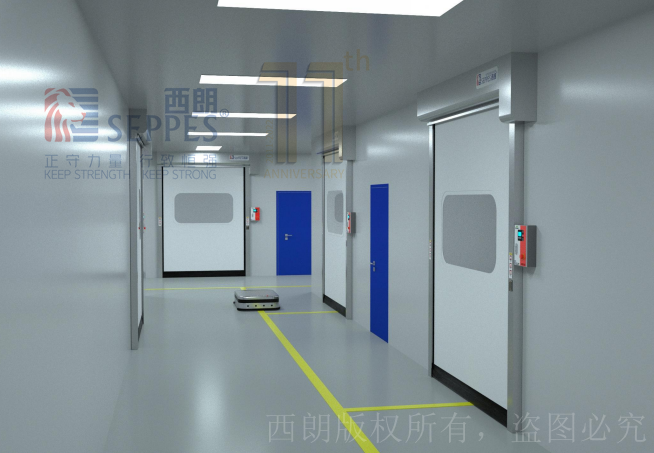
This post discusses the importance of self-repairing high-speed doors in the industrial sector. With the increasing importance of these high-performance doors, they are self-repairing and self-resetting to meet the need for quick opening. These doors are the perfect way to save time and money. The advanced technology in high-speed self-repairing doors makes them the best fit for efficient operation in various settings. These automatic industrial doors repair themselves, and I will tell you why these doors are a must for every modern industrial building. Self-repairing doors will save money on maintenance and will improve the efficiency of operations. Are these doors a good investment? Self-repairing high-speed will tell you why and how. Let’s get started.
Introduction to Self-Repairing High Speed Doors

Self-repairing high-speed doors have been designed to cater to all maintenance and downtime issues. There is no other solution like these doors on the market today. If the door is hit and comes out of its tracks, the door will reseat itself automatically and continue operation. The curtains are flexible, allowing the door to realign itself automatically without the need for human intervention. This process continues the operation of the door, without the need for extra maintenance and cost accumulation over the years.
Today’s self-repairing doors keep to the cutting edge of technology with high-end prototyping as sensor and variable speed motor integration, allowing the door to achieve high energy efficiency as well as optimized operational performance. The door is built for high traffic and extreme work environments, including warehouses, manufacturing buildings, and cold storage units. The high energy efficiency and ease of maintenance make these door units a no-brainer for facilities with a need to streamline efficiency and high levels of productivity.
Definition and Fundamental Concept
There are specialized industrial doors called self-repairing high-speed door sets made to self-repair. Some automatic doors areoperate made to smoothly and seamlessly even after industrial doors impact them. Self-repair doors have specialized automatic self-repair features that allow the door sets to realign the door at no cost. These self-repair doors are made to repair themselves, which allows doors to operate in high-volumehigh-volume self-repair demanding environments. This makes them the ideal high-volume self-repair door.
Key Features and Data of Self-Repairing High-Speed Doors
Self-Repair Mechanism
Description: The door curtain automatically realigns into its tracks after dislodgment.
Advantage: Repair costs are less, downtime is minimized, and the operation continues without interruption
High-Speed Operation
Description: Depending on the model, opening speeds range anywhere from 3 to 10 feet per second.
Advantage: Quick access creates an efficient workflow and helps prevent energy loss.
Durable Materials
Description: The materials are of high-quality PVC or reinforced fabric and are resistant to wear and tear.
Advantage: In even the most grueling conditions of an industry, long-lasting strength will be provided.
Advanced Safety Features are critical in the design of self-repairing high-speed doors to ensure safe and efficient operation.
Description: The door curtain has light grids, motion sensors, and safety brakes.
Advantage: A secure working environment is provided by protecting people and equipment from incidents.
Energy Efficiency
Description: The door curtain helps to conserve energy by having insulated properties and operating quickly.
Advantage: Heating and cooling losses are reduced, and ultimately, energy efficiency and sustainability are increased.
Growing Demand in Industrial and Commercial Sectors
Thanks to innovative technology, self-repairing high-speed doors are becoming more and more efficient and optimally operational for all commercial and industrial uses and needs. Their ability to reset automatically after an impact truly reduces maintenance costs and downtime. Excellent for seamless operations, these doors are great for logistics, manufacturing, and warehousing industries.
Current self-repairing high-speed doors feature workplace safety and energy efficiency. Fast-acting doors save energy and help maintain temperature control. Built with safety features, energy efficiency, and high-traffic durability, self-repairing high-speed doors are the ideal solution for virtually every industry.
Self-repairing high-speed doors have become an important component of every commercial and industrial unit and operation due to their ability to sustain productivity. Google search trends have shown, high-speed doors help achieve business goals and meet market sustainability.
How the Self-Repair System Works
Mechanism of Action
Engineers design self-repairing high-speed doors with advanced technology that ensures smooth operation, long-term durability, and autonomous self-repair after any failure.The following are the main systems and components that comprise these doors:
Self-Repositioning Flexible Curtain
The door curtains utilize the dual interlocking lattice of the flexible materials, enabling the door to automatically realign and self-reposition after becoming dislodged. Self-Righting Flexible Materials
Self-Repositioning Flexible Curtain Document
Studies prove that the mechanism described above reduces downtime by over 80% compared to standard straight high-speed doors.
Automatic RiInsertion System
The curtain automatically repositions itself into the functioning tracks of the automatic door sliding. As such systems are self-contained and simple, downtime is almost non-existent.
Studies show that the mechanism above reduces downtime by more than 60% compared to standard doors, which significantly lowers annual operational and maintenance costs.
Strong Side Guides
Designers equip the doors with strong interlocking retaining guides that allow single-impact doors to withstand multiple consecutive impacts.
Data suggests side guides experience a total of about 10,000 cycles per year and still demonstrate no decrease in functioning effectiveness or total wear of the guides.
Motorized Roll-Up System with Safety Override
With the ability to control both the speed of opening and closing, and the ability to stop a malfunction by opening to a certain height, the system acts as a failsafe as well.
Data: The system minimizes the chance of irreparable damage to the sensors by over 90% in high-risk situations.
These features clearly set a self-repairing high-speed door system apart, delivering innovation and efficiency for unique applications with high levels of reliability.
Innovative Zipper Structure
Self-repairing high-speed doors use an innovative zipper structure that delivers seamless self-recovery, durability, and low maintenance. This design integrates high-performance materials with precise engineering to improve reliability.
Self-Reinsertion Mechanism: The zipper track guides the curtain back into place after impact, reducing downtime and repair work by up to 85%.
Enhanced Seal Integrity: The tight zipper seal minimizes drafts, contamination, and energy loss, achieving a 30% reduction in energy leakage compared to traditional systems.
High Durability Materials: Wear-resistant components withstand over 500,000 cycles in high-traffic environments.
Quiet and Smooth Operation: The structure eliminates jerky motion and reduces operational noise by 40%, improving comfort in busy industrial spaces.
Low Maintenance Needs: The low-friction design reduces mechanical wear and cuts long-term maintenance costs by about 25%.
Together, these structural advantages make the zipper system essential for achieving high performance, reliability, and ease of use in self-repairing high-speed doors.
Automated Controller Features
Self-repairing high-speed doors come with automated controllers that help improve speed and functionality, enabling quick opening and closing maneuvers. Here are 5 distinct characteristics of the self-repair high-speed doors with automated controllers.
Speed Control is essential for the efficient operation of high-speed self-repairing doors. Smooth and consistent control of door-wide opening and closings ensures that the workflow of the doors is maximized.
Data. Modification of the opening and closing of the doors at 20 and 80 inches in intervals.
Automatic Fault Detection and Repairing Control Systems. Faults are automatically detected and diagnosed by interconnected systems. Downtimes are lessened.
Data. Cut diagnostic alerts. Eliminate 30% of downtime in repair troubleshooting.
Smart Obstacle Detection. The closure of the high-speed doors is prevented by the detection sensors in the door area when closing.
Data. Accidents and untoward incidents are prevented. 45% improvement in operational safety standard.
Low Energy Consumption Mode. Power conservation is triggered by automated controllers when high-speed doors remain shut for some specified intervals.
Data. Approximately 20% of the energy bill is conservatively achieved.
Remote Control. Wireless operation controllers are supplied with flexible monitoring and operational control systems.
Data. 50% Decline in manual operation and greater convenience.
Key Technical Features
Materials Used in Construction
PVC (Polyvinyl Chloride): PVC offers flexibility and durability, which is why manufacturers use it in door curtains to ensure efficient performance and self-repair capability.
Temperatures from -22°F to 158°F
Galvanized Steel: For its strength and corrosion resistance, it is used in the frame and support structures.
Standard conditions: Over 10 years of rusting resistance.
Aluminum Alloy: Although aluminum offers great strength, it remains lightweight, which is why manufacturers use it for guide rails and other structural components that support smooth operation.
Up to 25% is the overall door weight is reduced, which improves the speed and efficiency of the door.
EPDM Rubber: This type of rubber is used in the sealing components for weathered and airtight closures.
Temperatures from -40°F to 302°F
Polycarbonate Panels: For visibility, safety, and impact resistance, polycarbonate panels are used in the door.
From glass, with polycarbonate panels, you get 250 times the impact strength, which is why they are more durable.
Advanced Sealing Systems
Self-repairing, high-speed doors have state-of-the-art systems for sealing on the door to keep them efficient, constructive, and high-performing in all environments. These kinds of systems are designed for less maintenance to improve energy-saving and protection from the outside. Advanced sealing systems used include:
Brush Sealing Systems
Info: Continuous sealing of edges along the door to reduce air and dust infiltration while dampening sounds made.
Typically used in placements and areas of high-sanitary food processing plants.
Magnetic Seal Systems
Info: Uses the power of magnets to tightly close the doors for energy efficiency and thermal insulation.
Best to keep an internal temperature steady for climate-controlled areas.
Inflatable Sealing Systems
Info: Assists an inflatable gasket in forming a seal that is pressure-tight and adjusts to uneven surfaces.
Best for domains that have a great need for protection and confidentiality, like the pharmaceuticals.
Dual-Lip Seals
Info: Containing an overlap of two lips that build a design to refilter and expand the service life.
Most fit for high-traffic zones that need to be operational frequently.
Interlocking Rib Seals
Info: Adds interlocking frames that improve stability and resist gaps and seams during pressure or movement.
Common in the industry for high-usage demands and operational settings.
In even the most demanding environments, self-repairing high-speed doors perform exceptionally well, thanks to these sealing systems.
Integrated Safety Systems
High-speed doors that are self-repairing feature state-of-the-art integrated safety technology that allows them to function with the utmost safety and reliability. Overall, these systems are designed for the safety of the people operating the doors and are made to protect the doors and the area surrounding them. Here are just a handful of the safety systems that are standard in self-repairing high-speed doors.
Photocell Sensors
Data: Infrared sensors identify obstructions in the doorway to avoid collisions.
Stops the door from closing if an obstruction or a person is detected.
Very common in areas with a lot of people to protect them and the equipment within the area.
Safety Light Curtains
Data: Light grids that cover the area in front of and behind the door, automatically stopping the door if the light is interrupted.
Provides extra safety across the full height of the door.
Very effective in areas with a lot of users of the door, especially where forklifts or other vehicles are used.
Emergency Stop Mechanism
Data: Emergency stop systems for automatic and manual doors allow the operator to stop the door’s movement.
Stops doors from causing additional damage or injuries.
These systems are designed to be as responsive as possible and to be initiated within just a few seconds.
Soft Bottom Edge
Data: The edge of the door is made of a cushioned material to absorb the impact of contact.
Helps to lower the risk of injury to people and damage to vehicles or equipment.
Highly recommended in areas where door use is frequent.
Automatic Reverse Function
Data: When an obstruction is detected, the door automatically reverses to its open position.
Prevents potential damage and ensures smooth operations.
Essential in fast-paced settings to maintain workflow efficiency.
These integrated safety systems are fundamental to the reliable function of self-repairing high-speed doors, prioritizing compliance with safety and operational excellence.
Operational Benefits
Minimized Downtime and Uninterrupted Workflow
Self-repairing high-speed doors are designed to ensure smooth operations with minimal downtime. With advanced high-speed door technology, these doors will minimize workflow interruptions. Features like breakaway panels and automatic resets mean fewer manual adjustments and repairs are needed. This innovative self-repairing technology dramatically lowers repair times and allows operations to continue with minimal downtime.
In addition, designers build self-repairing high-speed doors using advanced, state-of-the-art components and high-performance materials that withstand the high fatigue cycles in demanding environments. Reliable sealing and energy-efficient designs maintain temperature stability on the interior and withstand high-abrasion use. The combination of these features greatly boosts productivity, reduces maintenance needs, and supports high-demand operations. These advanced self-repairing high-speed doors deliver exceptional performance and functionality even in the most demanding commercial and industrial environments.
Reduced Maintenance Costs
Self-repairing high-speed doors spend far less time needing maintenance due to automatic features that realign the door to the track line if dislocated. These doors spend the least time needing maintenance because of the durable, flexible material that wears down far less than the materials on other doors. Self-repairing doors now have low-maintenance features to minimize burning out the more expensive parts. Losing parts, time, and efficiency because of breakdowns is highly costly, but it is key to sustaining high operational efficiency. Self-repairing high-speed doors are practically operational efficiency optimizers.
Energy Efficiency and Enhanced Safety
A self-repairing high-speed doors are cutting-edge in energy savings and safety. At this point, every industry in the world could use one, if not many, self-repairing high-speed doors. These doors save large amounts of energy because they form a tight seal that regulates internal air and reduces the runtime and energy use of heating and cooling systems.These self-repairing doors are a lifesaver because they save energy and are a money-saving cost because of the high amounts of thermal energy savings, especially in buildings such as warehouses, food processing plants, and laboratories.
Moreover, the protective features of these self-repairing high-speed doors are state-of-the-art. These protective features include motion sensors, light curtains, and automatic stopping features. In addition to the safety features, the doors are made to close and open extremely fast. This will keep the workflow running efficiently. Other benefits of fast-opening doors include improved operational safety because they reduce exposure to germs and other contaminants that enter the air and accumulate inside the space. A huge advantage these self-repairing high-speed doors provide is that they can take impacts and will realign to avoid downtime in the building, contributing to efficient operation. These energy saving self-repairing high-speed doors are going to become a huge factor in many other buildings for complete energy saving self-repairing high-speed doors. These are doors to improved advanced safety.
Industries and Environments of Application
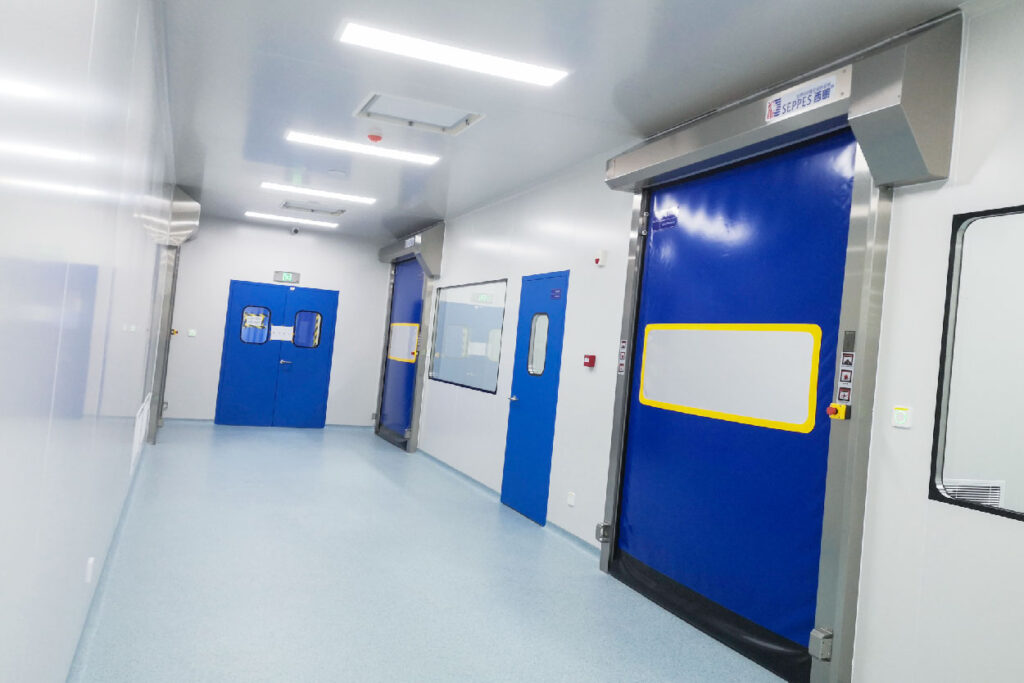
Logistics and Distribution Centers
To maintain the logistics and service center’s ability to function and serve modern supply chains, the process must run without interruptions and operate with increased efficiency. Self-repairing high-speed doors allow the buildings to provide easy and dependable access to high-traffic points. These doors lose full function and must be repaired when they get damaged by the forklifts and other equipment used in the buildings. However, when impacted, the doors can function to a sufficient level to reintegrate themselves into the door frame, causing no need for repair. This also allows for no need for repair and maximum operational function to persist throughout the building.
In addition, when there are unconditioned spaces, these buildings lose less temperature-controlled air, which is essential for unconditioned space transfer in temperature-controlled buildings. As these high-speed doors rapidly pull in open and closed positions, they conserve a highly controlled indoor climate. With integrated excess, these doors save service center workflow, repair avoidance, and provide energy to operate. Overall, high-speed self-repairing doors provide a great return in service and value for the logistics and service center.
Food Processing and Cleanrooms
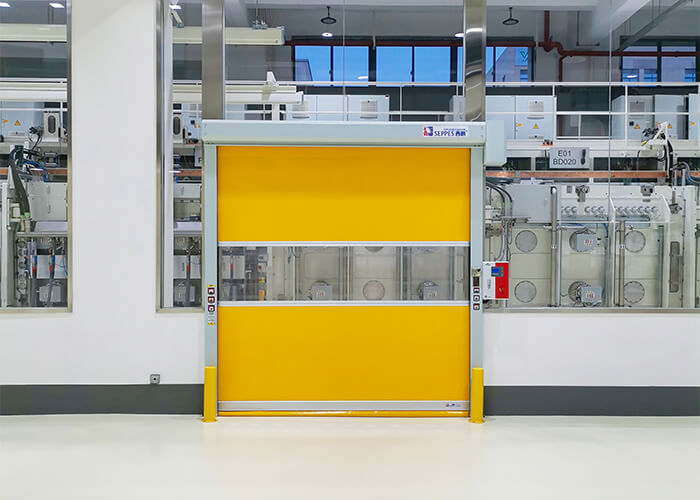
Self-repairing high-speed roll-up doors play an essential role in food manufacturing and cleanroom environments by maintaining strict hygiene and environmental control. Their smooth, non-porous surfaces prevent dirt buildup and support sanitation compliance. Fast opening and closing reduce exposure time, minimizing the entry of dust, insects, and unwanted air.
Advanced models include antimicrobial materials, automated cleaning functions, and airlock compatibility—features that help prevent cross-contamination in food processing. These doors also support ISO cleanroom standards required in pharmaceutical and electronics facilities.
Thanks to their self-repairing mechanism, the doors recover quickly after impact, ensuring minimal downtime and helping these industries maintain productivity and operational compliance.
Automotive and Manufacturing Facilities
In the automotive sector and manufacturing facilities, fast, reliable, and safe self-repairing high-speed doors are extremely important. These doors are designed to withstand high traffic and constant operation, and to save on maintenance costs, the doors self-reset. When damaged, the doors automatically reset, reducing maintenance costs and downtime. The doors’ rapid opening and closing speeds help streamline workflow by allowing fast movements of goods, parts, and equipment. Remaining closed during the rapid openings and closings ensures the doors are never a weak point in the indoor climate. This is especially critical in dust-free manufacturing environments or ones that require strict temperature control. Self-repairing high-speed doors are equipped with cutting-edge technology that makes workplaces safer and controls energy usage more efficiently. This is especially important to modern workplaces’ innovations in self-repairing high-speed manufacturing doors.
Customization and Design Flexibility
Options for Size and Color
Customizable self-repairing high-speed doors can fit a wide range of sizes for different industrial and commercial uses. Whether a facility needs large warehouse openings or smaller specialized doorways, manufacturers provide tailored rapid-door solutions in almost any configuration.Standard and oversized sizes are easy to come by, allowing for seamless fitting in different facilities.
These doors can also be made in any color to match any art or branding that a space may possess. Many suppliers have a list of basic colors, such as red, blue, yellow, or green, but matching a color to company branding or for safety purposes is also very common.Using fully or partially transparent materials also helps let in more natural light and increases visibility. With this flexibility in size and color, manufacturers can make self-repairing high-speed doors both highly functional and visually appealing.
Integration with Access Control Systems
Self-repairing high-speed doors work with advanced control access systems to improve how a facility operates and to make it more secure. Modern doors work with RFID readers, biometric scanners, keypad entries, mobile app controls, and more to allow only specified access and to meet high security needs.
Moreover, these doors can connect to a building’s entire management system, allowing remote management and monitoring of control access points.The system features automatic entry and exit logs for easy security tracking, regulatory compliance, and a faster workflow. This ability to pair self-repairing high-speed doors with advanced access control systems is perfect for Industrial, commercial, and high-security systems. This integration improves security and also reduces footholds by enabling secure and fast access.
Comparative Advantages Over Traditional High Speed Doors
Automatic Self-Repair vs. Manual Intervention
Automatic self-repairing high-speed doors offer superior convenience, accessibility, and energy efficiency but require higher upfront costs and maintenance, while manual intervention doors are cost-effective, reliable, and simpler to maintain but less accessible and convenient.
Tabular Summary:
| Automatic Doors | Manual Doors | |
| Cost | High upfront | Low upfront |
| Maintenance | Regular required | Minimal |
| Convenience | High | Moderate |
| Accessibility | Excellent | Limited |
| Energy Use | Efficient | Variable |
| Security | Advanced options | Basic |
| Reliability | Complex | Simple |
| Hygiene | Touchless | Contact needed |
| Traffic | High-volume | Low-volume |
| Aesthetics | Modern | Traditional |
Cost Analysis and ROI
Self-repairing high-speed doors are an ideal solution for self-repairing high-speed doors with an emphasis on convenience. While these doors may cost more than other options on the market, the self-repairing features reduce the need for maintenance, saving money on future repairs. Ultimately, self-repairing doors are more cost-effective than traditional doors over a longer supply chain.
These high-speed doors also keep the temperature inside the building constant, saving money on utility bills as well. Keeping the energy cost down is a huge advantage in places where temperature control is important, like industrial buildings, warehouses, or cold food storage buildings.
Self-repairing high-speed doors are a smart investment as they can endure high traffic and challenging environments while maintaining efficient operation. Their use in the industrial sector with large resource-heavy machinery or high-volume logistical workflows is a huge benefit in productivity as well. When high-maintenance doors are avoided, the savings over time more than pay for the doors.
Considering cost-benefit analyses, these doors also foster enhanced operational efficiency and savings over time. The touchless tech, updated sensors, and other high-tech features add to the doors’ overall value offered to resource and temperature-controlled efficiency-focused businesses.
Conclusion: Future Trends and Investment Value
Role in Advancing Industrial Automation
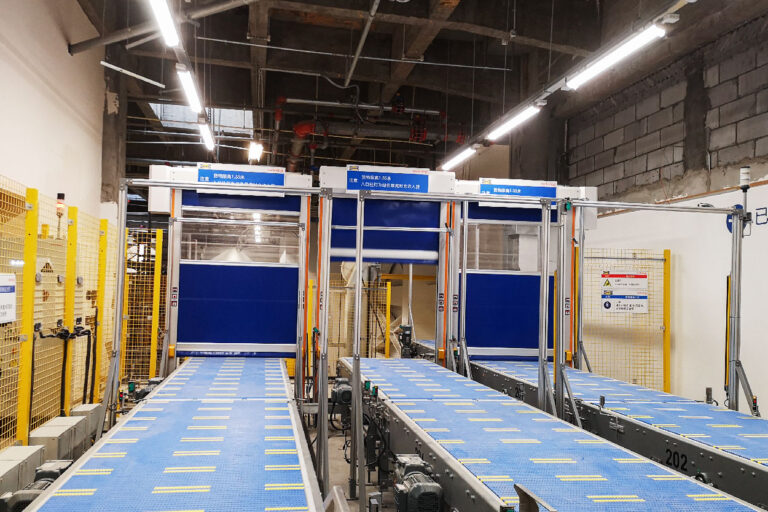
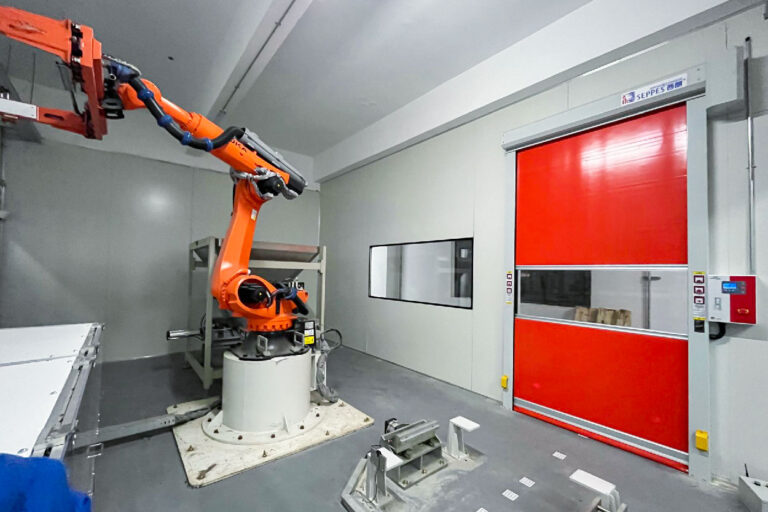
Self-repairing high-speed doors are becoming very important in furthering automation in industry. These doors use new self-repairing technology and handle environments with heavy machinery and high workflow demands. Engineers integrate advanced sensors and IoT technology so the doors operate independently through automated factory systems. They also work seamlessly with conveyor lines, robotic arms, and other automated equipment.
With the new systems, advanced data analytics are used to evaluate and monitor door functions and self-identify system faults. The system can even carry out minor self-repairs, with little or no human oversight, giving the door the ability to self-maintain. This ability will decrease downtime, boost productivity, and lower maintenance costs. For energy efficiency, the doors will optimize the thermal system in the automated facilities and will balance the temperature. The doors will also help maintain safety and hygiene standards with their rapid operation.
With their ability to connect and adapt, self-repairing high-speed doors will help improve operational effectiveness in a range of different areas, ensuring efficient operation. These doors will further streamline workflows in a variety of industries.
Considerations for Upgrading to Self-Repairing High Speed Doors
In the Self-repair High-Speed Doors case, I analyze many things. First, I analyze the operation(s) performed at my building and the type of traffic, weather, and usage frequency of the doors. Then, I analyze the savings on repairs and repair downtime, assuming the doors keep working without any repairs. I analyze the doors’ capabilities to streamline the energy usage and their ability to work with other door systems/automation I have. Finally, I analyze the type of construction used to assess the potential overall savings, as well as the value of the upgrade to my building.
Frequently Asked Questions (FAQs)
What is a high-speed roll-up door, and how does it differ from roll-up doors?
High-speed roll-up doors serve industrial applications and use a high-performance fabric that rolls onto a drum to enable fast opening and closing cycles.Unlike other roll-up doors, these models focus on and prioritize speed and downtime reduction. They are often equipped with a frequency inverter or inverter-driven motor control for efficient operational smoothness. These doors can accommodate pedestrian and vehicle traffic both indoors and outside.
How do self-repairing high-speed doors restore to their original position after an event of accidental collision?
Self-repairing high-speed doors use a crash-safe system with track-reset notches—positioned at the top or along the sides—to let the door panel disengage and re-enter the guide without damage. After a collision, the door moves back to its original position automatically or with minimal manual help. This approach reduces downtime and eliminates the need for counterweight realignment or major repairs.
Are self-repairing high-speed doors suitable for indoor and exterior use?
Yes, most industrial high-speed doors and high-speed fabric doors support both indoor and outdoor use. Manufacturers personalize and modify them with features such as weather seals, insulation, and anti-crash systems. With remote control options, customizable door panels, and built-in safety functions, high-performance fabric doors and dynamicroll®-style systems adapt to various environments and rapid-door applications, ensuring consistent performance for both indoor and outdoor operations.
What safety devices and crash system features are included with self-repairing high-speed roll-up doors?
Self-repairing high-speed roll-up doors come fitted with additional safety features, including photo-eye and edge sensors, as well as audible alarms, and optional anti-crash systems for impact detection. For impact collision events, a crash system and guide track reset notch properly positioned at the top or inside the guides allow for damage-free recovery movement by the door. Movements are constrained for safety using control panels with frequencies and interlocks.
Can high-speed self-repairing doors be insulated or used as a partition between production areas?
You can achieve temperature control and prevent particulates and airflow by using high-speed self-repairing doors and high-performance fabric doors, which you can specify with insulation layers or design as partitions. These fabric door models also provide isolation to the ecosystem while still allowing rapid workflow for environments that demand high-volume movement and speedy operational access.
How does the control panel, inverter, or single-phase option affect performance?
The control panel, usually used in conjunction with a frequency inverter, or single-phase inverter, controls motor speed, soft start and stop, and recovery routines in self-repairing mechanisms to improve the life of a door, reduce the impact of shocks when opening and closing quickly, and enhance the ability to address specific requirements of different door models to accommodate the volume of traffic and Energy requirements of specific applications, especially in the case of high-performance fabrics and high-speed-roll up doors.
What maintenance is required for high-performance fabric roll-up doors and BMP systems?
The high-performance fabric roll-up door systems, including the BMP or dynamicroll® systems, have maintenance programs that include routine inspection of the high-speed fabric, guides, door panel connections, and safety devices. Routine inspections of the crash system, track reset notch, counterweight balance, and control panel settings enable self-repairing mechanisms to be damage-free. Predictive maintenance programs decrease the likelihood of system failures and allow high-speed doors to operate seamlessly in conjunction with high-speed systems.
How do remote control options and customisation improve usability for industrial settings?
Self-repairing high-speed doors offer modular components that enable operators to modify them to suit particular processes. Integrating these doors with a building management system (BMP) and access control with remote customisation provides a seamless workflow. These doors meet safety and operational requirements in heavily used industrial sites by including sound and visual alerts to improve safety, insulation to reduce noise, and customized panel materials to limit wear. Designers also ensure the doors operate quickly, delivering rapid open/close cycles to support high traffic flow.
Reference Sources
- IEEE Xplore: High-speed self-healing ring architectures for future interoffice networks – Discusses self-healing mechanisms in high-speed systems.
- IOP Science: MCU system-based intelligent high-speed elevator door operator fault analysis and research – Analyzes intelligent high-speed door systems and fault management.
- ScienceDirect: Preparation and performance study of self-repairing coating with superhydrophobic properties – Explores self-repairing materials applicable to high-speed systems.
- Taylor & Francis: The repair of vehicle bodies – Includes insights into high-performance systems and repair technologies.
- Virginia Tech VTechWorks: Blast performance of hollow metal steel doors – Research on high-use doors in industrial settings.
 简体中文
简体中文  English
  Deutsch
  日本語
日本語  한국어
한국어  العربية
  Español
  ไทย
ไทย  Bahasa Indonesia