


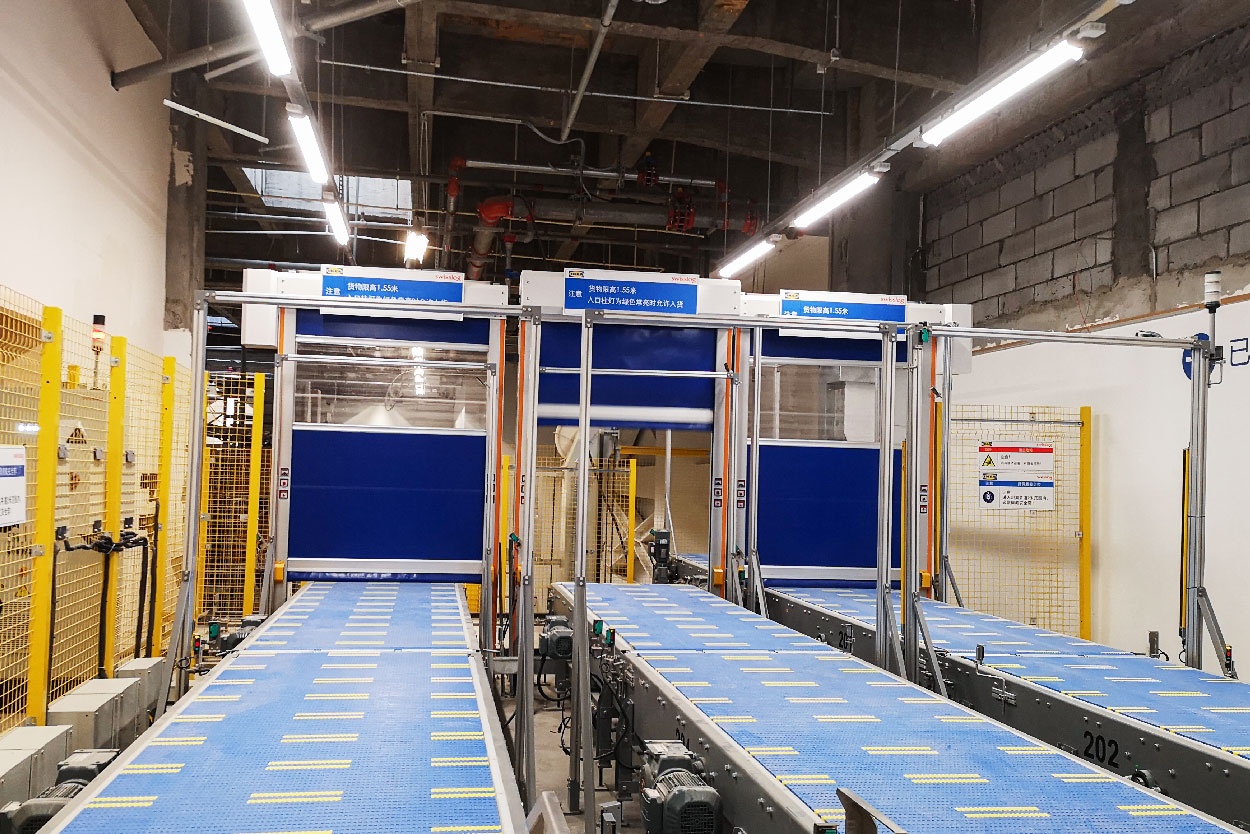
The needs of many other industries are being combined into one simple solution: industrial rubber roll-up doors. These doors give industries efficiency, durability, and reliability, and are designed to be used in the roughest work environments. Furthermore, they improve productivity, safety, and energy efficiency. In this blog, we look into the latest trends, applications, and innovations of industrial rubber roll-up doors to help modernize your business. In this blog, we will tell you the latest information so you will be able to easily modernize your business. We will also tell you why modernized rubber roll-up doors are so needed in your business.
Introduction: Why Industrial Rubber Roll Up Doors Matter
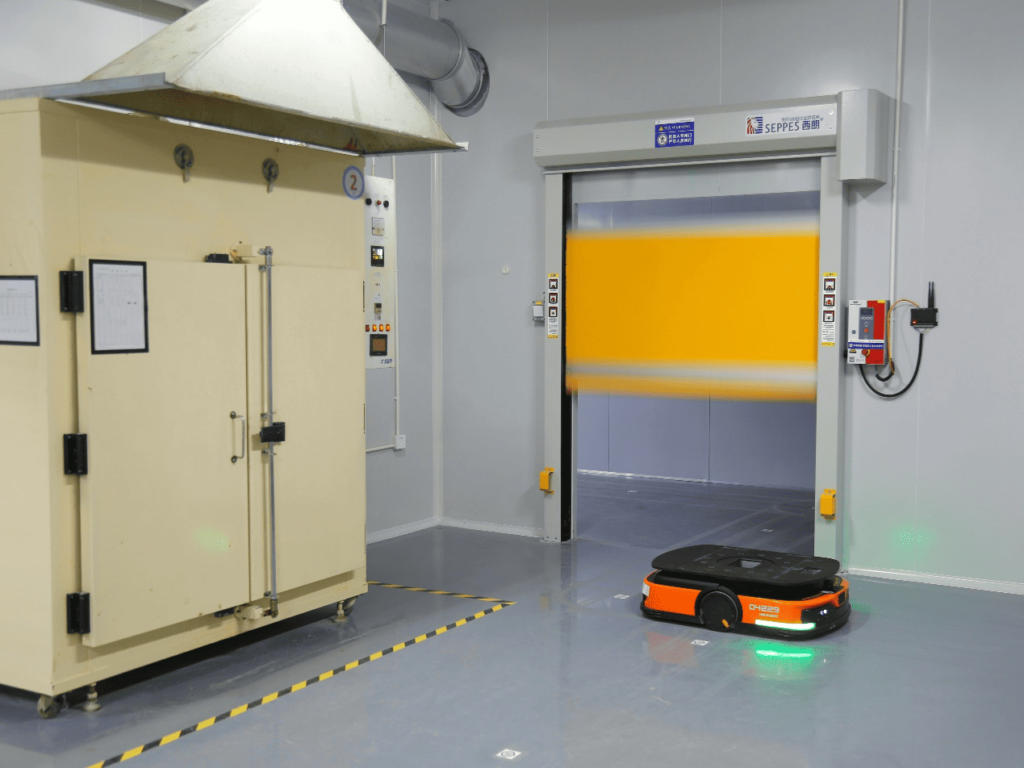
Industrial rubber roll-up doors are incredibly effective in tough industrial environments because of how durable, efficient, and safe they are. Rubber roll-up doors use high-quality materials to last for years. They withstand harsh industrial environments and physical impact, keeping maintenance and replacement costs low. Their fast opening and closing preserve energy and workflow efficiency. Because of quality and value, industrial rubber roll-up doors are very useful additions to warehouses, manufacturing plants, and other industrial sites.
Overview of Roll Up Doors and Their Industrial Importance
Thanks to new technology, industrial roll-up doors have become an essential part of modern businesses. Most roll-up doors withstand heavy daily use, incorporating advanced automation, composite rubber, and heavy-duty aluminum or steel. They integrate best with smart business technology, allowing for quick opening and closing cycles to reduce wait times and save energy.
Today’s roll-up doors have some of the best safety technology available. Most have embedded safety sensors and customizable operation controls to reduce hazards during the movement of machinery, people, or loads. They are also built to control the temperature of the environment to save energy and prolong the life of air conditioning chiller and heater equipment. This is especially true in cold storage and temperature-controlled warehouses.
More and more, roll-up doors are designed to meet the specific needs of individual industries. High-speed roll-up doors, for example, are perfect for logistics and distribution centers that require rapid access. Chemical plants often use corrosion-resistant roll-up steel doors to handle tough chemicals in harsh conditions. With customization options and low-maintenance needs. Industrial roll-up doors help businesses improve operational efficiency and stay competitive in a tech-focused workplace.
Industrial Rubber Roll Up Doors: Key Market Drivers
Roll-up rubber doors are critical components in businesses that need to focus on efficiency and security, especially in extreme environments. They are designed for the most heavy-duty use and the most severe and extreme weather. Where there are severe impacts, these doors perform excellently. They are perfect for businesses like warehouses, distribution lines, and manufacturing facilities.
From efficiency to climate control and cost control, Roll-Up Rubber doors are the best solution. Raor draws help minimize air exchange. This means increased savings in your temperature-controlled environments. In use, repair, and replacement, these doors are low maintenance. Ultimately, these doors help reduce downtime.
The Roll Rubber Doors are designed with security in mind. They provide solid protection from unauthorized access and external threats. In addition to keeping your employees and your valuables, automated locks and user-controlled sensors. All of these provide protection and control from threats.
Considering all these advantages, businesses strategically choose industrial rubber roll-up doors to enhance operational efficiency and provide stronger protection in today’s ever-changing industrial environment.
Market Overview and Growth Trends
Current Market Size and Forecast Highlights (2025–2030)
The industrial sector’s need for high-quality and functional rubber roll-up doors is growing at a rapid pace. Transforming Industries like Manufacturing and Warehousing have also contributed to the growth. Research shows the market was valued at 1.8 billion in 2023 and is expected to reach 3.2 billion by 2030. This shows a predicted growth rate of 7.8% annually.
Rapid industrialization in developing nations is a huge factor in this growth. The increase of e-commerce logistics and the need for better operational solutions are driving demand for high speed rubber rolling doors. Innovations like AI-integrated doors and IoT-enabled systems positively impact the growth in this market. The growing need for sustainable solutions is a huge factor in rubber roll-up doors. They provide the operational solutions required and are increasing energy efficiency.
As industries look to improve security, automation, and cost savings, the rubber market roll-up doors are going to evolve rapidly. The Asia-Pacific region will lead the market as manufacturing and storage units grow. While North America and Europe will experience moderate growth thanks to technological advances and improved infrastructure.
Notable CAGR and Industry Expansion
Demand for durable, low-maintenance solutions for industrial environments is contributing to the steady compound annual growth rate (CAGR) of the industrial rubber roll-up door market. With the development of major insulating capabilities, advancements in automation, safety. And insulation, and safety measures, market innovations are expanding the use of roll-up doors in various industries. The expansion of infrastructure and logistics drives the use of roll-up doors in the automotive and warehousing industries. North America and Europe show steady market growth, while the Asia-Pacific region focuses heavily on industrial applications.
Regional Breakdown: Americas, EMEA, and APAC
Americas
North America’s industrial rubber roll-up doors market has seen steady growth as it has developed a demand from the automotive, warehousing, and logistics industries. The U.S. has the most growth from its development. The use of advanced industrial solutions, and the investment in modern infrastructure. Latin America has grown from developing manufacturing units and the desire for energy-efficient, durable door solutions.
EMEA
Over the last couple of years, EMEA (Europe, the Middle East. And Africa) has demonstrated sustained and continuous growth in the region’s industrial rubber roll-up doors. Europe has a strong and sustained market presence due to the region’s focus on sustainability, strong safety regulations. And automation of industrial processes, including high speed rubber doors. In the Middle East region, end users invest in large-scale infrastructure, airports, and industrial units. That in turn increases the demand for rubber roll-up doors. Africa has a budding industrial market, which typically uses cheaper and more reliable industrial roll-up doors storage solutions.
APAC
Due to fast industrialization and urbanization in China and India. In Southeast Asian countries, the Asia-Pacific (APAC) region has become the fastest-growing industrial rubber roll-up doors market. In the region, large amounts of funding are allocated to logistics and automotive production. And e-commerce warehousing (all of which are end-users of the doors). Furthermore, industrial tech development and growing concern for sustainable energy fuel APAC market growth.
Key Features and Advantages
Durable and Resilient Construction
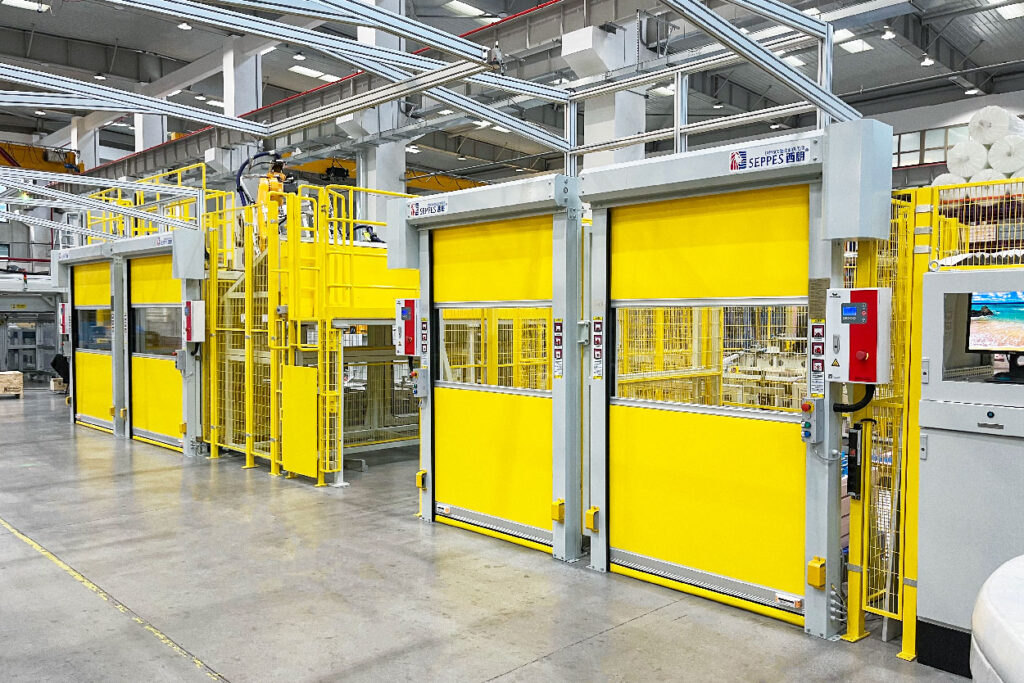
Rubber roll-up doors are made to fit adverse conditions, high volumes of traffic, changing weather, and numerous impacts. They are made from high-quality rubber reinforced with such materials as polyester or other types of high-end fabric. Add to this the upper-end seal technology of the roller doors. And you have a door that offers protection from the entry of weather elements, dust. And debris, and that will ultimately increase your energy savings. They are even highly resistant to corrosion. Maintenance-friendly, rubber roll-up doors are best suited for all your warehouse, manufacturing, and distribution center needs. Providing the best value for your buck, rubber roll-up doors are amongst the best door options for your business.
Energy Efficiency and Climate Control Performance
Industrial rubber roll-up doors can significantly improve energy efficiency and control the climate in a space. They provide climate-controlled areas with a good seal that minimizes conditioned air and airflow loss. They help with decreased energy and utility costs from stabilizing internal temperatures. Modern rubber roll-up doors are insulated, which covers the thermal performance and is great for cold storage, food processing, and temperature-sensitive areas.
Most models include high-speed operation, which controls how fast doors open and close to have more efficiency, control the climate. And improve productivity in high-paced industrial businesses. The industrial rubber roll-up doors are a great business choice in climate control and energy efficiency. Overall, they give businesses more control over operational efficiency and sustainability.
High-Speed Operation and Automation Compatibility
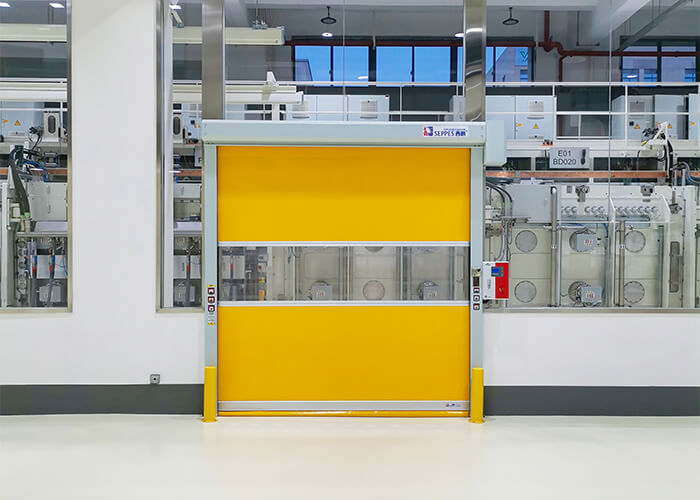
The Industrial Rubber Roll-Up Doors are built with speed and efficiency for busy areas such as logistics, warehousing, and manufacturing. Their high-speed functions let them open and close quickly. This minimizes wait times at their doors and allows customers and employees to go about their day with as few interruptions as possible.
These doors are also made to work with automated systems, so modern facilities can also use them. Some doors come with built-in motion detectors, remotes, and programmable logic controllers (PLC), which means these doors can open and close on their own as per their settings. This eliminates the need to open and close these doors manually and keeps employees safer as there is less interaction required in high-risk zones. In summary, the Industrial Rubber Roll-Up Doors combine high speed and technology to streamline business functions.
Applications Across Industries
Warehouses and Logistics Centers
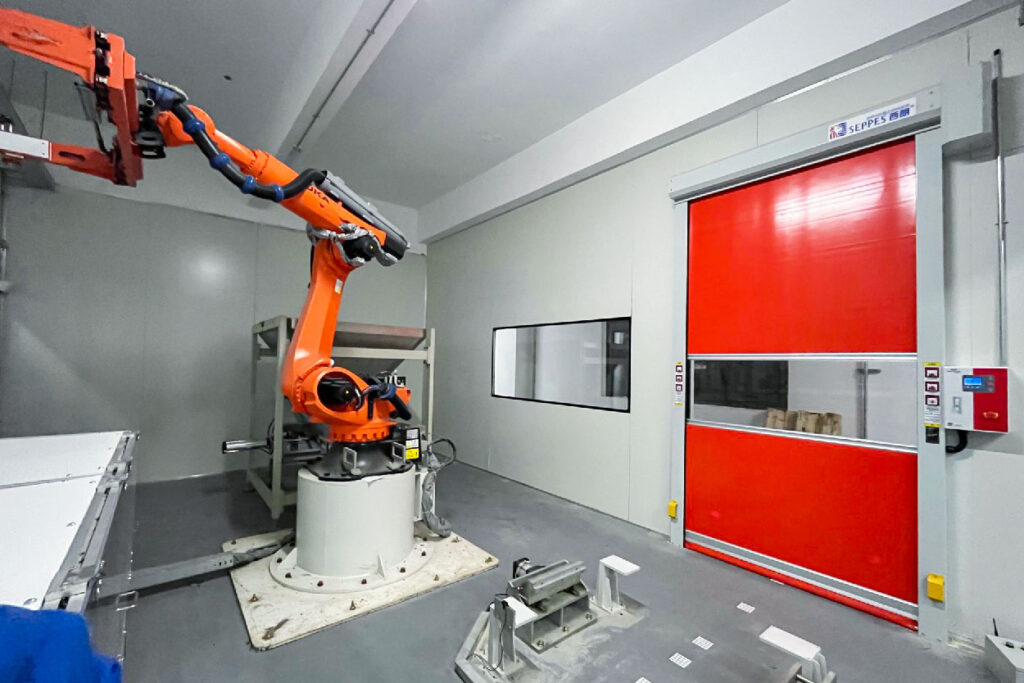
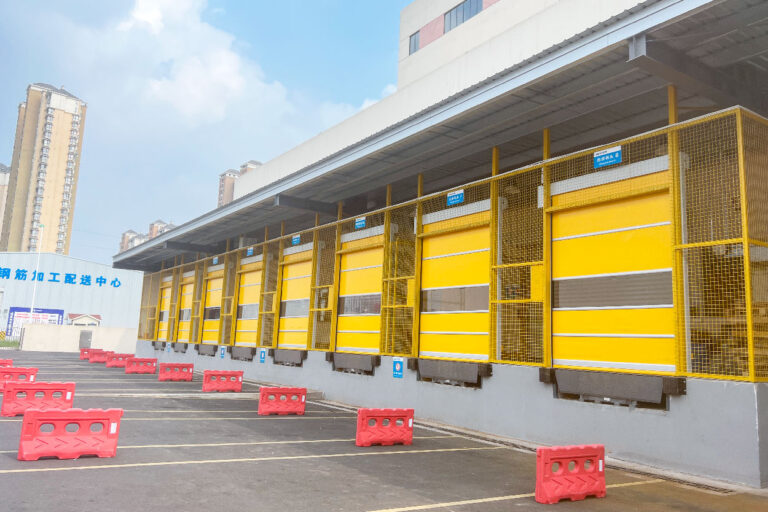
In warehouses and logistics centers, where operational efficiency and durability are paramount, industrial rubber roll-up doors are a vital component. Unlimited operational capacity, heavy throughput, and any environmental weather conditions are easily managed by these doors. In cooler climates and spaces that have specific humidity control requirements, these doors are climate control savvy, high energy loss mitigating, and high open and close speed sustaining. Material handling is also streamlined, as they open quickly to let goods and forklifts pass, and quickly close to reduce operational downtimes.
Large-scale automated facilities that use industrial rubber roll-up doors achieve modern safety and efficiency standards through enhanced automation and sensor controls built into contemporary roll-up doors. Additionally, the reinforced rubber is impact-resistant and will hold up even in the busiest environments. For these reasons and to improve workplace safety, modern roll-up doors are highly recommended to create a balanced workplace.
Cold Storage and Manufacturing Facilities
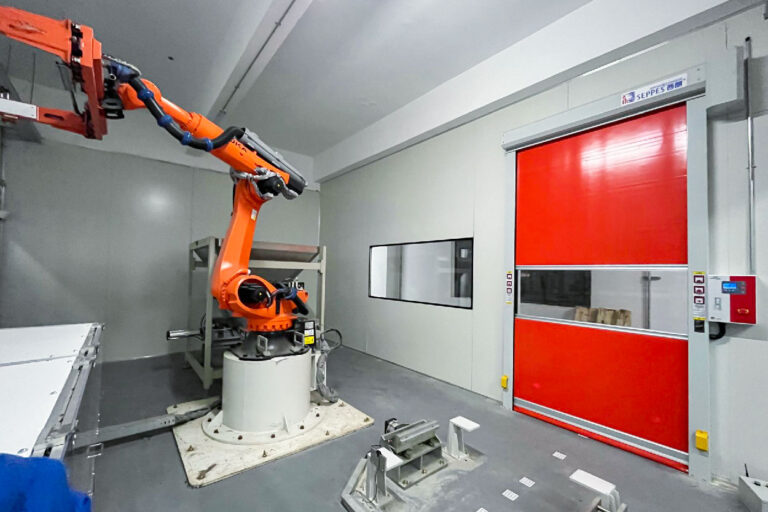
Manufacturing and cold storage facilities rely heavily on industrial rubber roll-up doors. The doors are adaptable and can withstand changing environmental factors. Adaptive functionality is important in cold storage facilities because it’s important to keep the doors at a specific temperature to protect perishable inventory. The speed at which the doors open and close minimizes wasted energy from the external environment and keeps the focus on energy conservation. The doors feature above-average construction and minimize impact damage, which is crucial in manufacturing facilities with heavy equipment and high traffic. The latest rubber roll-up doors incorporate additional safety features and sensor technology to automate operational processes to increase productivity further. In any industry that requires speed and high-quality thermal insulation, industrial rubber roll-up doors are a necessity.
Healthcare and Institutional Settings
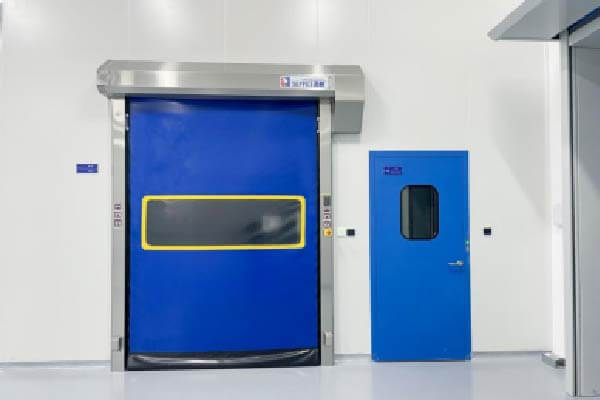
Healthcare and institutional facilities use rubber roll-up doors to protect the health, safety, and efficiency of staff, patients, and students. Hospitals, research laboratories, and pharmaceutical facilities have many specific requirements, and Industrial Rubber Roll-Up Doors meet these needs with their design. Smooth, non-porous surfaces make daily cleaning easier and more efficient. These surfaces help to meet strict sanitization requirements and also help to conform to standardized regulations needed in front of staff. These requirements include easily cleaning surfaces, rapid operation to allow for quick access, and help maintain environments that are needed for air exchange control, such as operating rooms and clean rooms. Optional features include soundproofing, fire resistance, and touchless operation. Industrial Roll-Up Rubber Doors are designed to address the individual safety and functionality requirements needed for the industry.
Technology and Innovation Driving the Market
Smart Automation and IoT Integration
With smart automation and IoT technology gaining usage in most industries, the industrial rubber door market is starting to benefit. Modern facility management integrates with rubber roll-up doors to provide better operational management and usage.
Rubber roll-up doors with IoT technology allow businesses to monitor doors remotely, automatically identify faults, and schedule predictive maintenance. These technologies help track door usage and enable businesses to address faults before they escalate, optimizing energy usage in the process.
Automated industrial rubber doors can also be customized to respond to environmental or operational events. These can include temperature, fire, or even the volume of people in the space. These features help provide a safe environment for users, and also help provide energy management with less wasted energy. The doors’ latest innovations include the most advanced technology in the market to meet a company’s automation and facility cost management requirements.
Material Advances: Reinforced Elastomers and Composites
New developments in materials science have brought new possibilities to industrial rubber roll-up doors through composite materials and new reinforced elastomer technologies. Enhanced elastomers blend added tensile strength with the flexibility of rubber to create doors that withstand more damage, weather conditions, and increased use. Composites also create new possibilities as a combination of fiberglass or carbon fibers with a polymer, which in their new form is lightweight, yet extremely tough. Better insulation in doors also reduces energy expenses in temperature-controlled environments, and sustainable, recyclable materials used in composites help with efforts to “green” engineering that is beginning to define the future of industrial rubber roll-up doors.
Customizable Options for High-Performance Rubber Doors
Businesses can consider their high-performance rubber door solutions to be designed for customization. Custom options include a user-selectable door size to meet fit requirements for their operation. Another option is to choose an automatic door system. Automation is available for high-speed operation, touchless opening, and programmable controls in high speed rubber doors.
Users can also customize their door systems to their operation or branding design through a selection of materials, colors, and finishes. Additional features are available for operation design when temperature and noise control are requirements through a selection of thermal and acoustic insulation. Custom option for safety include vision and safety impact panels as well as breakaway safety impact panels for added safety impact panels.
Custom high-performance rubber door solutions provide durability and adaptability to meet an operation’s specific requirements. These doors can also integrate advanced technological features to enhance performance. These high-speed rubber rolling doors are available for a wide range of commercial and industrial applications. High-performance rubber doors with custom features offer smart monitoring flexibility with IoT connectivity for real-time performance analysis and predictive maintenance. Emerging Technologies and safety sensor technologies. Enduring Technologies is always focused on durability and adaptable flexibility for use in a wide range of commercial and industrial applications.
Segmentation by Mechanism, Speed, and Materials
Manual vs. Automatic Roll-Up Doors
Manual roll-up doors offer a simple, inexpensive solution and operate using a hand crank. Their straightforward mechanisms make them ideal for low-traffic areas, yet they also perform well in spaces with moderate use. Built from strong, durable materials, these doors withstand heavy wear and tear, making them suitable for small warehouses, storage units, or home garages where speed and automation are unnecessary, and usage remains light.
On the other hand, automatic roll-up doors use modern features like electric motors and computerized control systems, meaning they can open and close by themselves. Since doors like these can include things like motion sensors, touchless entry, and remote control mechanisms, they can make places much more efficient and are great for high-traffic areas. These doors are great for places like factories, distribution centers, and places where people are always loading and unloading trucks.
By determining things like average speed and your budget, people can determine which roll-up door best fits their needs while maximizing functionality.
Speed Classification: High-Speed and Ultra-High-Speed
To operate successfully in tough environments, ultra-high-speed roll-up doors and high-speed roll-up doors are built for speed and ease of operation. High-speed roll-up doors operate at 20-60 inches per second. This makes them great for places like warehouses with moderate to high levels of traffic. High-speed roll-up doors will optimize efficiency and increase the lifespan of the door. High-speed roll-up doors will also improve the efficiency of temperature control in a cold storage unit, as well as improve the temperature control in the environment by reducing the amount of time the door is open and closed.
At over 80 inches per second, ultra-high-speed roll-up doors exceed high-speed roll-up doors in speed by a large amount. This makes ultra-high-speed roll-up doors a good fit for places like automotive manufacturing plants and distribution centers with advanced distribution systems. Because of the need to increase operational efficiency, ultra-high-speed roll-up doors are manufactured with advanced materials and manufacturing processes. This makes newer ultra-high-speed doors much more reliable and also more energy efficient. This will give them longer life spans and improve operational safety.
Choosing between ultra-high-speed roll-up doors and high-speed roll-up doors is a big decision for your business. Think about traffic volume, how much energy savings are needed, and the operational requirements that need to be met to meet the requirements of your customers using high performance rubber doors.
Material Choices: PVC, Steel, and Neoprene
Choosing the right materials for roll-up doors is important for their overall performance, life span, and how well-suited the doors are for the environment you are working in. For quick and inexpensive options, PVC (polyvinyl chloride) is a great choice (for example, factories with temperature controls, or cleanroom mobile doors) because it is lightweight and flexible; however, steel is much better because of its high impact and extreme weather conditions. Steel works best for industrial arrangements where high security is needed; it is also best for extreme weather conditions. Neoprene works for extreme chemical and oil exposure and extreme temperature conditions as well. Neoprene works perfectly for design structures in a manufacturing process where high temperatures are encountered. Understanding all of these materials makes it easy for businesses to figure out how to get the best roll-up doors for their needs.
Distribution Channels and Customer Strategies
Direct Sales and Aftermarket Distributors
Direct sales simplify the way of buying industrial rubber roll-up doors for businesses. The manufacturer sells the doors directly to the customer. This means the customer can get a heavy duty door that fits their exact operational requirements. This allows customers to order doors to their exact specifications and purchase directly, cutting out the middleman and reducing costs. Customers also receive support, including installation options and ongoing maintenance, ensuring the door operates properly for years.
On the other end of the spectrum, aftermarket distributors are the ones who make buying these doors possible for the large customer base because they are the ones who buy them from the manufacturers and resell them to customers. They supply doors to customers across various industries and offer multiple styles and specifications to meet diverse needs. They also sell doors online, making it easier for businesses worldwide to purchase rubber roll-up doors. The unique combination of ways to buy doors from distributors and the manufacturers directly gives customers endless operational supply possibilities for their businesses.
Online Platforms and Value-Added Services
Innovation and technology are popular lately and have changed how different industries operate, including how to market and sell high performance rubber doors. E-commerce websites have also proven to help entrench the informational market. Product specifications, technical info, and even third-party reviews/testimonials help buyers make an informed decision. Leading manufacturers and distributors have updated their websites, utilized third-party websites to enhance their market reach, shortened their delivery times, and increased the ease of online transactions.
Also very popular are the online/on-demand virtual assistance, online customization to your personal specifications, and video tutorials and guides on maintenance to help assist the buying process. Customers can design doors to their specifications, access customer service virtually and at any time, and adjust their maintenance calendars digitally to their specifications. Plus, advanced search engines and algorithms are more precise and better at directing customers to doors that are appropriate for their needs, their industry, and even their location and the weather. This digital/technological commitment is the rubber industry’s dedication to the buyer and their needs.
Challenges and Market Restraints
High Initial Installation and Maintenance Costs
The installation and maintenance costs of industrial rubber roll-up doors are exceedingly high and present a challenge to most businesses. These heavy duty doors are made to last a long time and to be utilized frequently, and as such use high construction costs and materials along with automation and safety systems. These features complicated construction and costs and deter businesses from investing; however, safety and automation systems provide longterm cost savings. Maintenance with these systems is another deterring cost. Frequent inspections, part replacements, and specialized upkeep make maintenance complicated, increase costs, and require a skilled technician.
Businesses that need operational improvements are the most affected by high costs, and small and medium businesses find costs a barrier. Manufacturing plants use rubber roll-up doors in extreme cold and extreme heat environments, and use high-maintenance repairs on doors. New methods and designs have reduced installation costs. Preemptive maintenance and Modular design manufacturing are more cost-saving, prices and doors are becoming more reasonable over time.
Tariff Impacts and Supply Chain Disruptions
The construction of industrial rubber roll-up doors is affected by global trade. Due to increased rubber, steel, and aluminum, manufacturing costs have risen. Therefore, end-users from different markets pay different amounts. Manufacturers’ supply chain alterations due to changing trade tariffs result in new materials acquisition from new, less economically viable, and more expensive countries.
Inaccessible and unscheduled raw materials create imbalances in industrial resources. When labor is present, it is expensive, and raw materials are unattainably delayed. Increased costs of transportation and delayed shipments create imbalances in resources. These increased lead times to depleted inventory create localized manufacturing and improved inventory management in many companies. The global supply chain rebalances. Restrictions through tariffs and unstable supply chains will continue to economically and operationally affect the rubber roll-up door industry.
Limited Awareness in Developing Markets
Heavy-duty industrial rubber roll-up doors provide durability for high-traffic areas and harsh environments. Their unique design handles extreme temperatures and high moisture, making them ideal for manufacturing, warehousing, logistics, and cold storage. Despite these benefits, many businesses in developing countries and lower-income economies underuse industrial rubber roll-up doors. Many developing countries don’t have information, poor marketing, or a lack of information on money-saving opportunities.
Analysing Google search trends, we can see that developing countries are very interested in industrial automation. Firms should invest in marketing campaigns to educate developing countries on the benefits of industrial rubber roll-up doors, including saving energy & money. And improving the overall safety of the work environment. Partnering with local distributors to show the developing countries that industrial rubber roll-up doors are cost-effective and reliable to improve their operational workflow and to show that it is a viable option, improving their overall industrial infrastructure.
Future Outlook and Strategic Recommendations
Shift Towards Sustainability in Manufacturing
Various industries now apply sustainable practices to produce rubber roll-up doors. For example, manufacturers use high-performance rubber that comes from recycled materials, can be recycled, or is biodegradable. In addition to this, some of the manufacturers are focusing their efforts on making processes that consume less energy to produce the doors in order to reduce emissions from their factories. With the implementation of renewable energy sources. Such as solar or wind energy, the companies will become more environmentally friendly than they are now.
Modern, designed rubber roll-up doors are also being made for less maintenance and longer durability. This will generate less waste during their lifetime, and with the use of advanced technologies such as sustainable coatings and automation in production, the doors will have much-improved life spans and be better environmentally. This is in coordination with the regulations around the world. That are getting stricter, to reduce the industrial emissions of greenhouse gases and promote a circular economy.
From the positive impacts to customers from sustainable strategies, it has shown that the demand for environmentally responsible products from customers has become greater over time. Continual research and innovations will be the main driving force for industrial rubber roll-up doors and will give the doors a greater edge in competing for sustainable manufacturing.
Emphasis on Smart Factory Integrations
The use of industrial rubber roll-up doors in smart factories shows how automation and sustainability can work together. These roll-up doors have been engineered to work with smart systems in factories with things like IoT (Internet of Things) sensors, machine learning, and automation. These doors also link to central factory management systems to enable them to adjust to things like how active the factory is, the temperature, and humidity.
The ability of high speed rubber doors to open and close automatically and to sync with robots or conveyor belts helps cut down energy waste while also improving efficiency. Smart sensors also provide predictive maintenance to catch and address problems before they result in downtime. These features increase operational dependability. With all of these features, industrial rubber roll-up doors help keep energy use low, workflows smooth, and safety high. These doors are vital to all smart manufacturing systems.
Importance of Aligning with Safety and Efficiency Standards
Industrial roll-up doors that are designed for safety give you peace of mind and protect you legally. New safety standards set by OSHA, and quick open and close doors, as well as new fume-resistant materials, protect workers and ensure doors are compliant. These new energy standards mean that doors limiting heat and cold escape are as much of an advantage as new high-speed openings. These doors decrease your company’s energy expenditures and help your company’s bottom line. And help the earth by being high-performance rubber doors. Additionally, to the health of workers, the doors’ durability and your maintenance budget’s health will thrive as they comply with your new standards. Roll-up doors that are safe are a win for the workplace and a win for the company.
Conclusion
Recap of Key Trends
An important trend in manufacturing and logistics operations is the adoption of industrial rubber roll-up doors. A main focus is on energy efficiency and the use of the latest insulation technologies to reduce heat loss. The speed of doors opening and closing enhances energy conservation. A shift in the design of industrial rubber roll-up doors is for durability. Design of the door material is extended to the strength and longevity of the door feature to endure heavy use and climates. Enhanced safety adjustments to industrial rubber roll-up doors feature technology such as a photo-eye for motion detection. Auto-reverse doors and technology improves safety of the work environment.
Increasing use of the Internet of Things is defining the new design and operation of industrial roll-up doors. Smart technology for real-time use of the door allows for the accurate assessment of operational status. Downtime and cost of maintenance are reduced. Eco-friendly and recyclable materials are used in the manufacturing of industrial rubber roll-up doors. Improved designs of doors are now available to admins of industrial operations. The doors are eco-friendly. Improved doors have combined safety and efficiency. The installation of the latest designs of doors is a must for industrial operations.
The Strategic Significance of Advanced Industrial Rubber Roll-Up Doors
To me, modern industrial high speed rubber roll-up doors are important because they improve operational efficiency, safety, and help with sustainability. With their durability and quick operation, they decrease downtime and maintenance. Their eco-friendly components assist users in meeting sustainability goals. These doors are functional and help create better industrial spaces.
Frequently Asked Questions (FAQs)
How does an industrial rubber roll-up door improve opening speed and productivity?
High-speed rubber roll-up doors include high-speed, rubber doors and rapid open and close cycles which improve productivity by cutting down on air exchange and the time it takes for forklifts and people to pass through doors. These high-speed rubber roll-up doors use direct drive, springless, and tough drive systems to work continuously for large openings. The rubber curtain recovers quickly from light hits, which helps busy facilities keep up with throughput instead of slowing down from increased downtime.
What makes the curtain and door design suitable for harsh environments?
Rolling rubber doors are tough and designed to handle the hottest and harshest of conditions like the elements. The door curtain resists breaking and features a polyester weave that withstands tearing and abrasion while providing added strength. The heavy-duty guide construction and the low-profile components help the doors withstand a lot of wind. And they also perform very well with heavy foot traffic and door use. Many high-performance doors feature a curtain lock design and curtain features that lock the curtain in place under adverse wind conditions. These doors can and are used in both outside and inside tough conditions with high and low air pressure.
Are these rugged industrial rubber doors appropriate for large openings and heavy-duty applications?
Roll-up steel doors and high-speed rubber doors are available for heavy-duty applications and large openings. Models such as rugged rolling steel doors and high-performance rubber doors handle frequent cycles and manage wind loads. For larger openings, facilities use hybrid versions with a rubber curtain and heavy-duty guides and frame construction to deliver performance and dependability under continuous, demanding use.
How does the door compare to traditional overhead door or garage door solutions?
Rubber roll-up doors are industrial doors that provide faster cycle times, less maintenance, and are more impact resilient than an average garage door or overhead door. While rolling steel and overhead doors are durable, rubber doors are faster and utilize less floor space, as overhead doors require more track space. High-speed rubber doors use a flexible rubber curtain that absorbs impact and causes less damage. For sites that require high access speed and low downtime, high-speed rubber doors are the superior option to traditional overhead doors.
What safety and durability features are common in high-performance rubber roll-up doors?
In order to minimize the need to service the door, high-performance doors include heavy-duty guides, springless or direct drive systems, and components that require as little maintenance as possible. Safety options include reverse safety edges, motion sensors, and patent-pending curtain locks that help keep the curtain from blowing out during high wind situations. The materials used and the construction used show a commitment to dependability. And many manufacturers provide lifetime or extended warranties for the parts and curtain performance, even in extreme conditions.
How do I choose between a rubber curtain and a rolling steel door for my facility?
Think about the priorities of the application. If you need rapid operation, combined with impact resistance, low maintenance, and high-volume traffic, a high-speed rubber door or rubber curtain is typically the best option. If the need is high security, needs to be fire rated, or extreme resistance to cutting and durability, then a roll-up steel or rolling steel door may be the better option. When choosing a product, consider requirements for wind load, the size of the opening. Whether the door is for exterior or interior use, and whether it needs to stand up to extreme conditions or heavy-duty usage.
What maintenance and lifecycle considerations should I expect for rugged high-speed rubber doors?
Most commonly, high-speed rubber roll doors have low maintenance needs that are low. They have routine inspections done on the drive system, curtain, guides, and bearing drive parts, and occasional lubrication done on the bearings. Metal doors are generally repaired more often compared to rubber curtains. Many manufacturers have a lot of confidence when it comes to long-term dependability for industrial use. And so they back performance with curtain and component lifetime warranties and strong warranties.
Which manufacturers and patented technologies should I look for when specifying a high-performance industrial rubber roll-up door?
Look for proven brands, like Rytec, and others that use high-performance rapidflex® style technology. Look for high-performance doors that are patent pending for their curtains, springs, or their locking mechanism, and have a direct drive or springless system for safer use and a strengthened structure. Choose a door that suits the required conditions, is rated for exterior or interior use, handles wind loads. And fits large openings to meet expected standards.
Reference Sources
- Value Stream Mapping of a Rubber Products Manufacturer
This academic paper discusses rubber product manufacturing processes and efficiency improvements.
Read the paper here - Industrywide Studies Report at Gates Rubber Company
A detailed survey report on working conditions and processes at Gates Rubber Company, provided by the CDC.
Access the report here - NIOSH Control Technology Assessment at Uniroyal Tire Company
This report includes industrial hygiene assessments and mentions the use of foam rubber for airtight doors.
View the report here
 Deutsch
  English
  简体中文
简体中文  日本語
日本語  한국어
한국어  العربية
  Español
  ไทย
ไทย  Bahasa Indonesia