

Moderne Lagerhäuser, Produktionslinien und Verladedocks erfordern Geschwindigkeit ohne Kompromisse bei Sicherheit, Energieeinsparung oder Haltbarkeit. Schnelllaufende Rolltore bieten genau das: konstruktionsbedingte Geschwindigkeit, robuste Bauweise und intelligente Steuerungen, die sie zu echten Betriebsvorteilen machen. Die Vorteile liegen auf der Hand – 20 % höherer Durchsatz, 50 % weniger torbezogene Unfälle und über 30 % geringerer Energieverlust. Für Kühlhäuser, Reinräume oder Sicherheitsbereiche amortisieren sich diese Tore schnell und beweisen, dass sie kein Luxus mehr, sondern Industriestandard sind.
Einführung in Hochgeschwindigkeits-Rolltore
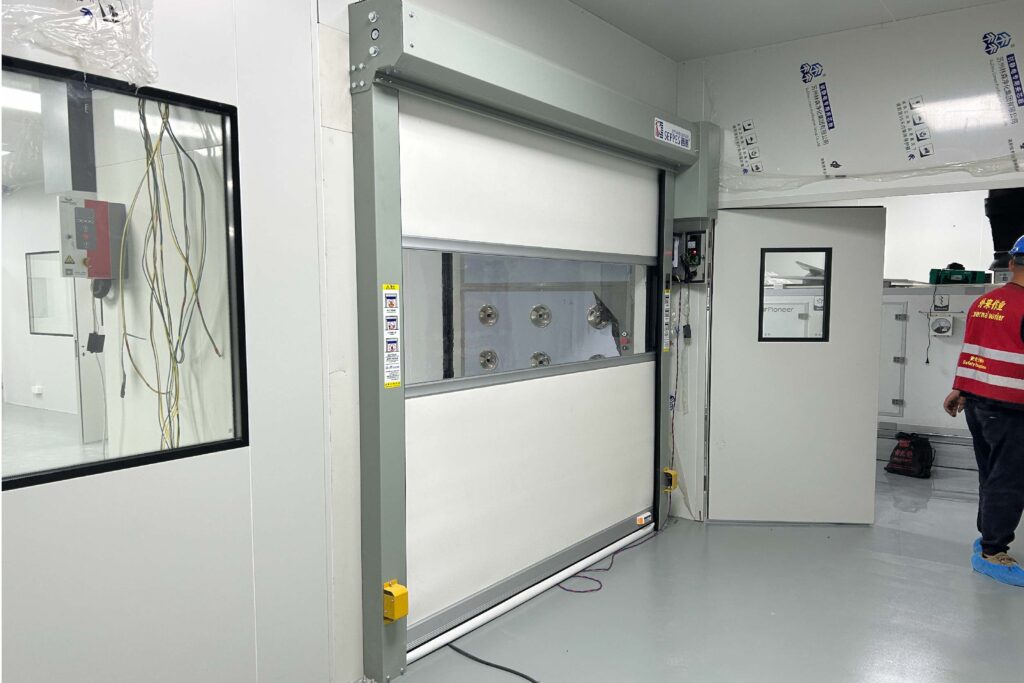
Hochgeschwindigkeits-Rolltore sind fortschrittliche Industrietore, die für schnellen und effizienten Betrieb ausgelegt sind. Sie öffnen und schließen deutlich schneller als herkömmliche Tore, reduzieren Wartezeiten und verbessern den Arbeitsablauf in stark frequentierten Einrichtungen. Diese Tore werden typischerweise in Umgebungen eingesetzt, in denen die Minimierung des Luftaustauschs, die Aufrechterhaltung von Temperaturen oder die Erhöhung der Sicherheit Priorität haben. Ihre Haltbarkeit, Energieeffizienz und Widerstandsfähigkeit bei häufiger Nutzung machen sie zu einer zuverlässigen Lösung für Lagerhäuser, Produktionsstätten und andere hochfrequentierte Bereiche.
Definition und Kernmerkmale von Schnelllauf-Rolltoren
Fast Acting Roll-Up Door is engineered to zip open and shut at eye-watering speeds, channeling efficiency, security, and reliability in spaces that never slow down. Built to handle the unique demands of factories, warehouses, and controlled environments, these doors bundle a suite of performance-boosting features that align with any operational blueprint.
Here’s a quick look at five standout characteristics of these high-velocity barriers:
Go-Getters in Motion. Speeds kick off at a respectable 36 inches per second and can blast past 100 inches per second, compressing downtime into fractions of a second and pushing productivity through the roof.
Tough Meets Agile. Premium composites—think reinforced PVC, anodized aluminum, or marine-grade stainless steel—offer a resilient shell that shrugs off grinding use and the hardest of climates, shift after shift.
Bedeutung von Geschwindigkeit in industriellen und gewerblichen Räumen
Fast-acting roll-up door is proving to be key productivity multipliers for industrial and commercial operations. Engineered to open and close in seconds, they eliminate unnecessary delays, allowing. material, personnel, and equipment to move quickly and continuously. Each cycle trims the exposure time to outside air, which keeps conditioned interiors stable, curtails heating and cooling costs, and minimizes the chance of airborne contaminants reaching sensitive goods. Moreover, the doors’ velocity adds a layer of safety in congested aisles; sensors and soft edges ensure that personnel and equipment can proceed confidently, sharply cutting the odds of door-related collisions. For sites running tight production schedules and strict quality guidelines, these doors’ combination of speed, durability, and reliable performance is an indispensable part of the everyday workflow.
Die Entwicklung der Schnelllauf-Rolltor-Technologie
The design and manufacture of high-speed doors have evolved in tandem with engineering and materials science breakthroughs, each iteration expanding the applications and performance of the product. Five recent developments stand out as having fundamentally redefined the technology:
*Optimized Drive Mechanics* System designers have succeeded in miniaturizing and circuit-integrating exceptionally responsive driving elements. As a result, doors now reach operational speeds of 8 feet per second with pronounced precision, accelerating and decelerating in fractions of a second to reduce standby power demand and mechanical stress.
*Lightweight Composite Skin* Engineers have migrated from traditional steel to multi-layer composites—reinforced polyester, micro-cell PVC, and specially coated textile laminate. These skins remain below 3/16-inch thickness, delivering class-leading tensile strength, chemically-resistant surfaces, and aerodynamic profiles, all of which support rapid cycling and prolonged durability in harsh production environments.
*Proactive Traffic Management* The user interface now occupies the sensor level: sophisticated radar, laser, and thermal arrays gather real-time volume and speed data before ranking and routing traffic. Control logic uses predictive patterns to pre-position panels, eliminating blank hesitation and creating walk-up touchless, bi-directional, and scheduled modes that deploy power and panel motion only when requisite.
*Variable Resistance Thermal Core* Insulation technology no longer ends with air-gap chambers. Door cores now consist of multi-material sandwiches that fold bubble cores into polyurethane webs, followed by flexible EPDM skirt extrusions that contour to the jamb upon closure. The combined system limits the delta between storage and outside environments, safeguarding pharmaceuticals in cleanroom docks and करमेला리에 running less tonnage of vapor re-cooled air.
Mechanismen und Konstruktion von Schnelllauf-Rolltoren

Fortschrittliche Motorsysteme und Schienenkonstruktionen
Fast-acting roll-up door incorporate state-of-the-art motor technology that pivots on speed to tighten energy use and eliminate downtime. With variable-frequency drives built in, each motor modulates speed to open and shut smoothly. Minimizing both friction and strain, so components stay strong for many cycles. The tracks, specially shaped for both rigidity and low tolerance, guide panels silently, confining vibrations and reinforcing structural integrity even in bustling loading operations. Collectively, these refinements sharpen operations control, boost durability. And elevate safety in environments where every second and every exposure to air counts.
Sicherheitsmerkmale: Sensoren und Notfallprotokolle
Modern fast-acting roll-up door come fitted with an array of sophisticated safety mechanisms designed to safeguard both personnel and equipment throughout daily operation. Integrated photoelectric and motion sensing elements scan the entire opening zone; the system responds in milliseconds. Halting the door before an obstruction is ever fully recognized, thereby averting possible injury. In critical environments where foot and cart traffic converge, edge-detection strips, responsive to the lightest point-contact, further mitigate exposure by reversing motion the instant contact occurs. Power interruptions will not compromise safety. Each door is equipped with a manual crank option to complete an open or close cycle. Allowing safe passage while electrical systems are restored
Intelligente Steuerungen für optimierten Betrieb
Smart controls for quick-roll-up doors boost performance by maximizing speed, accuracy, and dependability. Programmable logic controllers (PLCs) form the core, letting operators set opening and closing velocities to exact tolerances. Linked sensors trigger automatic actions, like lifting the curtain upon recognizing motion, or pausing the drop when an object blocks the path. Built-in wireless connectivi-ty enables remote observation and command. Managers can watch door status and alter settings in live time from any mobile device. By embedding these intelligent capabilities, facilities uplift throughput, lower energy consumption, and reinforce safety.
Anwendungen und Einsatzbereiche von Hochgeschwindigkeits-Rolltoren
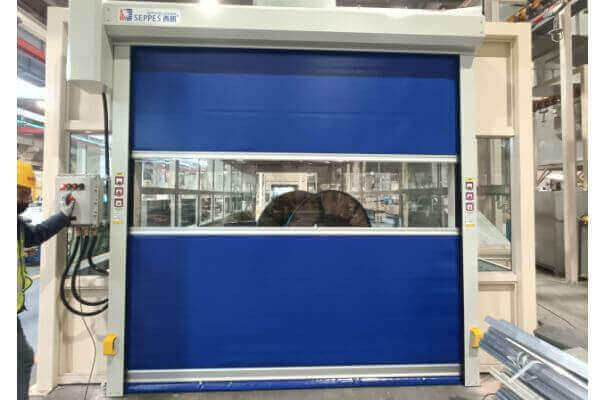
Ideale Umgebungen: Lagerhäuser und Distributionszentren
Fast-acting roll-up door is particularly suited for warehouses and distribution centers due to their ability to streamline operations and maintain strict environmental controls. These facilities often require fast, frequent access between different areas to support efficient loading, unloading, and inventory management processes. The rapid opening and closing speeds of these doors help minimize air exchange, maintaining temperature and humidity levels critical for preserving goods, especially in cold storage or climate-sensitive environments. Furthermore, their durability and low-maintenance design ensure long-term reliability even in high-traffic areas, enhancing workflow and reducing operational disruptions.
Vorteile in temperaturkritischen Branchen
Fast-acting roll-up doors deliver measurable advantages whenever precise temperature management is non-negotiable. Here are five standout benefits explained in detail:
Energieeffizienz
Doors that glide shut in seconds curtail heat or cool losses, slashing the time different temperature zones overlap. This minimizes the kilowatt-hours burned in cool-storage or refrigerated zones, translating now and in the future into cash savings and a smaller carbon footprint that can even support green labeling.
Product Preservation
Stable temperature and humidity levels make the difference between perfection and failure for medical supplies, temperature-sensitive foods, and quality beverages. Each controlled slide keeps the right micro-climate intact, preserving batches, minimizing re-work, and preserving the brand reputation that hinges on consistency.
Verbesserte Arbeitsablaufeffizienz
By accelerating the opening and closing cycle to 60 to 100 inches per second, these doors clear zones faster than the blink of an eye. Forklifts, pick-pack crews, and delivery drivers sail through, sparing seconds that compound into measurable minutes eliminated from daily operating logs. The flow becomes continuous rather than fractured, and the work process is sharper, faster, and always on schedule.
Beispiele aus der Praxis
Fast-acting roll-up door has moved from one-off innovations to mainstream solutions in a surprisingly broad range of sectors. In food processing, their role goes beyond convenience: the barrier prevents airborne pathogens from breaching clean zones, helping operations stay well within audit targets. Cooler distribution centers count on the same speed to cut the length of time warm air intrudes, keeping product from sweating and power bills from climbing. Automotive assembly lines leverage the traffic density. They speed—paired robots, materials handlers, and team members cut downtime, speeding the lean clock. At airports and mega-hubs, a same-stroke cycle brings cargo to and from sterile layouts, simplifying customs routines and speeding touch-and-go flight prep. Across the board, these doors have earned a place as lifted linchpins that shrink cycle time and limit product exposure to outer elements.
Materialien und Konstruktion für hohe Leistung
Häufig verwendete Materialien in Hochgeschwindigkeitstoren
High-speed doors are engineered with materials that handle constant motion and outside stressors. For the flexible curtain, soft PVC (polyvinyl chloride) is the go-to. It weighs very little, absorbs shocks without cracking, and doesn’t fade or stiffen in extreme temperatures. The framework and supporting tracks usually blend aluminum or polished stainless steel, giving a tough exoskeleton that resists acidic cleaning sprays, salt air, and constant vibration. A newer trend is adding light but strong reinforced fabrics or composite ply to the curtain; the mix gains abrasion resistance without losing the roll-up softness. Together the layers guarantee the curtain squeezes back into the pocket, the frame does not warp, and every cycle moves in milliseconds, all cooking plant air pressure, fault-proof in warehouses, and going pulse by pulse in food fill lines.
Isolierungsoptionen für verbesserte Klimakontrolle
Fast-acting roll-up doors can be customized with multiple insulation choices that enhance climate control in manufacturing and logistical environments. Because these doors are frequently built with insulated panels or curtains that use state-of-the-art thermal composites, they slow heat exchange and help keep indoor temperatures consistent. Construction features like high-density foam cores, double-wall architecture, and engineered weather seals boost energy performance and curb temperature swings. Moreover, most high-speed doors use pneumatic or magnetic sealing systems that minimize air leaks—an essential detail for storage areas dealing with temperature-sensitive products or for facilities straddling distinct climate zones. By integrating these insulation technologies, operators lower energy bills, optimize environmental control, and meet rigorous sustainability benchmarks.
Haltbarkeit und Widerstandsfaktoren
Fast-acting roll-up doors balance impressive durability with resistance capabilities, making them a better-for-business choice in even the most demanding industrial and commercial settings. Composite materials like reinforced PVC, painted aluminum, and high-grade stainless keep doors tough against the wear and tear of high-intensity traffic and the thermal shock of scrubber debenches. Purpose-designed to foil wind, water, and caustics, the doors permit dependable long-term use in warehouses, processing plants, and distribution centers alike. Optional protections like hardy, impact-absorbing skins and intelligently engineered, move and-self-repair fabrics extend service life even more, slashing bake-oven downtime. Accuracy metrics and a cf-grip degree of cycle easing eliminate guesswork while counting consumables, aligning with cost-run schedules. Companies that elevate durability, uptime, and cold-profit will find these roll-ups a natural choice.
Wettbewerbsvorteile: Geschwindigkeit, Effizienz und Sicherheit
Öffnungs- und Schließgeschwindigkeitsmetriken
Fast-acting roll-up doors move remarkably fast, with certain models reaching fifty inches of upward and downward travel in a single second. This velocity shuts openings faster, keeping conditioned spaces sealed, curbing unintended heating or cooling losses, and clearing human and equipment traffic without pause. The sped-up sequence eases assembly and shipping pacing, slashes idle freeze-and-thaw interruptions, and lessens detention time that otherwise invites careless cross-traffic or malfunctions. Manufacturers, pharmaceutical lines, and food-processing plants deploying these shutters verify less recurring maintenance, tighter inventory control and, most importantly, a demonstrable cut in environmental control costs.
Auswirkungen auf Arbeitsablauf und Energieeffizienz
Fast-acting roll-up doors are proving to be game changers for businesses looking to speed up processes and cut energy waste at the same time. Their gate-like zip keeps people and equipment in steady motion, so the usual slowdowns and backed-up lines barely have a chance to form. Because the doors open and close in a blink, outside air gets in only for the split second it takes to pass through. Helping tight-control spaces—like production floors, distribution centers, or cold storage—keep their target temperatures steady. The result: the same work gets done for less energy, which the plant manager can feel good about. Built to shrug off the knocks a plant can dish out, these doors don’t call for considerable repairs down the road. Combine that with their thin, energy-refracting design, and the doors spell savings that extend through budgets and emissions reports alike.
Fortschrittliche Sicherheitsmerkmale: Anti-Crash-Systeme
Fast-acting roll-up doors fitted with state-of-the-art anti-crash systems take workplace safety and productivity to the next level. Using smart technology, these systems spot and react to potential collisions even before the door itself gets hit. If the door is grazed, the anti-crash module quickly nudges its components back to the closed or open preset limit, erasing the delay and minimizing repair bills. Moreover, embedded radar and photo-sensors continually scan the door path; any detected body or load immediately commands a microstop, making personnel and forklifts the lone pause in an otherwise smooth cycle. By joining rapid cycles with adaptive protection. The technology turns a typically vulnerable moving barrier into an unshakeable partner in any high-traffic loading dock, warehouse, or production gap needing round-the-clock, risk-free throughput.
Energieeffizienz und Nachhaltigkeit von Hochgeschwindigkeitstoren
Minimierung des Luftaustauschs und von Temperaturverlusten
In applications where climate integrity is paramount, high-speed roll-up doors are purpose-built to curb air leakage and prevent thermal loss. Their rapid open-and-close cycle minimizes the duration the aperture is exposed, cutting the volume of conditioned air that can escape. This speed is indispensable in controlled environments such as food-processing plants, pharmaceutical clean rooms, and temperature-sensitive distribution centers, all of which demand rigorously uniform climate parameters. Beyond quick motion, the doors integrate cutting-edge sealing profiles and thermal-laminated panel cores to create a barrier that further inhibits heat transfer. As a result, appreciable gains in thermal integrity translate to substantial reductions in operating expenditure and a smaller, measurable carbon footprint, thereby aligning energy efficiency with environmental stewardship.
Senkung der HLK-Kosten und Umweltauswirkungen
High-speed roll-up doors are an effective strategy for slashing HVAC expenses and cutting the carbon footprint of a facility. When openings stay sealed for the shortest possible time, conditioned air stays inside and hot or cold outside air stays out, relieving the HVAC system of unnecessary work. As a result, energy demand drops, and utility expenses fall steadily. Beyond cost savings, sealing tighter means fiowers of greenhouse gases tied to running heating and cooling equipment also shrink, aligning ideals with measurable results. These doors combine fast operation with superior insulation, heavy-duty sealing, and precision control to create a thermal barrier that performs day after day, keeping conditioned air where it matters and reducing the demand for additional mechanical cooling or heating. Choosing roll-up doors, therefore, accelerates both corporate energy goals and wider decarbonization targets. Proving that operational efficiency and environmental stewardship can go hand in hand.
Einhaltung von Green-Building-Standards
Fast-acting doors advance green building goals by coupling energy-efficient innovations with sustainable materials. By constricting air leakage and thermal transfer, these doors address two of the most pressing energy concerns evaluated under LEED and similar certifications. Their rapid cycle minimizes the length of time the building envelope remains breached, thereby stabilizing internal climates and curbing energy losses widely acknowledged in both industrial and commercial applications. Furthering the green mandate, manufacturers utilize high percentages of recyclable constituents alongside production techniques such as low-emission coatings and minimized acoustic waste, effectively meeting the sourcing, fabrication, and operational guidelines of the rating systems. The result is an architectural component—combining mechanical precision and material stewardship—that reinforces the wisdom of high-performance design. Collectively, these features fulfill the overarching ambition of physical structures that are both resource-efficient and environmentally accountable.
Vergleich mit anderen Torarten
Schnelllauf-Rolltore im Vergleich zu traditionellen Rolltoren
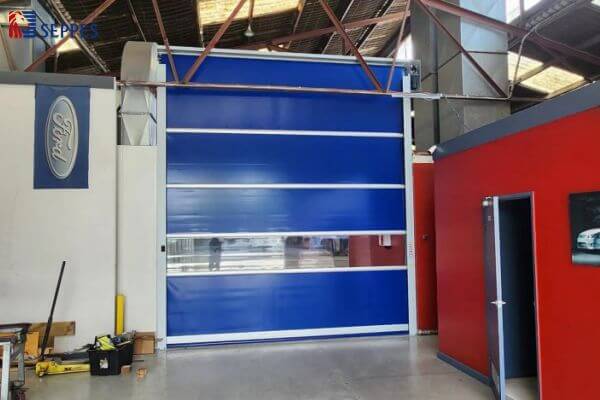
Fast-acting roll-up doors are faster, more energy-efficient, and require less maintenance, while traditional rolling doors are more cost-effective, aesthetically versatile, and better insulated.
| Parameter | Fast-Acting Roll-Up | Traditional Rolling |
| Geschwindigkeit | Hoch- | Mittel |
| Haltbarkeit | Hoch- | Mittel |
| Wartung | Niedrig | Mittel |
| Kosten | Hoch- | Niedrig |
| Isolierung | Mittel | Hoch- |
| Ästhetik | Begrenzt | Versatile |
| Sicherheit | Hoch- | Mittel |
| Raumnutzung | Efficient | Requires Ceiling Space |
Wartungs- und Platzbedarf
Fast-acting roll-up doors require less maintenance and save space, while traditional rolling doors need moderate maintenance and require ceiling space.
| Parameter | Fast-Acting Roll-Up | Traditional Rolling |
| Wartung | Niedrig | Mittel |
| Raumnutzung | Efficient | Ceiling Space Needed |
Kostenanalyse für verschiedene industrielle Torlösungen
When analyzing the cost of industrial door solutions, it is important to consider both upfront installation costs and long-term operational expenses.
| Parameter | Fast-Acting Roll-Up | Traditional Rolling |
| Installation Cost | Higher | Mittel |
| Maintenance Costs | Niedriger | Higher |
| Einsparungen durch Energieeffizienz | Significant | Minimal |
| Total Cost Over Time | Balanced Due to Efficiency | Potentially Higher Over Time |
Though fast-acting roll-up doors tend to come with a steeper upfront price tag, their minimal upkeep and energy-smart features frequently translate into savings that outweigh the initial outlay over time. By contrast, conventional rolling doors generally cost less to put in place, yet the larger cumulative expense over their lifetime often comes from ongoing maintenance and significant energy draw compared to industrial high-speed roll-up doors. This price relationship too can be closely mapped, however, to the operating profile and architectural particulars of the building itself, so a side-by-side, facility-specific performance comparison remains the best practice and prudent buying strategy.
Sicherheitszertifizierungen und regulatorische Compliance
Verständnis von Zertifizierungen für Schnelllauf-Rolltore: UL, CE und ANSI
Fast-acting roll-up door earn certifications such as UL, CE, and ANSI, guaranteeing that they satisfy critical standards in safety, quality, and performance.
UL certification verifies that the door has undergone rigorous safety tests, thereby confirming consistency with the standards governing risk mitigation and permitting installations in both the U.S. and Canadian markets.
CE conformity indicates alignment with European Union directives covering health, safety, and environmental obligations, attesting that the product delivers comprehensive protective measures.
ANSI certification indicates that the door abides by widely accepted American safety and performance benchmarks, validating its integrity in demanding conditions.
Together, these certifications vouch for the door’s operational dependability and strict conformity, making them indispensable for installations driven by a commitment to safety and operational excellence.
Notfallprotokolle und Feuerwiderstandsklassen
Ultra-quick roll-up doors are integral to emergency preparedness, supporting orderly evacuation while limiting the movement of flames and smoke. Built to stringent life-safety codes, these doors open and close at industry-leading speeds, affording occupants the pathway they need and staunchly resisting heat intrusion. Models affixed with fire-rated seals are rated to outperform cumulative containment surge measurements over spans from…” checklist standards stretch from 30 minutes to multiple hours, calibrated to purpose and parent-service association click-through definitions.
Compliance für sensible Bereiche
Roll-up doors installed in controlled environments need to operate under rigorous compliance mandates to safeguard safety, hygiene, and productivity. Acceptance criteria risk-profiled to the zone must cover the full spectrum of applicable fire-life-safety codes, calling for verified fire-resistance ratings as well as drop-bar, fusible, or smoke-vent actuators tied to the facility’s fire-alarm architecture. In GMP-rated spaces like drug manufacture or food processing, sanitation protocols dictate audit-traceable cleanability, compelling the use of seamless, mirror-polished, VOC-free synthetic profiles devoid of glazing beads, recesses, or crevices outside the no-touch-zone. Lifecycle evaluations, including infrared-harmonic endurance checks and drag-torque adjustments. It is mandatory to guarantee all motion-control subsystems—electric, pneumatic, or hybrid—remain under threshold drift. Thus sustaining documented, risk-exposed integrity in loaded formats. Adhering to these layered standards simultaneously defends the manufacturing ecosystem and secures personnel integrity.
Installation, Wartung und Betriebskosten
Best Practices für die professionelle Installation
Thorough installation of fast-acting roll-up doors is key to maximizing performance, lifespan, and operator safety. The following five guidelines provide installers with the foundational practices required for reliable results:
Precise Opening and Surrounding-Structure Measurements
Prior to field work, obtain exact door-opening dimensions and assess adjacent structural elements. Correct sizing minimizes air infiltration and guarantees proper sealing, with even a half-inch variance risking substantial performance drops and unexpected wear.
Comprehensive Structural Verification
Inspect adjoining walls and framing to verify capacity to resist door loads and dynamic forces. Structural elements should exhibit integrity; steel reinforcement, dense concrete, or equivalent systems must be certified or supplemented when deficiencies are noted.
Select Application-Appropriate Mounting Components
Utilize fasteners, brackets, and angles fabricated from materials specifically rated for door size and typical exposure. Use of grade-316 stainless steel in saline, humid, or chemically contaminated locations is prudent to prolong integrity and operational reliability.
Activate, Test, and Document Built-In Safety Features
Fully install and systematically calibrate safety technologies, including light curtains, pressure-sensitive edges, and automatic-stop circuits. Maintain a ±1 cm alignment tolerance with triggers for reliable and predictable reversal behavior, and archive test results as part of operational handoff.
Adhering to Manufacturer Instructions
Keeping to the supplier’s setup guidelines is crucial; doing otherwise risks voiding warranty coverage and leads to avoidable service disruptions. Observing target torque values for fastenings or exact cable routing standards curbs the likelihood of failures—and repair bills—down the road.
Integrating these best-practice standards during the mounting process ensures automatic fast-rolling doors operate consistently while satisfying the relevant compliance benchmarks.
Wartungspläne und Fehlerbehebung
Long-term reliability and peak performance of the fast-acting roll-up door rest on disciplined upkeep and the swift resolution of minor concerns before they escalate. Performing the following tasks on the timetable indicated will sustain peak door performance:
Daily Walk-Through
Scan the tracks, rollers, and jamb seals for obvious degradation. Listen for sudden, new tones in the travel cycle of high-performance doors, and confirm hitch-free, smooth up and down motion.
Monthly Care
Treat all moving assembly points—rollers, hinge joints, shaft bearings—with the lubricant recommended in the manufacturer’s manual. One diagnosed stroke is best; else the oil will serve only as contaminant bait.
Quarterly Obstruction Safety Verification
Activate and observe each safety beam and photocell, confirming they respond to typical and borderline interference. Swipe the lenses with a microfiber towel free of solvents to keep the light path unobstructed.
Tension Maintenance
With a calibrated scale or tension indicator, take inventory of spring and cable pull. Alter the tension in the range specified. Ensuring the door is parallel to the guides and settles gently to the floor without a crawl.
Monthlyly Take-Out
Creep all wire and cable terminals at the motor and, for exterior wiring, the control panel; loosen, brush, re-tighten. If a doorway failed diagnostic resets or out-of-range positions appear, carry out a manufacturer guide procedural cycle to restore recognized limits.
When you put these steps into practice, you minimize unexpected outages, save budget on large repairs, and extend the overall life of your roll-up door. For the best results, keep the manufacturer’s manual handy; it provides model-specific insights that ensure you follow the exact procedures and safety tips your system requires.
Kostenanalyse: Anschaffungs- vs. Lebenszykluskosten
When assessing fast-acting roll-up doors, balance the initial capital outlay against the expected total lifecycle expenditure. The initial capital outlay usually comprises purchase price, site installation, and any custom modification work. Yet the longer-lived operating expenditure footprint—comprising power consumption, scheduled and unscheduled service, spare-parts replacement, and overall throughput gains—ultimately determines the economically sensible choice.
Although the purchase price of rapid-acting doors often exceeds that of conventional models, superior insulating core modules, markedly decreased equipment-cycle outages, and comparatively rare component fail-ures incrementally accumulate energy and maintenanceavoidance savings. Proactive service, through routine inspect-ion and calibration activities, helps safeguard performance and, equally, the expected service interval length. The life-cycle lens enables facilities managers to align capital allotments with operational profitability, thus supporting decisions that favour enduring asset value against outlay that, on justification terms, best suits the present budget.
Anpassungs- und Smart-Integration-Optionen
Anpassungsmerkmale: Größe und Farbe
Fast-acting roll-up doors can adapt to a range of facility requirements through focused size and color options. The following five features help streamline custom specifications.
Tailored Opening Sizes
Each door can be engineered to precise height and width dimensions, accommodating everything from narrow service bays in distribution centers to expansive high-bay warehouse entrances.
Adjustable Thickness Choices
Fabrication in a variety of thickness profiles allows the door to meet thermal performance targets while resisting damage in environments with high-impact traffic or temperature variance.
Extensive Color Matching
Facility managers can select from a broad palette of factory-applied finishes, including branded colors and specialty coatings, ensuring the door reinforces corporate identity and harmonizes with architectural design.
Contrasting Panel Articulation
To balance visual interest and maintenance practicality, swing sections can be produced with different color applications front and back, minimizing visual wear and optimizing color endurance.
Obscure or Glazed Vision Inserts
Integrated view ports, either tinted or glazed, enhance perimeter awareness and legitimate daylight distribution while maintaining the door’s structural integrity and thermal envelope in secure operations.
Integration in Gebäudemanagementsysteme
When tied to contemporary facility management platforms, high-speed roll-up doors become more than barriers—they become responsive operational assets. Their direct feed into centralized controls permits instant oversight and remote command, so operators can oversee door status, position, and alarms from any authorized workstation. Coupling the door to RFID or biometric access systems renders entry both secure and invisible, reducing queues and manual checkpoints. Parallel feeds to climate sensors allow doors to adjust based on pre-set thermal or airflow thresholds, preventing costly thermal losses. In combination, these protocols lower energy spend, accelerate the movement of goods, and keep the facility operating within its ideal performance envelope.
Vorausschauende Wartung und Fernüberwachung
Using predictive maintenance alongside remote monitoring has become essential for maintaining fast-acting roll-up doors with minimal interruption. Sensors installed in the doors continuously gather performance data—temperature, speed, and vibration. Advanced algorithms analyze this data, flagging early signs of wear so that technicians intervene long before a part fails, which helps to cut unplanned stoppage durations and the associated repair expenses. Simultaneously, a remote monitoring dashboard displays live performance metrics, allowing facility staff to notice and rectify unusual behaviors—be it a slower opening speed or a misaligned sensor—within moments of their occurrence. Together, these technologies significantly protract the usable life of the doors, elevate energy efficiency by keeping seal gaps to a minimum, and bolster safety measures by proactively managing risk through informed decision-making.
Markttrends und zukünftige Innovationen
Wachstum bei der Einführung von Hochgeschwindigkeitstoren
High-speed doors—fast-acting roll-up types, in particular—continue to gain ground within both industrial and commercial environments, and the adrenaline behind the adoption curve is their outsize return on investment in efficiency, energy conservation, and safety performance. With tighter energy budgets and safety protocols, facilities managers see these doors not merely as barriers but as operational assets.
Neue Technologien: KI und fortschrittliche Automatisierung
Artificial intelligence fused with next-generation automation is adding a new dimension to the functionality of roll-up doors. Intelligent algorithms constantly analyze usage patterns, ambient temperatures, traffic volumes, and mechanical wear. Predictive maintenance becomes proactive, tackling defects before they complicate schedules. Meanwhile, integrated sensors govern opening and closing speed, curtailing motion to what the moment absolutely requires, conserving kilowatts, and shielding personnel and equipment with millimeter-level accuracy. The cumulative gain is a smarter door that historically outlasts baseline alternatives.
Führende Hersteller und Markteinblicke
Leadership in the fast-acting roll-up door market rests with several engineering titans. Rytec, Hörmann, ASSA ABLOY Entrance Systems, Albany International, and TNR Doors continually refine materials, drive mechanisms, and secure controls to meet the accelerating demand for speed, longevity, and uncompromising safety. Their concentrated R&D investments deliver site-specific customizations without sacrificing reliability.
Surveys indicate that user demand is surging for energy-use transparency, automated safety systems, and sustainable, recyclable materials. Facilities are specifying controls that offer real-time energy feedback and integrating door frames built from bio-derived composites. The dual pressure of cutting operational costs and shrinking the carbon footprint is reshaping manufacturer design roadmaps and accelerating deployment across diverse facilities.
Fazit: Bewertung von Schnelllauf-Rolltoren
Zusammenfassung der Hauptvorteile
Fast-acting roll-up doors deliver distinct advantages that make them indispensable in today’s industrial and commercial settings. Here are five key advantages.
Boosted Operational Efficiency
Designed to open and close at rapid speeds, these doors substantially shorten the time lost to every cycle. Certain models move at rates of up to 60 inches per second, accelerating material flow and slashing wait times in even the busiest facilities.
Optimized Energy Savings
The rapid cycle time minimizes thermal exchange, helping to keep conditioned space intact. Areas with specific climate controls, like cold-storage and temperature-sensitive warehouses, enjoy sustained temperature steadiness and documented energy savings that can reach 30%.
Exceptional Durability
Constructed of heavy-duty materials—often reinforced PVC or aluminum—these doors subject themselves to constant traffic and exposure without failing. Simulation and real-world tests indicate lifespans that exceed one million cycles, sealing in long-term, predictable value.
Advanced Safety
Modern safety features include integrated motion sensors, soft curtain edges, and automatic reversing drives that turn the curtain before contact. By proactively shielding personnel and goods, these enhancements foster a consistently secure workplace.
Roll-up doors require next-to-zero headroom because they coil upwards into a tight roll instead of swinging out or sliding across a track. This practical startup detail frees aisle width and overhead space for racking, machinery, or more floor circulation, especially crucial in the aisle-challenged aisles of warehouses or workshops. By letting every square foot contribute to the workflow, the doors reveal hidden productivity and safeguard operating clearances.
Strategische Überlegungen für Facility Manager
When considering fast-acting roll-up doors for our facility, I focus on several strategic factors. First, I assess the specific operational needs, such as the frequency of door usage and the speed required, to improve efficiency. Energy savings play a significant role, so I evaluate the door’s insulation and sealing properties to regulate indoor temperatures effectively. Durability and low maintenance are key; selecting a high-quality door ensures long-term reliability and reduces downtime. I also prioritize safety features in high-performance doors, ensuring compliance with workplace regulations while safeguarding employees and equipment. Lastly, I examine the door’s compact design to optimize space usage in our facility. These considerations help me make informed decisions that align with operational goals.
Zukunftssichere Zugangslösungen
Fast-acting roll-up doors are the smart choice when it’s time to future-proof access points in industrial and commercial facilities. Their speed allows for near-instant entry, keeping movement fluid and uninterrupted. Fully open in just seconds and just as quickly sealed, the curtain limits the amount of outside air exchanged, which helps stabilize temperatures and trim energy bills—win-win for operations and the environment. Sturdy materials and gear assemblies mean the doors need little upkeep yet stay reliable for the long haul. Engineered safety edges, photo eyes, and emergency stops protect people and equipment, leaving operators confident the doors will perform today and tomorrow.
Häufig gestellte Fragen (FAQs)
Was sind Schnelllauf-Rolltore und wie funktionieren sie?
Fast acting roll-up door open in a blur and braid efficiency into the fabric of busy commercial and industrial operations, reducing energy costs significantly. Engineered to zip up and settle back down fast, they create a continuous cycle of movement that keeps open-door-no-time measurable. Relying on high-performance tech, every cycle is a seamless flow that shrinks wait-and-open wait, cutting unavoidable idle time in a flash. Traffic—consistent, heavy, and unforgiving—no longer puzzles the entry, and the rhythm of productivity never stumbles.
Welche Vorteile bieten Hochgeschwindigkeitstore in gewerblichen Anwendungen?
Keeping the clock, the door, and the costs aligned propels high-speed models into the preferred folder, especially in ramps and docks that call for third-gear access. They funnel foot, forklifts, and straddle trucks without loss of integrity; energy bills settle into manageable patterns because temperature keeps sidewalls and dock curtains from mingling, and chilled storage shrinks loss. When monitors tally accidents, the security threshold rises—more eyes, fewer fumbles, and every alarm echoes sooner. Dependable, reinforced, and now, anti-slam-repaired, the shield is a confident nod to operations.
Wie schneiden Schnelllauf-Rolltore im Vergleich zu traditionellen Garagentoren ab?
Standard sectional crews hesitate to meet the rhythm of high-throughput, so high-speed roll-up doors dance unfettered. They pitch a springless architecture that skips waiting on coils to recover, survive, and hold costs to remedial interruptions. Cold seal virtue, rugged polymer slats, and steady reversible lanes line up for the work. They park in distribution and hang in retail, setting a tone that commercial and industrial guilds agree on: high-speed there, low maintenance here now.
Welche Materialien werden in Hochgeschwindigkeits-Textiltoren verwendet?
Fast-acting roll-up door is engineered from insulated fabric that balances thermal insulation with rugged durability. The soft yet abrasion-resistant material endures sustained winds typical in cold-storage docks and production lines while still operating with minimal drag—ideal for applications where rapid cycles are paramount and weight-saving is critical.
Können Schnelllauf-Rolltore für spezifische Toranwendungen angepasst werden?
Indeed, rapid-rolling doors are configured for the precise demands of each site. Available in variants including custom heights, accelerations of five feet per second or more, and specialized composite skins, every detail is refined through collaboration with end-users. Such tailoring guarantees that performance, downtime risk, and floor space are precisely aligned with a plant’s tactical needs.
Wie verbessern Hochgeschwindigkeits-Sektionaltore die betriebliche Effizienz?
By speeding passage, these doors amplify throughput. When triggered, an opening consumes a fraction of the second, luring personnel, lift trucks, or carts with virtually no idle intervals. The swift curtain drops moments after the last wheel crosses, sealing the interior and curtailing energy drift that would compromise a pharmaceuticals plant or a meats distribution center, thus cementing productivity while protecting stringent climate parameters.
Können Hochgeschwindigkeits-Gewerbetore in verschiedenen Umgebungen eingesetzt werden?
High-speed commercial doors excel in versatility, finding a home in warehouses, production floors, and retail environments alike. Their purpose-built design accommodates each space’s particular needs, combining swift entry with a critical barrier against dust, temperature loss, and unauthorized access.
Was sind die Vorteile von Schnelllauf-Rolltoren?
Roll-up variants lead with advantages that steadily convert traffic volume into tangible gains. By opening and closing in seconds, they keep personnel moving and reduce air infiltration, promoting stable indoor climates and keeping energy bills in check. Heavy-duty components withstand frequent cycling and continue to perform under the specific wear common to industrial and retail zones.
Welche Arten von Hochleistungs-Rolltoren sind verfügbar?
Within the category, choices abound: lightweight fabric rolls for maximum acceleration, traditional industrial models for everyday challenges, and the Extreme 300 and 1024 series for the harshest environments demanding security and thermal control. Each door type is tuned to speed, tight seals, and enhancements that keep operations running with minimal interruption.
Können Hochgeschwindigkeits-Rolltore sowohl innen als auch außen eingesetzt werden?
Both indoor and outdoor installations benefit from the same core performance. Weather-resistant design, customizable seals, and durable finishes let a single solution manage chilled docks, controlled warehouses, and high-volume commercial entrances, consolidating door sourcing while meeting diverse operational climates.
Referenzquellen
Schnelllauf-Rolltor mit einer Vorhanggeschwindigkeits-Erfassungsvorrichtung
Autoren: 毛罗·洛伦扎尼, 阿尔曼多·韦基
Veröffentlichungsdatum: February 10, 2015
Zusammenfassung: This conference paper discusses the design of a fast roll-up door that includes a curtain speed detection device, which is crucial for ensuring the door operates efficiently and safely in high-speed applications.
Link: Fast Roll-Up Door Comprising a Curtain Speed Detection Device
Schnelllauf-Rolltor mit Vorhanggeschwindigkeits-Erfassungsvorrichtung
Autoren: マウロ・ロレンツァーニ, アルマンド・ヴェッキ
Veröffentlichungsdatum: February 10, 2015
Zusammenfassung: This paper presents a high-speed roll-up door that incorporates a speed detection mechanism, enhancing its operational safety and efficiency. It is relevant for understanding the technological advancements in fast-acting roll-up doors.
Link: High-Speed Roll-Up Door with a Curtain Speed Detection Device
Kollisionsschutzvorrichtung für Schnelllauf-Rolltore
Autor: G. Langenbach
Veröffentlichungsdatum: June 20, 1997
Zusammenfassung: This paper discusses a crash protection device designed for rapid roll-up doors, focusing on safety features that are essential for high-speed applications. It provides insights into the engineering considerations for fast-acting doors.
Link: Kollisionsschutzvorrichtung für Schnelllauf-Rolltore
Aktuelles schnelles Industrie-Rolltor
Autoren: Jože Breznikar, Gabrijel Rejc, M. Šentjurc
Veröffentlichungsdatum: 17. Oktober 2005
Zusammenfassung: Dieser Konferenzbeitrag gibt einen Überblick über den aktuellen Stand schnelllaufender industrieller Rolltore, erörtert deren Konstruktion, Funktionalität und Anwendungen in verschiedenen industriellen Umgebungen. Er ist relevant für das Verständnis der Markt- und Technologietrends bei schnelllaufenden Rolltoren.
Link: Aktuelles schnelles Industrie-Rolltor
Schnelllauf-Rolltor mit einem Vorhang mit elastischen Kanten
Autoren: 毛罗·洛伦扎尼, 阿尔曼多·韦基
Veröffentlichungsdatum: February 10, 2015
Zusammenfassung: Diese Arbeit behandelt ein Schnellrolltor-Design mit elastischen Kanten, das die Haltbarkeit und Leistung des Tores bei Hochgeschwindigkeitsbetrieb verbessert. Sie bietet Einblicke in innovative Konstruktionsmerkmale, die die Funktionalität steigern.
Link: Schnellrolltor mit einer Bahn mit elastischen Kanten
Fazit
Diese Quellen sollten Ihnen eine solide Grundlage für die Überprüfung der Informationen in Ihrem Artikel zu schnelllaufenden Rolltoren und verwandten Technologien bieten. Stellen Sie sicher, dass Sie über Ihre Einrichtung oder Bibliothek auf die vollständigen Artikel zugreifen. Falls Sie weitere Unterstützung oder spezifische Details aus einer dieser Arbeiten benötigen, zögern Sie bitte nicht zu fragen!