📞WhatsApp 86-18068436613

Dock Leveler Capacity: Why Truck Fit Comes First

Dock leveler capacity becomes useful to a buyer when it is matched to the vehicles, handling equipment and loading pattern at the bay. A platform with an impressive tonnage rating can still leave a project with an unsuitable slope, insufficient lip contact or an installation that does not fit the existing pit.
The purchasing sequence should therefore begin with the vehicle interface, continue through the moving load and platform geometry, and finish with a quotation covering the complete bay. This gives SEPPES the information needed to propose a configuration and explain its limits before the buyer commits to equipment or civil work.
Table of Contents
ToggleStart with the Vehicles That Will Actually Use the Bay
A truck dock leveler enquiry should identify the lowest and highest load-bed positions expected at the actual stopping point. Record the relevant loaded and unloaded conditions, rather than relying only on a vehicle’s nominal catalogue height. Also record the dock floor elevation and the approach surface from which the vehicle measurements are taken.
UK HSE guidance notes that vehicle platform height can change between loaded and empty conditions and warns against excessively steep dock-leveler slopes. These are reasons to assess the operating range over the loading process, rather than checking a single parked-truck photograph. See HSE guidance on loading areas.
Describe the vehicle rear as well as its height. Rear-door arrangement, tail-lift equipment, obstructions, usable bed width and the position against the dock bumpers can all affect the proposed interface. Send photographs and dimensions that show where the leveler lip would contact the vehicle, not just a distant image of the truck body.
For example, a warehouse regularly receiving articulated trailers may occasionally accept smaller delivery trucks. The occasional vehicle deserves an explicit decision: confirm a compatible arrangement at that bay, or identify an alternative unloading route. Averaging the fleet’s bed heights would hide the vehicle most likely to fall outside the selected equipment’s operating envelope.
Ask the supplier to state which vehicle configurations are covered by its proposal and which remain unresolved. This makes the truck dock leveler selection review specific enough for operations staff to use when new vehicle types are introduced.
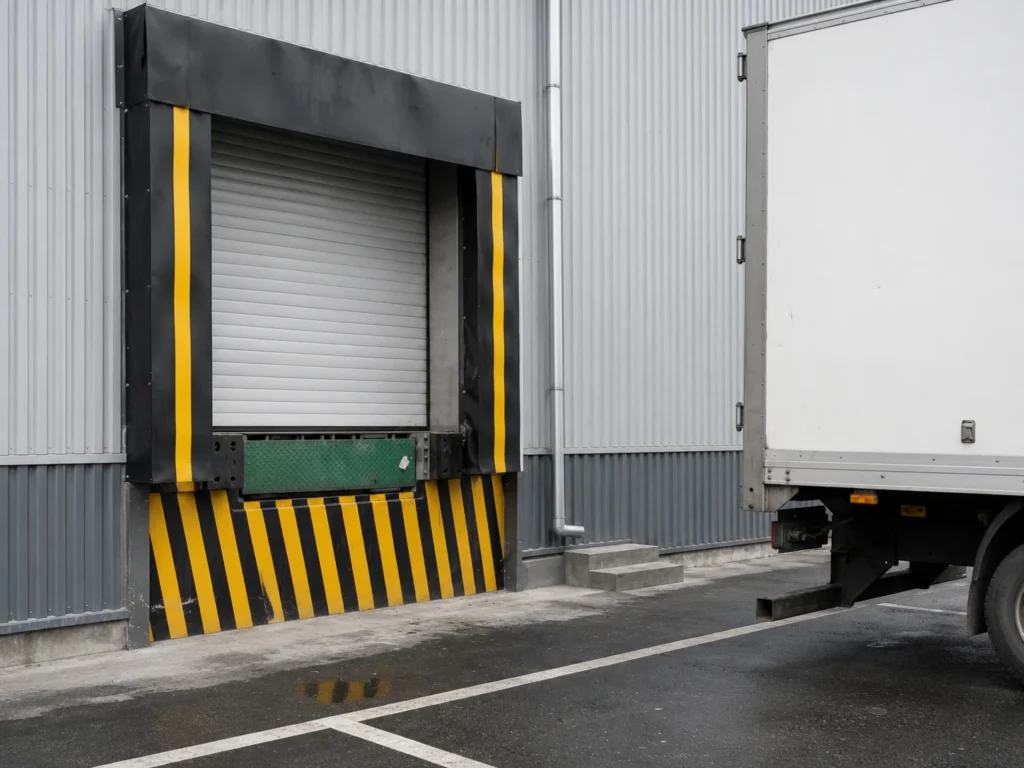
Calculate the Moving Load Before Selecting Dock Leveler Capacity
Begin with the total weight crossing the platform. This includes the handling vehicle in its operating configuration and the load it carries. Establish whether the vehicle weight already includes its battery, attachments and operator allowance so those items are neither omitted nor counted twice.
As a hypothetical example, suppose the confirmed operating weight of a forklift is 3,800 kg, already including the agreed equipment and operator allowance. Its maximum palletized load is 1,500 kg. The combined crossing weight is 5,300 kg. Those figures describe an example enquiry input; they do not establish that a platform advertised as six tonnes is suitable.
The supplier still needs to assess the rating basis, wheel arrangement and loading pattern for the offered assembly. Provide the actual handling-equipment model, wheel data where available, crossing frequency and operating conditions. Published selection guidance distinguishes gross transferred weight from the frequency of load passages; both affect the application review. See dock-leveler selection guidance.
Count traffic across the deck separately from the number of vehicles visiting the bay. In another hypothetical example, 25 trailers per day, each involving 18 loaded crossings and 18 unloaded returns, produce 900 deck passages. That is a different duty description from “25 trucks per day,” and it is also different from the number of times the platform is raised and stored.
Request a documented dock leveler capacity recommendation linked to these inputs. It should identify the proposed model, the applicable rating and any operating limitations. Applying a universal multiplier to the pallet weight, or comparing a static rating with a moving-load requirement, would leave essential parts of that assessment unanswered.
Read Dock Leveler Dimensions as an Operating Geometry
Dock leveler dimensions need to explain the crossing path as well as the space occupied by the equipment. Review usable deck width, effective travel length, lip reach, pit requirements and the transition at each end. A dimensional match to an existing opening is only one part of the selection.
Consider a simplified slope illustration with a 300 mm height difference. Over a horizontal run of 2,000 mm, rise divided by run gives 15%. Over 3,000 mm, it gives 10%. These are geometric examples, not permitted operating slopes or recommended SEPPES platform sizes. Actual deck movement, lip geometry and the vehicle position must be included in the proposed arrangement.
A lower average slope can still leave an abrupt transition that matters to a particular pallet truck or forklift. Ask the equipment supplier to review the complete travel path against the handling vehicle’s clearance and permitted operating conditions. A general ramp percentage cannot demonstrate that every vehicle will cross without grounding or loss of control.
For an existing pit, provide measured length, width and depth together with the surrounding structure, available electrical supply and access for service. Request the installation drawing for the exact proposed model before approving construction changes. Two products with similar deck sizes can require different supports, clearances or pit details.
Where a proposal does not cover the full vehicle range, ask for the unresolved cases to be identified. A separate bay or different loading arrangement may be more appropriate than forcing one platform to serve every truck. That decision should be made before the dock leveler dimensions become fixed in the civil works.
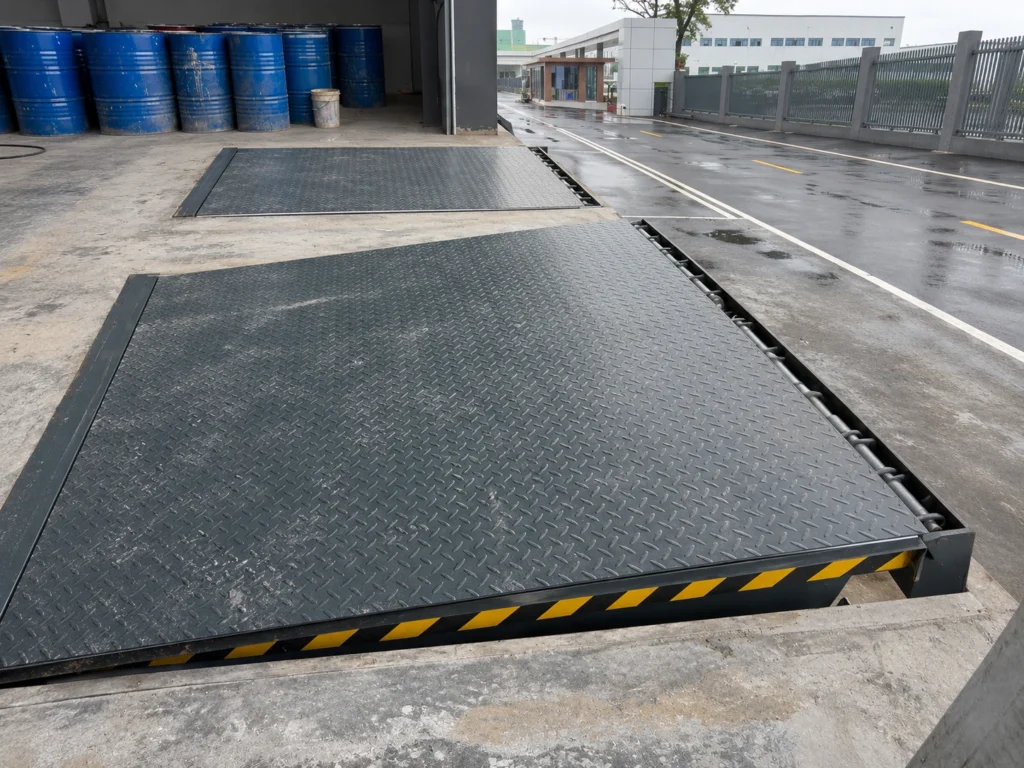
Compare Hinged and Telescopic Lips Against the Same Vehicle Data
The SEPPES loading dock leveler range lists hydraulic models with hinged lips and models with telescopic lip extension. Both require a project-specific review of vehicle geometry, loading duty and installation conditions. Hydraulic operation alone does not determine the lip arrangement that best fits the bay.
For a hinged-lip hydraulic dock leveler, ask the supplier to show the lip’s deployment path and supported position for the relevant vehicles. The review should explain how the rear of the vehicle, dock bumpers and available contact area fit the proposed geometry throughout the intended operating range.
When evaluating hydraulic telescopic lip dock levelers, ask what useful adjustment the extension provides for the actual stopping positions and rear configurations. Request the permitted extension range and required support conditions for the offered model. Extra reach has value when it resolves an identified interface requirement; it should not be treated as unlimited flexibility.
| Proposal | Question that decides its value | Evidence to request |
|---|---|---|
| Hinged-lip arrangement | Does its operating path suit the agreed vehicle group? | Vehicle interface drawing and stated operating limits |
| Telescopic-lip arrangement | Does controlled extension resolve a specific reach or positioning requirement? | Extension and support details at the relevant vehicle positions |
Keep the same vehicle list, handling-equipment data and project scope when requesting both options. A price comparison becomes meaningful only after each proposed hydraulic dock leveler has been checked against the same application. If one option excludes a vehicle type, keep that exclusion visible beside its price.
Compare Dock Leveler Price Across the Complete Bay
A dock leveler price should identify the platform and the work needed to make it usable at the intended bay. Separate the equipment supply from pit construction or alteration, structural preparation, power and field wiring, installation, transport and commissioning. An omitted item remains an unresolved cost even when the platform itself appears competitively priced.
Review the interfaces with dock bumpers, the industrial door, vehicle restraint arrangements, signals and operating controls. Identify what is included, what is supplied by another party and who coordinates the combined sequence. A platform control box does not, by itself, establish that every adjoining device is integrated into the agreed operating procedure.
If a shelter is part of the project, review the SEPPES dock shelter product page alongside the platform proposal. The shelter and leveler address different parts of the vehicle-to-building interface. Specify the intended vehicle group and confirm that the selected components can work together at the same bay.
Ask who checks installation readiness, who completes the agreed site verification and which records are provided at handover. The quotation should also identify access requirements and the support scope for the selected equipment. These details help distinguish a complete proposal from a platform-only supply price without inventing a standard installation allowance.
The buying decision can then compare dock leveler price against a defined result: an identified platform serving an agreed vehicle group, with a documented load basis and clear installation responsibilities. A lower quotation that leaves those decisions open transfers work and uncertainty to the buyer.
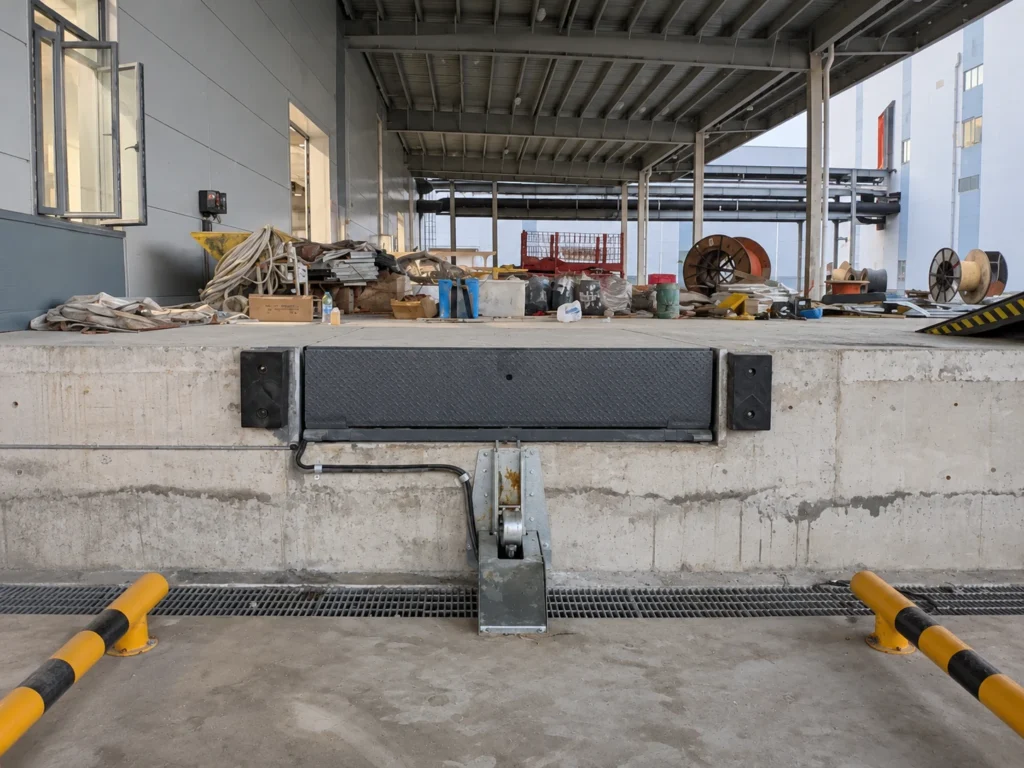
Send SEPPES a Vehicle-Based Enquiry
Prepare a short enquiry package containing the vehicle list and bed-height range, rear-interface photographs, dock and pit measurements, handling-equipment operating weight, maximum carried load and expected deck passages. Add the proposed door, shelter and restraint interfaces, together with the required supply and installation scope.
Use the SEPPES enquiry page to request an application review and itemized proposal. Ask for a comparison of hinged and telescopic arrangements where the vehicle data justifies it. A useful dock leveler capacity recommendation should remain connected to the conditions that make the selected configuration suitable for the project.