📞WhatsApp 86-18068436613

Industrial Door Installation Requirements: A Practical Guide for Industrial Facilities

Table of Contents
ToggleIntroduction
Industrial doors are widely used in warehouses, manufacturing plants, logistics centers, workshops, food processing facilities, and other commercial and industrial environments.
Selecting the right door is important, but proper installation is equally important.
Even a well-designed industrial door may not operate as expected if the installation environment, mounting conditions, electrical connections, or door alignment are not properly prepared.
Understanding the main industrial door installation requirements before installation can help reduce installation problems and create better conditions for long-term operation.
SEPPES provides industrial door solutions for different industrial applications and considers installation conditions as part of the overall project.
Why Industrial Door Installation Matters
An industrial door is a complete operating system rather than a simple movable panel.
The door curtain or panels, frame, guide system, motor, control unit, sensors, and safety devices all need to work together.
During installation, these components must be positioned and connected correctly.
Poor installation may result in problems such as:
- Uneven door movement
- Excessive vibration
- Abnormal noise
- Incorrect opening and closing
- Sensor errors
- Increased component wear
- Reduced operating efficiency
For this reason, industrial door installation should be treated as an important part of the entire project rather than the final step after purchasing the product.
1. Check the Opening Dimensions
One of the first steps in an industrial door installation is checking the actual opening.
The width and height of the opening should be measured accurately before the door is manufactured or installed.
Other dimensions may also need to be considered, including:
- Available headroom
- Side clearance
- Installation depth
- Floor level
- Surrounding structures
- Equipment near the opening
Different industrial door designs may have different space requirements.
For example, a high-speed door with a compact structure may require less installation space than some traditional door systems.
Accurate measurements can help ensure that the selected door configuration fits the actual installation area.

2. Evaluate the Installation Conditions
The installation area should be inspected before work begins.
The surrounding wall or structural frame needs to provide sufficient support for the door system.
The installer should also check whether there are obstacles such as pipes, electrical equipment, ventilation ducts, beams, or other machinery around the opening.
These factors can affect the available installation space.
Industrial door installation conditions should therefore be evaluated before the final product configuration is confirmed.
For complex industrial environments, providing site drawings and installation photos to the manufacturer can also help with technical evaluation.
3. Proper Door Frame Mounting
The door frame provides the basic structural support for the complete system.
During industrial door mounting, the frame should be positioned correctly and securely fixed to the supporting structure.
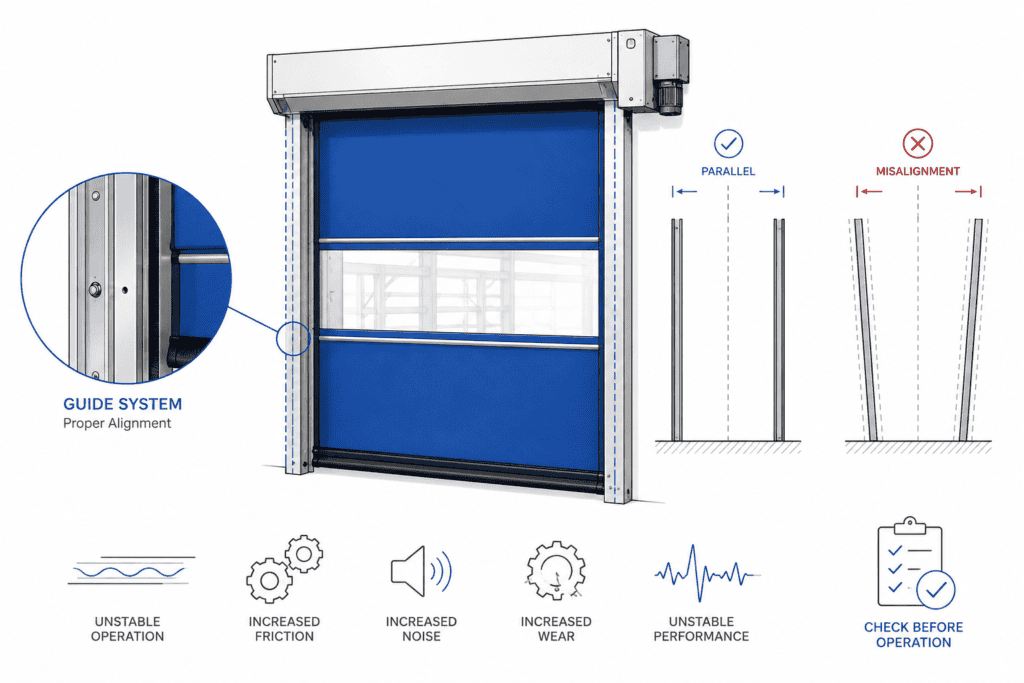
The vertical guides on both sides should remain properly aligned.
If the frame is not correctly positioned, the door curtain or panels may not move smoothly.
Proper mounting can help maintain stable operation and reduce unnecessary stress on moving components.
This is particularly important for industrial doors that operate frequently throughout the working day.
4. Guide System Alignment
The guide system controls the movement of the door curtain or panels.
Correct alignment is therefore an important part of industrial door installation.
The guides should be installed according to the required dimensions and kept parallel with the door opening.
Misalignment can affect door movement and may cause:
- Uneven movement
- Friction
- Noise
- Increased wear
- Unstable operation
During installation, the guide system should be checked before the door is placed into regular operation.
5. Motor and Drive System Installation
The drive system is responsible for moving the industrial door.
Depending on the product configuration, the drive system may include a motor, gearbox, shaft, control unit, and related electrical components.
The drive system needs to be installed securely and connected according to the product requirements.
The installer should also consider the available power supply and the location of electrical components.
For projects with special electrical requirements, the power specifications should be confirmed before installation.
SEPPES can provide technical information to help customers and installers prepare the necessary installation conditions.
6. Control System Setup
Modern industrial doors often use automatic control systems.
Depending on the application, the door may be operated using push buttons, remote controls, radar sensors, vehicle detection systems, pull switches, or other activation devices.
The control system needs to be configured according to the actual operating environment.
For example, a warehouse used by forklifts may require an automatic activation method that allows vehicles to pass without unnecessary manual operation.
A production workshop may require integration with other equipment or access-control systems.
The appropriate control configuration should therefore be considered during the planning stage.
7. Safety Device Installation
Safety equipment is an important part of the complete industrial door system.
Depending on the product and application, safety devices may include:
- Photoelectric sensors
- Safety edges
- Emergency stop buttons
- Warning lights
- Warning signals
- Obstacle detection devices
These components are designed to help detect abnormal conditions and reduce operational risks.
During industrial door installation safety checks, each safety device should be installed in the correct position and tested before the door enters normal operation.
The exact safety configuration should be determined according to the door design and applicable project requirements.
8. Floor Conditions
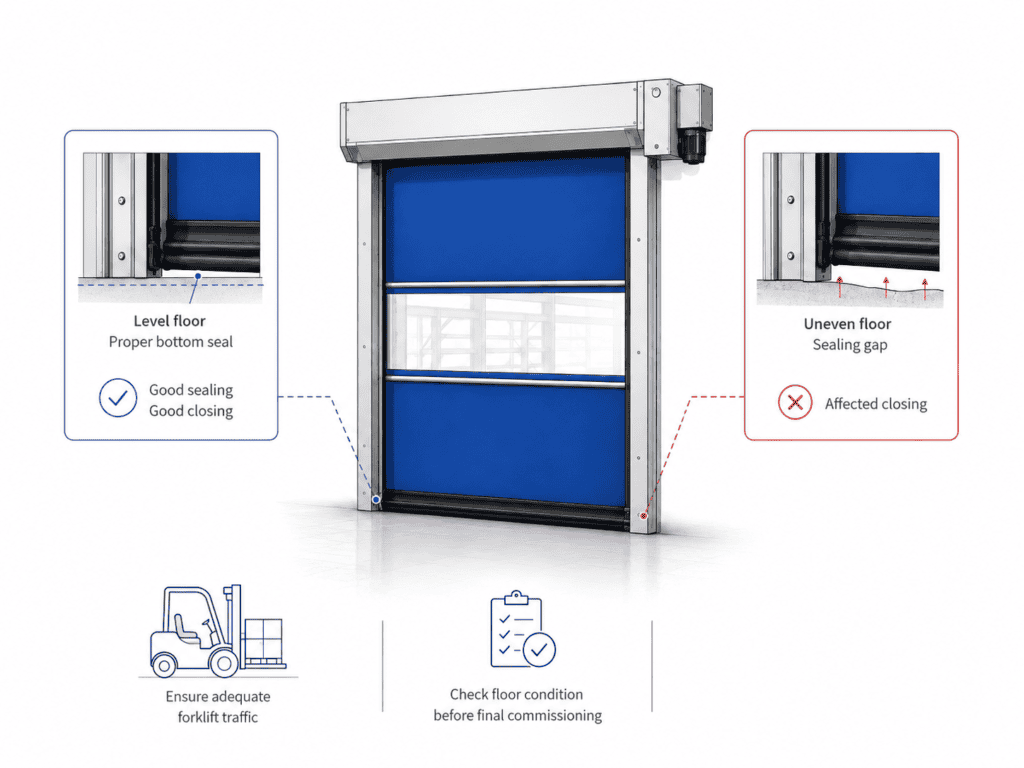
The floor below the door also affects installation and operation.
The floor should be reasonably level and free from significant obstacles.
An uneven floor can affect the bottom sealing area and may influence how the door closes.
In facilities where forklifts and other vehicles frequently pass through the opening, the floor should also be suitable for regular traffic.
Before installation, the installer should check the condition of the floor around the complete opening.
If adjustments are required, they should ideally be completed before final commissioning.
9. Electrical and Control Connections
Industrial doors require appropriate electrical connections for the motor and control system.
The electrical supply should match the requirements of the selected equipment.
Cables should be routed safely and protected from potential damage caused by vehicles, machinery, moisture, or other environmental factors.
Control panels should also be positioned where operators can access them conveniently without interfering with normal traffic.
Proper electrical installation contributes to stable operation and easier maintenance.
10. Industrial Door Commissioning
After the physical installation is completed, the door should be tested before being put into regular operation.
This stage is known as industrial door commissioning.
Typical checks may include:
- Opening movement
- Closing movement
- Operating speed
- Limit positions
- Sensor response
- Emergency stop function
- Safety device response
- Control system operation
- Abnormal noise or vibration
The purpose of commissioning is to confirm that the different components are working together properly.
If an abnormal condition is detected, it should be addressed before the door is used for normal production activities.
Industrial Door Installation Guide for Different Applications
Different industrial environments may require different installation considerations.
Warehouses
Warehouse doors may experience frequent forklift traffic.
Installation should consider vehicle clearance, activation methods, safety devices, and traffic flow.
Manufacturing Facilities
Production facilities may contain machinery, pipes, ventilation systems, and other equipment around the door opening.
The installation layout should account for these surrounding structures.
Food Processing Facilities
Food processing environments may have specific requirements for materials, cleanliness, and maintenance.
The door configuration should be selected according to the actual working environment.
Logistics Centers
Logistics facilities often require efficient vehicle and personnel movement.
The position of sensors and control devices should support smooth traffic flow.
Temperature-Controlled Areas
Temperature-sensitive environments may require attention to door positioning, sealing configuration, and opening frequency.
The installation should be planned together with the overall environmental requirements of the facility.
Common Industrial Door Installation Problems
Several installation issues can be avoided through proper preparation.
Incorrect Measurements
Incorrect opening dimensions can lead to installation difficulties or unsuitable configurations.
Insufficient Installation Space
Equipment, beams, pipes, or other structures may interfere with the door system.
Poor Alignment
Incorrect frame or guide alignment can affect door movement.
Improper Electrical Connections
Incorrect wiring or unsuitable power supply can cause control problems.
Incomplete Safety Testing
A door should not enter normal operation before its safety devices have been properly tested.
These problems demonstrate why installation planning should begin before the door arrives at the site.
How to Prepare for Industrial Door Installation
Before the installation team arrives, the customer can prepare several items.
Confirm the Opening Size
Provide accurate width and height measurements.
Check the Surrounding Area
Make sure there is sufficient space for the door structure and operating components.
Prepare the Power Supply
Confirm that the required electrical supply is available.
Remove Installation Obstacles
Clear unnecessary equipment or materials from the installation area.
Provide Site Information
Photos, drawings, and basic information about the working environment can help the manufacturer evaluate the project.
Good preparation can make the installation process more efficient and reduce unnecessary adjustments.
SEPPES Industrial Door Installation Support
SEPPES provides industrial door solutions for warehouses, factories, workshops, logistics facilities, food processing plants, and other industrial applications.
Different projects may have different requirements for door dimensions, installation space, operating frequency, control systems, and safety configurations.
SEPPES can evaluate these factors when developing the appropriate door solution.
From product selection and technical configuration to installation guidance and commissioning, each stage can influence the final operating performance of the industrial door.
By considering installation conditions at the beginning of the project, customers can reduce potential installation difficulties and create a more suitable working environment for the door system.
Conclusion
Proper installation is an essential part of achieving reliable industrial door performance.
From opening measurements and structural support to guide alignment, drive system installation, electrical connections, safety devices, and final commissioning, every stage can affect the operation of the complete door system.
Understanding the main industrial door installation requirements before installation allows businesses to prepare the site more effectively and select a configuration that fits the actual application.
For industrial facilities with specific installation conditions, working with an experienced industrial door manufacturer can also make the planning and installation process more efficient.
SEPPES provides customized industrial door solutions for different industrial environments, helping customers build reliable and practical access systems for daily operations.